
Wall and Ceiling Separation Repair Basics
- Jerry Koh
- Apr 18
- 5 min read

That thin line opening up where the wall meets the ceiling usually starts small. Then the paint cracks, the joint looks uneven, and every time you look up, it seems worse. Wall and ceiling separation repair is not just about filling a gap and painting over it. If the cause is movement, moisture, poor joint treatment, or weak plaster, a quick cosmetic patch can fail fast.
For homeowners and shop owners, this kind of damage is frustrating because it affects both appearance and confidence in the space. The good news is that many cases can be repaired cleanly and affordably when the problem is identified early and the surface is rebuilt properly.
What causes wall and ceiling separation?
In real properties, separation at the top of the wall happens for a few common reasons. The first is normal building movement. Houses and commercial units expand and contract with temperature changes, humidity, and settling. Over time, that movement can stress the joint where two surfaces meet.
The second common cause is moisture. A roof leak, plumbing leak, condensation problem, or bathroom humidity issue can weaken plaster, joint compound, or paint layers. Once the material softens or loses adhesion, cracks form and the gap starts to show.
Poor past workmanship is another reason. If the original joint was not taped correctly, if low-grade filler was used, or if the surface was painted before it was fully dry, the finish may separate earlier than expected. In older units, multiple rounds of patching can also build up weak layers that crack again.
Sometimes the issue is minor and mostly cosmetic. Sometimes it points to deeper damage above the ceiling, inside the wall, or around concrete edges. That is why a proper site check matters before any repair work starts.
Signs your wall and ceiling separation repair needs more than filler
A hairline crack does not always mean major structural trouble, but some warning signs should not be ignored. If the crack keeps reopening after repainting, if you see water stains, if the ceiling surface feels soft, or if nearby paint is bubbling, there is usually more going on than simple aging.
You should also pay attention to sagging sections, crumbling plaster, mold spots, or gaps that vary in width along the room. These signs often mean the repair area needs scraping, treatment, plaster rebuilding, and repainting as one complete process.
This is where many DIY fixes go wrong. A tube of caulk may make the line disappear for a short time, but if the base surface is loose or damp, the crack usually returns. In some cases it returns wider than before.
How a proper wall and ceiling separation repair is done
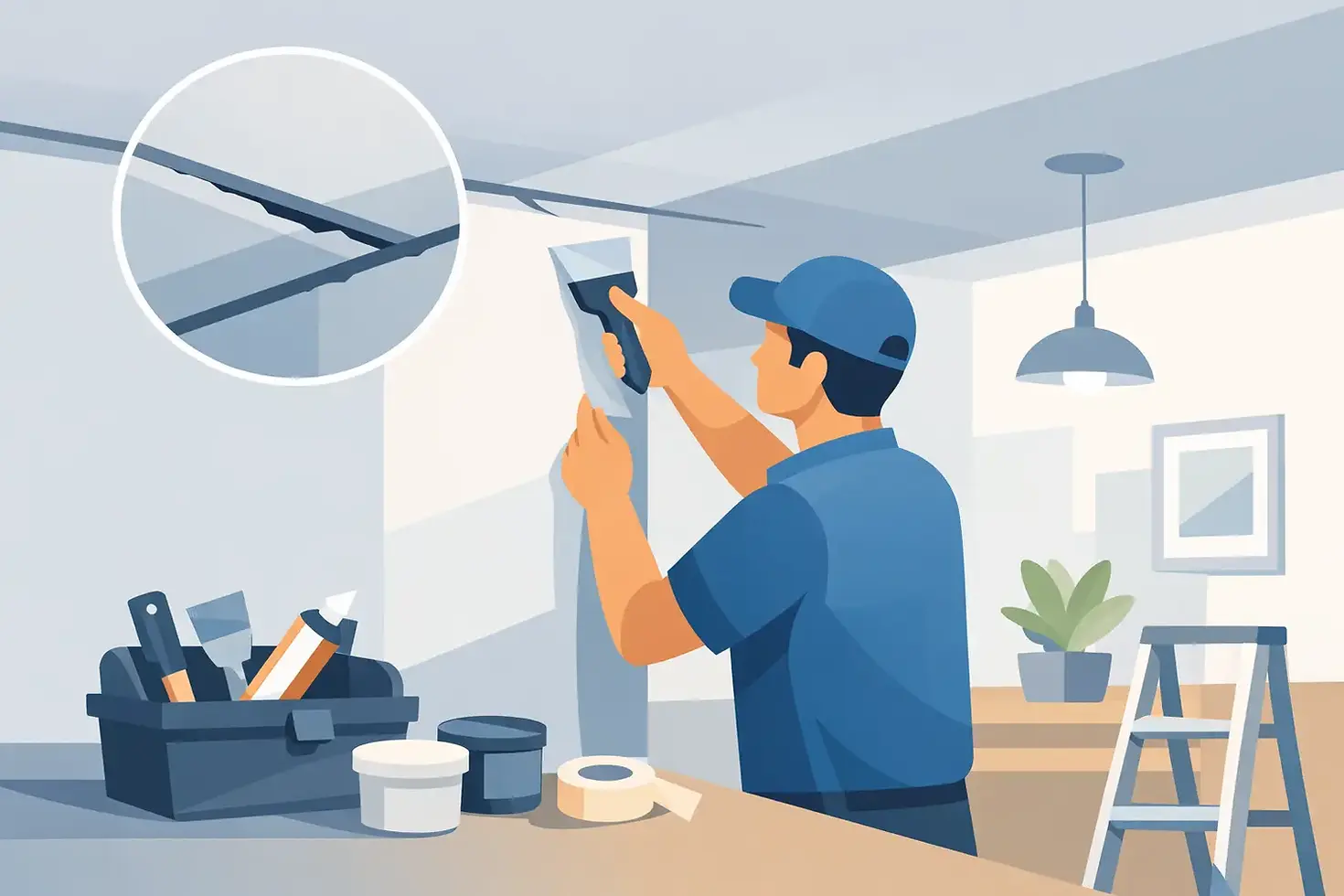
A lasting repair starts with preparation, not paint. The damaged joint has to be checked closely to see whether the issue is only at the surface or deeper in the plasterboard, concrete skim, or ceiling finish.
First, loose paint, weak compound, and any hollow or flaking material are removed. This step is important because new filler will only hold if it is bonded to a sound surface. If moisture is present, the source should be fixed before patching begins. There is no point repairing a joint while a leak is still active.
Once the area is clean and stable, the gap is treated based on its condition. Small cracks may need flexible filler or joint compound with reinforcement tape. Larger separations may need cutting back, re-bonding, patch plastering, and leveling to rebuild the line between wall and ceiling.
After that, the surface is skim coated if needed to blend the repair into the surrounding area. Sanding follows to get the joint flat and smooth. Only then should primer and paint be applied. If the repair is done carefully, the finished ceiling line should look neat instead of patched.
For older ceilings or walls with uneven texture, matching the surrounding finish takes experience. This is one reason clients often prefer a contractor who handles both plastering and painting. The repair is not treated as a crack alone, but as a surface-finishing job from start to finish.
Why some repairs fail quickly
Most failed repairs come down to one of three issues. The first is repairing over a dirty, chalky, or loose surface. The second is skipping reinforcement where movement is expected. The third is rushing the drying process and painting too soon.
Cheap materials can also be a problem, especially in humid rooms or older properties. Not every filler is suitable for ceiling joints, and not every crack should be treated the same way. A narrow paint-line crack and a recurring separation with plaster weakness need different methods.
Another trade-off is flexibility versus hardness. A very hard patch can crack if the building continues to move. A more flexible system may perform better in movement-prone areas, but only if the surrounding surface is still strong enough to support it. That is why there is no one-size-fits-all method.
When the problem is related to water damage
If the separation appears together with yellow stains, peeling paint, mold, or swollen ceiling boards, water is likely involved. In that case, the repair should not begin with cosmetic work. The leak source needs to be traced first, whether it comes from the roof, upper-floor plumbing, air-conditioning drainage, or bathroom seepage.
Once the leak is resolved, the damaged area often needs more than crack filling. Stained paint may need sealing. Mold-affected surfaces may need treatment. Soft plaster may need removal and replacement. If the ceiling board or backing is compromised, partial replacement may be necessary before skimming and repainting.
This is also where costs can vary. A simple dry crack at one room corner is very different from a moisture-damaged ceiling perimeter that needs hacking, treatment, plastering, and full repainting.
What affects repair cost?
Most customers want to know the price early, and that is fair. The cost of wall and ceiling separation repair usually depends on the crack length, the height of the area, ease of access, the condition of the base surface, and whether repainting is needed for one patch or the whole ceiling line.
If the repair includes leak damage, mold treatment, skim coating, or color matching across a larger area, the price goes up because labor and material use increase. Very small jobs can also seem expensive on a per-foot basis because setup, protection, and finishing still take time.
That is why clear quotation matters. A proper quote should state what is included, such as scraping, filler work, sanding, primer, touch-up painting, or full area repainting. Transparent pricing helps avoid surprises halfway through the job.
Should you repair it yourself or call a contractor?
If the crack is tiny, stable, and clearly superficial, a careful DIY touch-up might be enough. But if the line keeps reopening, if the ceiling is stained, or if the surface sounds hollow or feels weak, it is better to get a professional assessment.
A contractor can tell whether the issue is joint movement, water damage, failed plaster, or poor previous repair work. More importantly, a good one can handle the whole sequence properly - repair, skim coat, sanding, and painting - so you do not end up hiring multiple parties for one problem.
For clients who want a neat final result with less hassle, that full-service approach is usually the better value. It saves time, reduces mismatch between trades, and gives you a cleaner finish at the end.
Getting a cleaner result that lasts
The best repairs are usually the least obvious ones. That comes from patient prep work, correct materials, and proper finishing, not from rushing to cover the crack. At Lengpainter, this is exactly why repair and finishing are treated as one job, with practical site checks, honest quotations, and workmanship focused on smooth surfaces and clean paint-ready results.
If you have a crack where the wall meets the ceiling, do not wait until it spreads or starts staining. A small issue is usually simpler and more affordable to fix early, and a proper repair now can save you from a bigger ceiling job later.


Comments