
Best Time to Repair Spalling Concrete Before HDB Renovation

Planning an HDB renovation means juggling designers, contractors, and material deliveries. But structural defects have to come before aesthetic upgrades, not after. The best time to fix spalling concrete is during the preliminary hacking and demolition phase, well before any new finishes go up. Sort it early and your new tiles won't crack within months, and mould won't come back behind fresh paint.
Spalling concrete repair is a specialist job. Most general renovation contractors don't have the tools or chemical know-how to do it properly. You need a dedicated restoration team to stabilise the substrate first, so your main contractor has a sound surface to build on. Skip this step to save time and you'll usually end up paying twice for the same patch when the new work fails early.
Why Spalling Repair Must Precede Renovation Works
Treating spalling concrete before renovation isn't an optional upgrade you can push to later stages. It's a structural prerequisite. Tile directly over compromised concrete without treating it first, and the steel reinforcement underneath keeps corroding and expanding beneath your expensive new flooring. That hidden movement pushes against the tile adhesive layer over time. The result: hollow sounds, lifted edges, and cracked grout that no amount of surface cleaning will fix.
Your renovation budget is finite. Spending it on finishes that sit on top of a failing substrate is money down the drain. General contractors are set up for installation speed and visual results, not the patience and specialised chemical treatments structural repair needs. If your main contractor finds active spalling after wet works have already started, they'll likely pause the job to call in a specialist. That disrupts their schedule and inflates your final bill through variation orders.
Fixing the concrete first also settles the question of who's responsible for what. When a specialist handles the substrate prep and signs off on its condition, your tiler can get on with the job knowing the base is sound. Without that clear handover, disputes are almost guaranteed when tiles fail: the tiler blames the concrete, and the concrete repairer was never in the picture to answer for it.
Identifying Urgent Spalling Concrete Before Renovation Starts
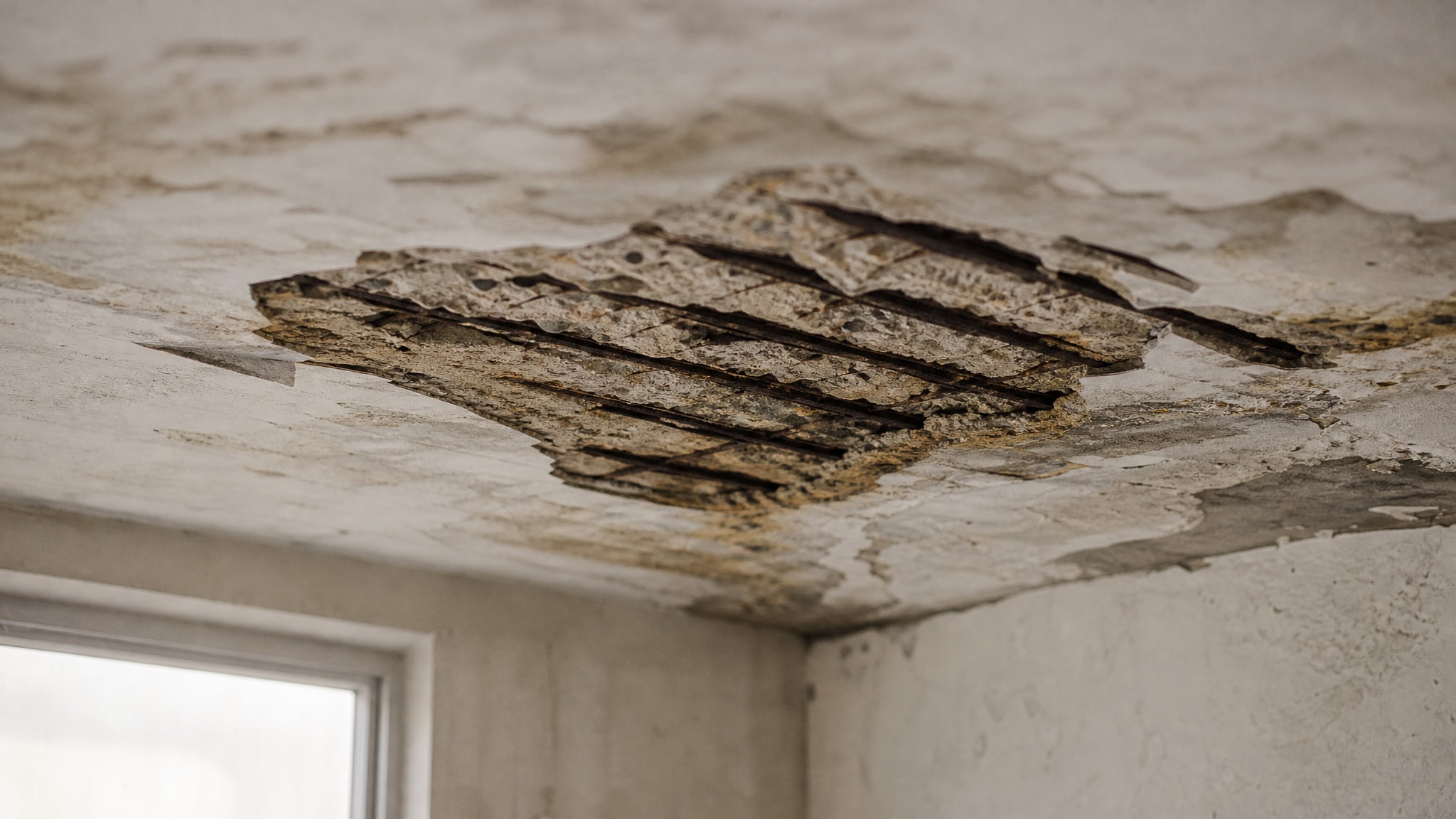
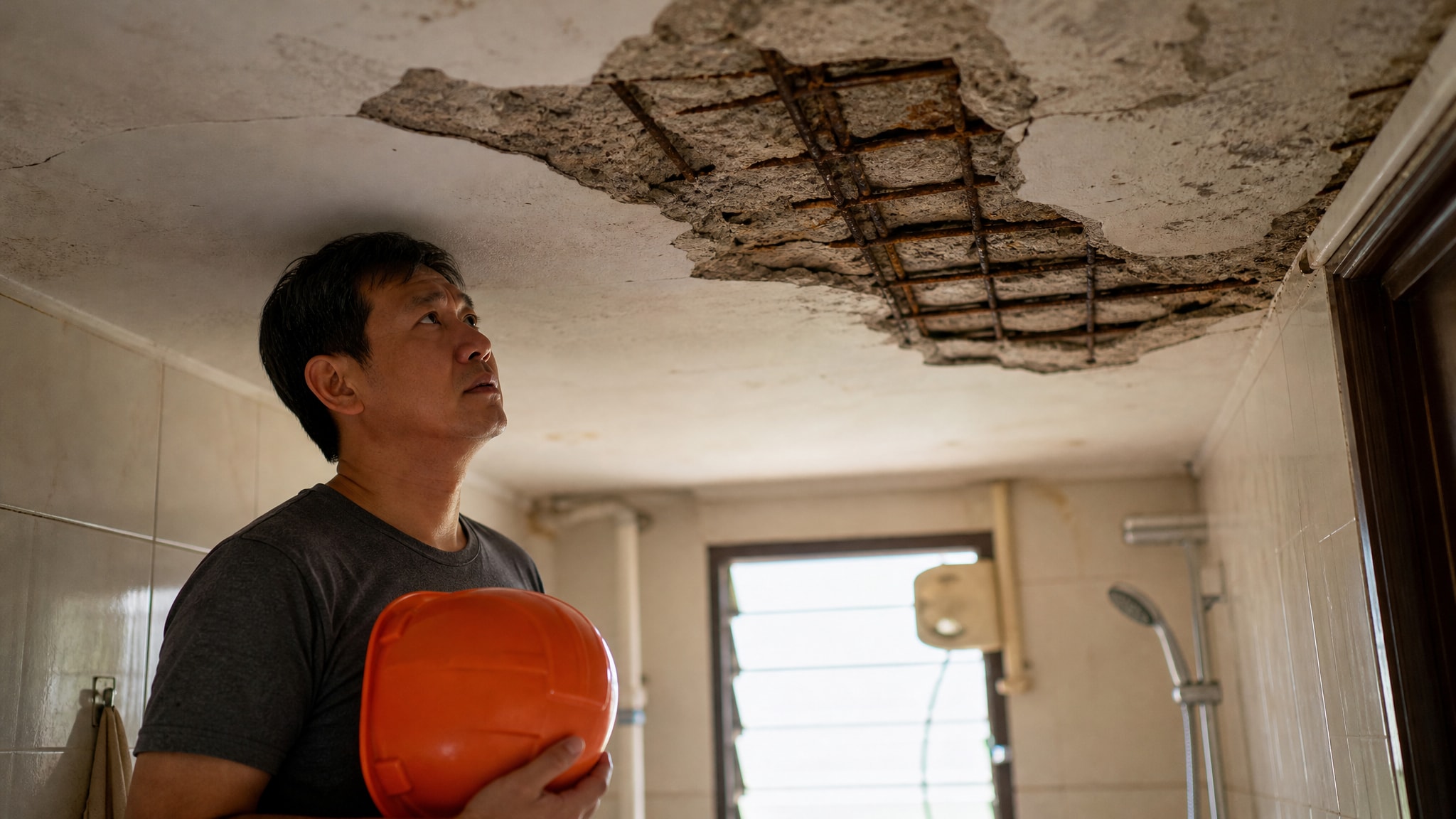
Inspect every ceiling, wall, and floor slab for warning signs before you sign a renovation contract or order a single tile. Rust-coloured streaks running down a wall or across a ceiling mean the steel reinforcement bars inside are actively corroding and staining the concrete around them. Paint won't cover this up for long. It's evidence of an ongoing chemical reaction that keeps eating away at the concrete from within, whatever finish you put on top.
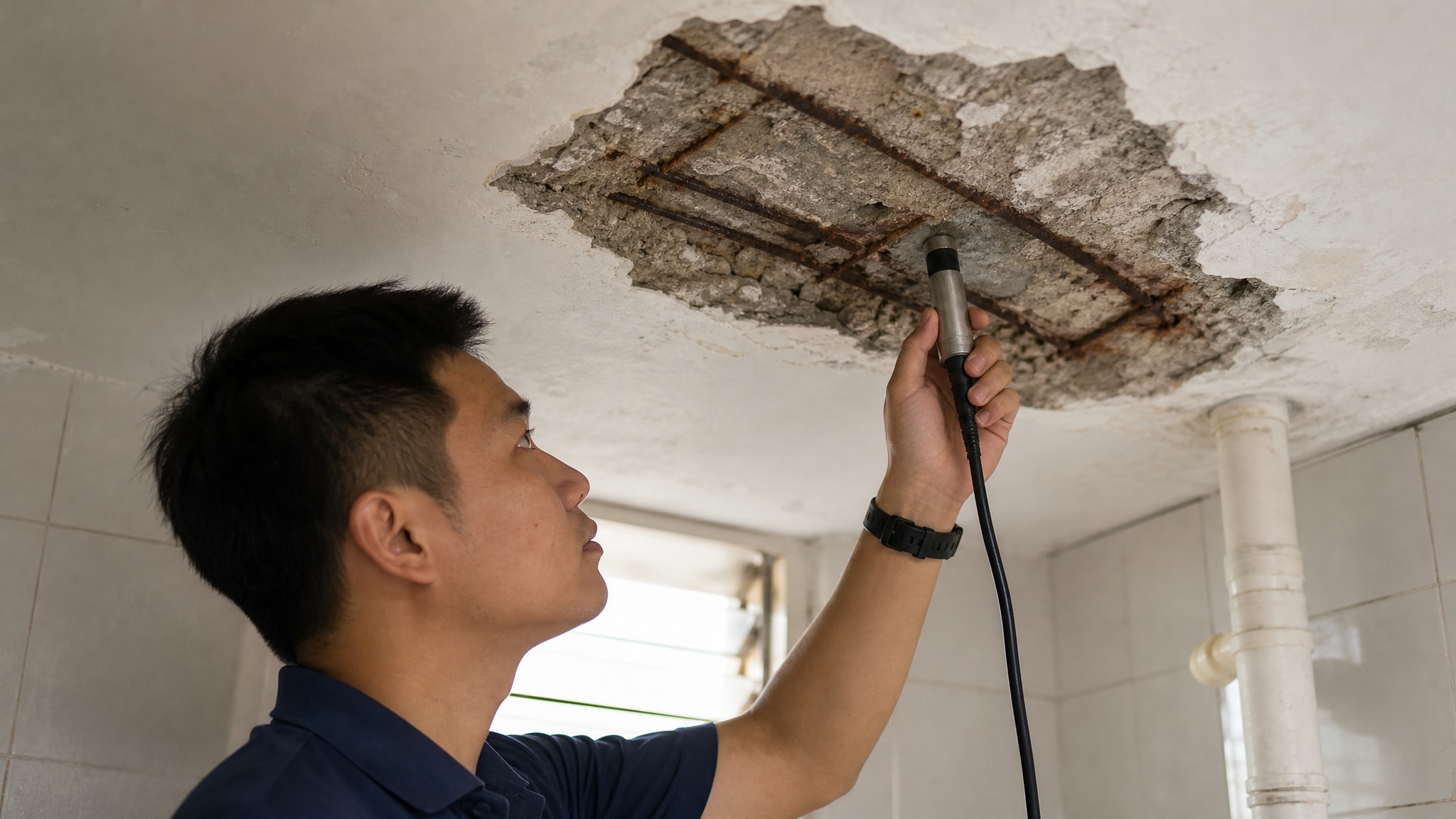
Tap suspected areas with a coin or small hammer and listen. A solid, healthy slab gives a sharp, high-pitched ring. Spalled or detached concrete gives a dull thud, which means air pockets are forming behind the surface layer. Those voids mean the plaster or screed has already lost its grip and will eventually come away, taking any new tiles or waterproofing membrane with it.
Exposed rebar is the most severe stage of concrete cancer and needs a professional straight away, before any other work proceeds. Once steel is visible, the concrete's protective alkaline layer has broken down completely, and corrosion speeds up fast in Singapore's humid climate. Wait for your renovation contractor to uncover this during hacking and you've wasted time you could have used to plan and price the repair properly.
Mould that keeps coming back despite cleaning points to moisture getting into cracked or porous concrete, not just surface grime. That dampness often comes from micro-fractures in spalled areas, letting water penetrate deep into the slab where ordinary fungicide can't reach it. Only a proper concrete repair that seals those pathways and restores the substrate will stop the cycle of growth that threatens both your health and your new finishes.
Sequencing Structural Repair Before Tiling and Finishing
The correct order: all hacking, rust treatment, and mortar application happen before your tiler mixes a single batch of adhesive. Your specialist contractor chips away all loose and contaminated concrete until they hit sound, clean substrate around the affected zone. This stage kicks up a lot of dust and debris, the kind that would ruin freshly laid tiles or contaminate open paint tins if it happened out of order.
Rust removal and anti-corrosion coating need direct access to the exposed steel bars in the damaged area. You can't apply these protective chemicals over existing tiles or waterproofing, which is why pre-renovation timing isn't negotiable. The repair mortar then has to bond chemically with the prepared concrete surface, and that bond fails if tile adhesive residue or construction dust gets in the way.
General renovation contractors typically don't carry the specialised bonding agents and polymer-modified mortars durable structural repair needs. Standard cement-sand mixes shrink as they cure and can't handle the tensile stress that ongoing rebar expansion puts on spalled zones. A specialist matches the repair material to the original concrete's thermal expansion and load-bearing capacity, so the patch behaves as part of the structure rather than a superficial filler.
Waterproofing membranes go on only after the repaired concrete has fully cured and reached adequate surface strength. Install waterproofing over green or uncured repair mortar and you trap moisture inside the patch, and that leads to membrane blistering and eventually water leaking into the unit below. This sequencing protects your investment, and it protects your relationship with the downstairs neighbours who'd otherwise cop the damage from waterproofing installed over an unstable substrate.
HDB Renovation Timeline Repair: Curing and Drying Windows
Repair mortars and anti-corrosion coatings need specific curing periods, and you can't compress those to hit an arbitrary renovation deadline. Most polymer-modified repair compounds need at least seven days of protected curing before they're strong enough to take tile loads or waterproofing. Rush this window, lay tiles too soon, and you get the debonding failures that plague HDB renovations where spalling was patched in a hurry.
Managing Moisture Content Before Wet Works
Moisture testing should confirm the repaired area has dried enough before any wet trade moves in. High residual moisture trapped beneath tiles or waterproofing causes adhesive breakdown, efflorescence staining, and mould coming back within months of completion. Your specialist contractor can run a simple plastic sheet test or use an electronic moisture meter to check readiness, so the move from structural repair to finishing work isn't a guessing game.
Singapore's tropical humidity stretches drying times well beyond what temperate-climate product datasheets promise. What cures in three days overseas can easily take ten days here, especially in a poorly ventilated toilet or an enclosed kitchen. Build a realistic buffer into your HDB renovation timeline repair plan and you avoid costly rework, because each trade gets a substrate that's actually ready for its materials.
Tell your main contractor about these waiting periods before renovation starts, clearly, so nobody gets pressured into cutting corners later. Some contractors push to speed things up with heat guns or dehumidifiers, and those can actually damage curing repair mortars through uneven drying. Curing is a chemical process. It needs time and stable conditions, not forced drying that crusts the surface while leaving the core weak underneath.
This approach won't suit homeowners chasing an instant fix, or anyone unwilling to adjust the renovation schedule around structural reality. Spalling concrete repair and a fast-track renovation timeline don't mix; one prioritises the substrate, the other prioritises the completion date. If your move-in date can't move, and there's no room for proper curing, tiling over untreated spalling will fail early, and the remedial work will cost you within years rather than decades.
Comments