
HDB Spalling Concrete Repair Specialist in Singapore

Finding an HDB spalling concrete repair specialist in Singapore means looking beyond general renovation firms. You need someone who understands the specific pathology of aging public housing. Spalling isn't a cosmetic surface defect. It's a chemical reaction inside the slab, and it needs targeted structural work, not standard plastering. A good technician can tell simple water leakage apart from chloride-induced corrosion before any hacking starts.
Leng Painter focuses exclusively on spalling and plaster restoration rather than full renovations. That narrow focus lets technicians build real diagnostic skill around HDB concrete defects, so your repair addresses the steel reinforcement underneath rather than just covering symptoms with fresh paint. General contractors often lack this depth because their business runs on broader remodeling jobs, not this one problem.
Why HDB Spalling Concrete Requires a Niche Specialist
Spalling in HDB toilets gets misdiagnosed as simple water leakage more often than not. Usually it's chloride-induced corrosion built up over decades of moisture exposure. A specialist spots this through visual assessment and moisture testing, where a generalist might just recommend re-waterproofing the floor tiles above. Treat the wrong problem and the damage comes back, often worse than before.
Structural Risks of Delayed Repairs
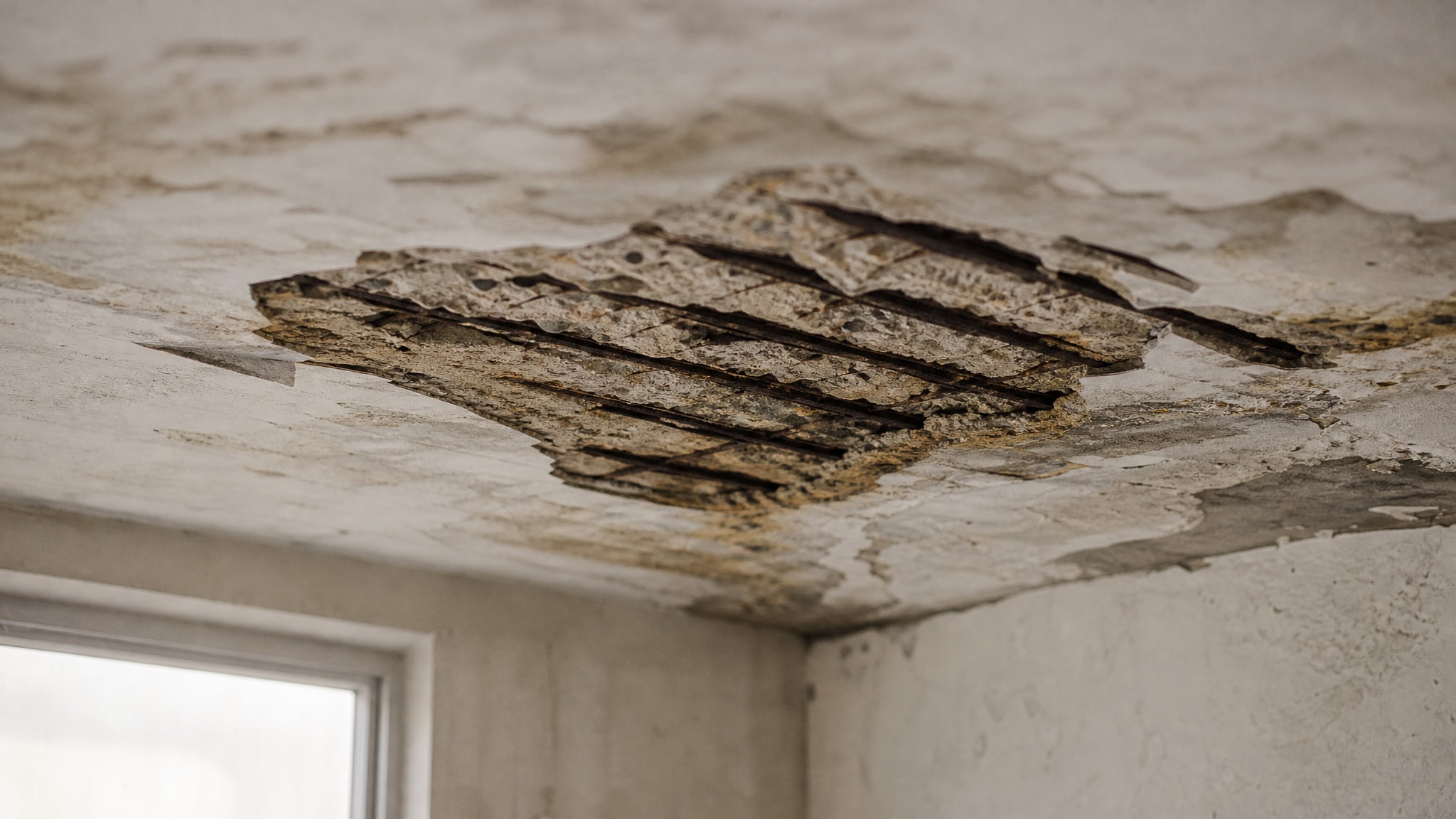
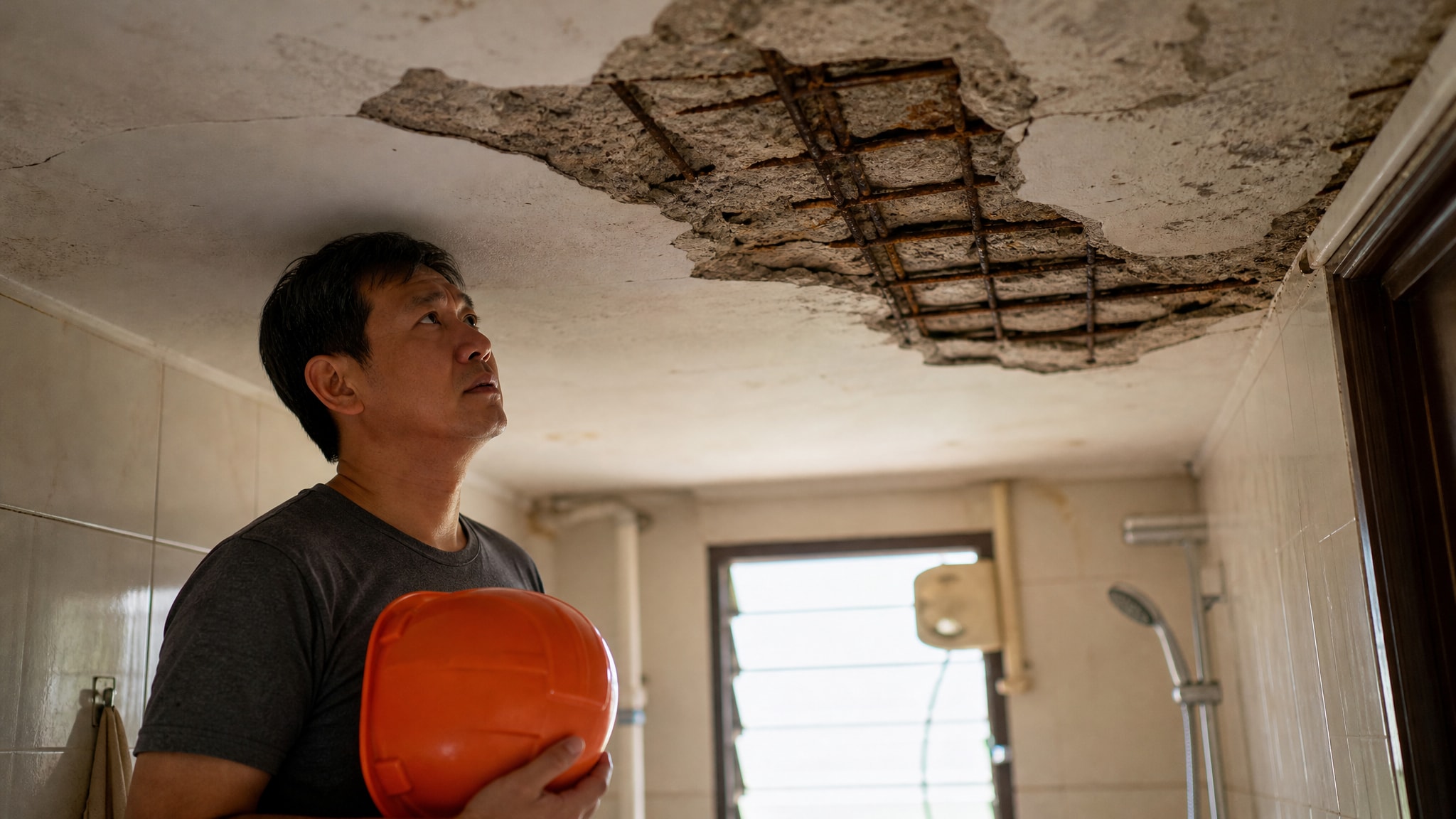
Untreated spalling concrete can go from minor surface flaking to exposed reinforcement bars within a single year in high-humidity environments like HDB bathrooms. Once the rebar hits air and moisture, the corrosion cycle speeds up fast, expanding the metal and cracking the surrounding concrete from the inside out. That expansion is what sends heavy chunks of ceiling or wall loose and unstable.
Delaying a professional lets carbonation push deeper into the slab, which eventually breaks the bond between the old concrete and any future patch. Early engagement stops this before it spreads to adjacent units or forces extensive rebar replacement. Safety should drive your timeline, not your budget.
Specialist vs General Renovation Contractor
General contractors often patch spalling with standard cement screed. It lacks the polymer modifiers needed to bond with old HDB concrete and resist future carbonation. A dedicated concrete spalling repair company in Singapore uses materials built for compatibility with aged substrates and high-moisture environments. The difference is material science, not just technique.
You can review our contractor versus handyman guide to see why structural work demands different qualifications than aesthetic upgrades. General renovators are good at tiling and carpentry, but they rarely carry the inventory or training for corrosion inhibition and non-shrink mortar systems. Pick the right professional and you avoid the costly rework that ends up pricier than doing it right the first time.
Our Spalling Concrete Repair Process for HDB Flats
Effective repair follows a strict sequence that puts substrate preparation ahead of finish aesthetics. We don't apply new material until the existing concrete is stable, clean, and chemically treated to stop ongoing corrosion. Skip a step in this workflow and you compromise the whole repair.
Inspection and Root Cause Diagnosis
Every job starts with a site assessment to work out whether the spalling comes from carbonation, chloride attack, or mechanical damage. We check moisture levels, map how far the delamination has spread, and locate every compromised rebar before proposing a fix. This tells us whether you need localized patching or more extensive slab treatment.
Accurate diagnosis means we avoid unnecessary demolition while making sure no active corrosion site gets missed. We explain what we find in plain terms, so you know exactly what we're fixing and why before you approve the scope of work.
Corrosion Treatment and Rebar Protection
We hack away all loose and unsound concrete to expose the full length of affected reinforcement bars. Each exposed rebar gets mechanical cleaning, then a zinc-rich anti-corrosion primer that restores the protective alkaline environment around it. Skip this step and rust keeps spreading beneath even the strongest new mortar.
Proper rebar treatment is what stops the problem coming back within months. Many callback jobs fail because the previous contractor skipped this chemical passivation step to save time or money. We treat the steel as the structure that matters and the concrete as its protective shell.
High-Strength Polymer Modified Mortar Application
After corrosion treatment, we apply a high-strength polymer modified repair mortar built for vertical and overhead work. It bonds chemically with the prepared substrate and resists shrinkage cracking while curing, unlike ordinary cement mixes. The polymer modification also cuts permeability, which slows future carbonation.
We follow manufacturer specifications for thickness and layering to keep the repair structurally sound without sagging. Only once the repair has reached adequate strength do we finish the surface to match the surrounding texture. Once painted, the repaired area should be indistinguishable from the original.
Common Areas We Treat: Toilets, Kitchens, and Ceilings
Moisture-prone zones in HDB flats are tricky because waterproofing failures often show up alongside concrete deterioration. These areas need repairs that address both the structural slab and the water management system above it. Ignore either one and the fix fails fast.
Toilet and Bathroom Ceiling Spalling
Toilet repairs often need coordination with tiling or plumbing work to seal out future moisture. We frequently find that ceiling spalling tracks directly with degraded waterproofing membranes in the unit above, which means joint remediation across both. Your bathroom repair has to tackle the structural and waterproofing sides together.
Bathrooms accelerate corrosion because of constant humidity and temperature swings. We use materials rated for wet-area exposure and advise on ventilation improvements to stretch the repair's lifespan. Lasting results come from controlling the moisture source, not just patching the damage.
Kitchen Slab and Outdoor Ledge Repairs
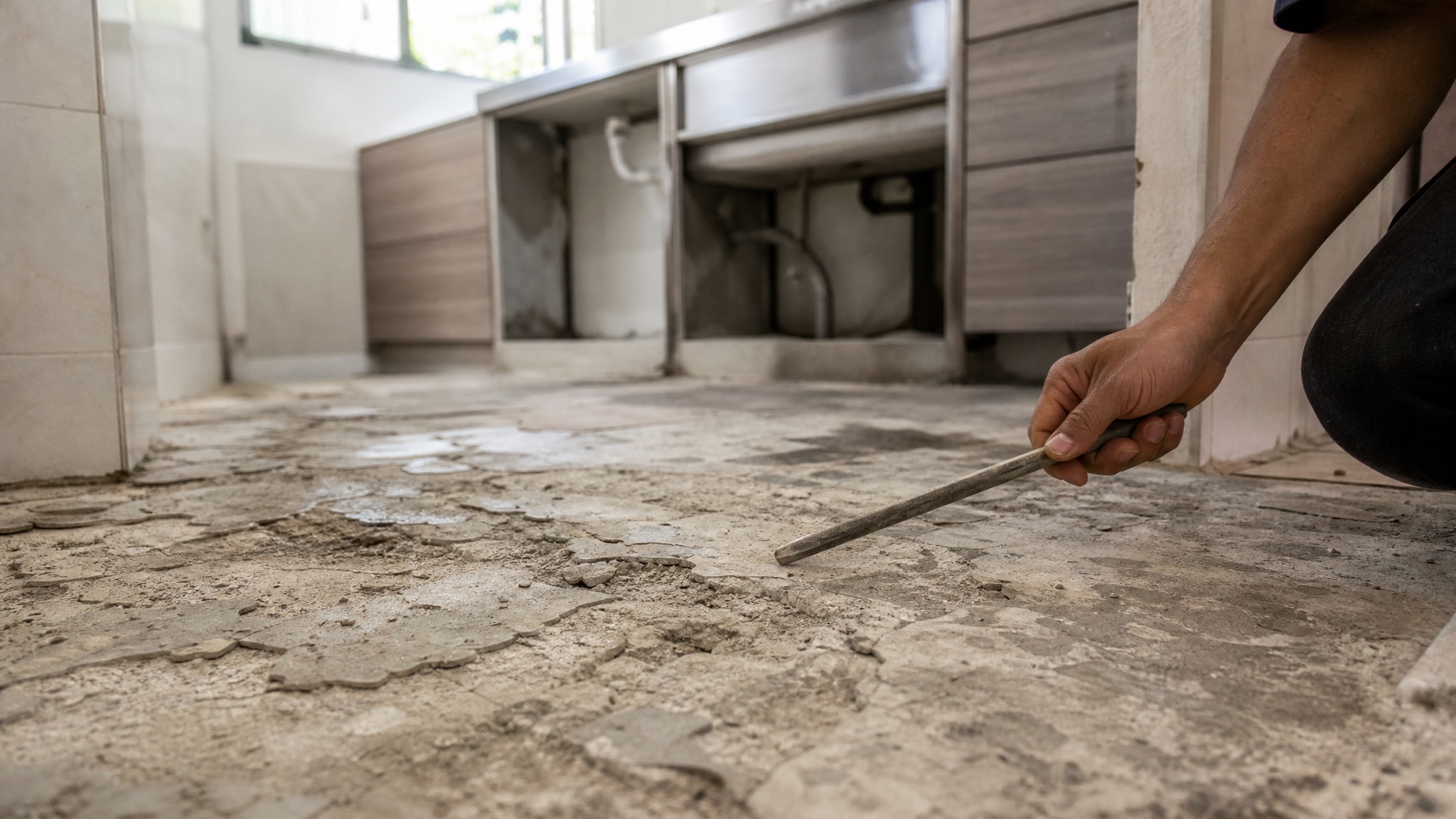
Kitchen slabs deal with grease penetration and thermal stress on top of the usual carbonation issues. Outdoor ledges take direct weathering and need UV-stable repair compounds that resist rain erosion. Both spots need materials chosen for their specific exposure.
For external areas, see our outdoor ledge repair cost considerations to understand how accessibility and height affect pricing. These jobs often need scaffolding or rope access equipment, which adds logistical complexity. Planning for that upfront means no surprise charges mid-job.
Cost Factors for Spalling Concrete Repair in Singapore
Pricing depends on site-specific variables, not a standardized rate card. Damage severity, how accessible the location is, and rebar condition all drive labor hours and material quantities. No two HDB flats deteriorate the same way, which is why fixed online quotes are misleading.
We don't hand out instant price estimates, because accurate costing needs a physical inspection of how far the damage goes. We'd rather skip the ballpark figures that set false expectations or lead to variation orders mid-job. Request an on-site quotation based on actual conditions, not assumptions.
Rebar replacement needs affect cost more than surface area alone. Extensive corrosion may mean cutting out and welding new steel sections, which takes extra skilled labor and engineering oversight. Understanding these cost drivers helps you judge competing quotes on scope, not just the bottom line.
Verifying Your Spalling Repair Vendor
Hiring an unqualified contractor for structural work exposes you to liability and a bad outcome. Verification takes minimal effort compared to the risk of a failed repair in a home you live in.
Checking HDB Licensing and Track Record
Confirm your contractor holds valid HDB licensing for structural repair work specifically, not just general renovation. Check their track record through completed project references and reviews that focus on spalling jobs, not painting or carpentry. Specialized experience counts for more than years in business generally.
Use our resource to verify spalling repair vendors against current regulatory requirements and industry standards. Valid credentials show compliance with building codes and insurance obligations that protect you. Don't assume a licensing status based on marketing claims alone.
Understanding Warranty Terms
Demand warranties covering both materials and workmanship for a meaningful duration on spalling repairs specifically. Material-only warranties exclude installation errors, and installation errors cause most premature failures in concrete restoration. Workmanship coverage is the contractor telling you they trust their own process.
Read the warranty exclusions carefully to see what maintenance obligations fall on you as the homeowner. Some warranties void if moisture sources go unaddressed or if someone makes unauthorized modifications after the repair. Clear terms stop disputes when problems resurface years later.
When to Call a Spalling Concrete Specialist Immediately
Certain warning signs point to active structural degradation that needs urgent attention. Waiting for a convenient scheduling window risks injury or damage that costs a lot more to fix later.
Exposed rusted rebar, falling concrete chunks, or cracks spreading fast all call for immediate action, ahead of whatever else is on your list. These symptoms confirm active corrosion cycles that get worse daily in Singapore's tropical climate. See our guide on signs your HDB needs inspection if you suspect damage but can't confirm it visually.
Early engagement means lower costs and fewer safety hazards than waiting for advanced structural decay. It also means planned repairs instead of emergency stabilization work. Contact us for spalling repair today to schedule your no-obligation inspection before minor issues escalate.
Frequently Asked Questions
How long does a typical HDB spalling concrete repair take?
Most toilet or kitchen ceiling repairs complete within one to three days depending on damage extent and curing time requirements. The polymer modified mortar needs adequate curing before painting or tiling can resume. Larger structural repairs involving rebar replacement may extend to five days or more.
Can I stay in my HDB flat during spalling repair work?
Yes, most spalling repairs allow continued occupancy with minor disruption to the affected room only. We contain dust and debris within the work zone using plastic sheeting and negative pressure where needed. Only extensive multi-room structural interventions typically require temporary relocation.
Will spalling repair stop water leaking from the unit above?
Spalling repair addresses concrete deterioration but does not replace failed waterproofing membranes in neighboring units. If leakage originates upstairs, that unit must repair their waterproofing concurrently for lasting results. We coordinate with upstairs owners and HDB officers when cross-unit remediation is necessary.
How often should repaired spalling concrete be inspected?
Schedule annual visual checks of previously repaired areas and adjacent zones prone to similar deterioration. Look for hairline cracks, discoloration, or hollow sounds when tapping the surface. Early detection of new damage allows minor touch-ups rather than major re-repairs.
Comments