
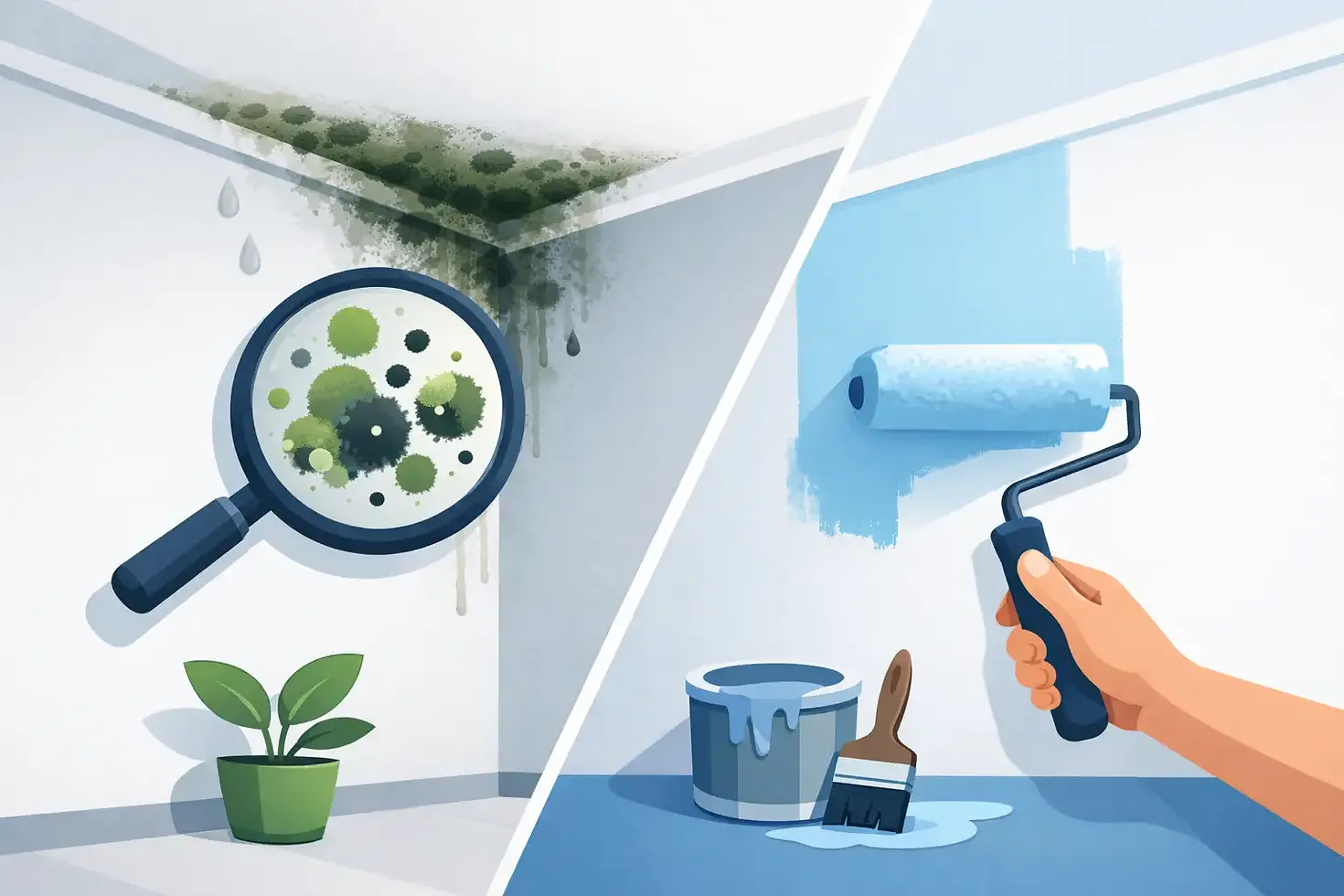
Can Mould Come Back After Painting?

You paint over a mouldy ceiling, the stains disappear, and the room looks clean again. Then a few weeks or months later, the spots return. So can mould come back after painting? Yes, absolutely - and in many cases it does, especially when the real problem was never fixed in the first place.
Painting can improve the appearance of a wall or ceiling, but paint alone does not stop active mould growth. If there is still moisture in the surface, a hidden leak above the ceiling, poor bathroom ventilation, or dampness trapped inside old plaster, the mould can return right through the new coat. That is why mould jobs should never be treated as a simple repainting job.
Why mould comes back after painting
Mould needs three things to grow - moisture, a surface to feed on, and enough time. Most homes already provide the second and third. Painted walls, plaster, gypsum board, and ceiling surfaces can all support mould once they stay damp long enough.
When someone paints over the affected area without proper treatment, they usually only hide the visible marks. The spores may still be sitting inside porous material, behind flaking paint, or in a ceiling patch that never dried properly. Once humidity rises again, the same patch can reopen.
This is why a clean-looking paint finish is not the same as a solved mould problem. The appearance changes fast. The condition underneath does not.
Can mould come back after painting even with anti-mould paint?
Yes. Anti-mould paint can help, but it is not magic. It works best as part of a full treatment process, not as a shortcut.
Good anti-mould paint can slow surface growth and make future cleaning easier. But if water keeps entering from a leaking pipe, a cracked exterior wall, condensation on a cold ceiling, or steam trapped in a bathroom with poor airflow, the paint is only fighting the symptom. Moisture will keep winning.
This is where many property owners get frustrated. They paid for paint, maybe even a premium product, but the mould came back anyway. In most cases, the issue is not that the paint was fake or useless. The issue is that the surface was not repaired, dried, sealed, and prepared properly before painting.
What proper mould treatment should include
A lasting result usually starts with inspection, not paint selection. You need to know where the moisture is coming from. In some homes it is a roof leak. In others it is pipe leakage from the unit above, failed waterproofing, cracked plaster, or daily condensation from cooking and showering.
Once the cause is identified, the damaged area should be cleaned and treated. If the paint is loose, blistering, or chalky, it needs to be scraped back. If the plaster is soft or water-damaged, patch repair may be needed. If the ceiling has bubbling or sagging sections, those cannot just be painted over and expected to hold.
After that, the surface needs time to dry properly. This part matters more than many people realize. A wall can feel dry on the outside while still holding moisture inside. Repainting too early often leads to peeling, staining, or mould returning under the new finish.
Only after treatment and drying should the area be sealed and repainted. Depending on the condition, that may involve stain-blocking primer, anti-mould coating, skim coat repair, sanding, and full repainting for an even finish.
The difference between staining and active mould
Not every dark patch means the same thing. Some ceilings have old water stains from a leak that has already been repaired. Others have active mould that is still feeding on current dampness. The treatment for these is not identical.
A dried water stain may only need proper sealing and repainting, assuming the substrate is still sound. Active mould is different. It usually needs cleaning, treatment, removal of loose material, and moisture correction before any finishing work begins.
This is one reason professional site checks help. Two ceilings can look almost the same from the floor, but one may only need stain treatment while the other may need leak tracing, plaster repair, and repainting.
Common reasons mould returns
Bathrooms are one of the biggest problem areas. Hot showers, weak exhaust fans, and closed windows create a damp environment almost every day. Even after repainting, mould often returns if the room stays wet for long periods.
Bedrooms and living rooms can also develop mould, especially on exterior walls, around window corners, or on ceilings below roof slabs. In those cases, condensation or small water entry points are often involved.
Another common reason is hidden leakage. A pipe above the ceiling may drip slowly enough that the damage shows up only as small stains at first. If the leak continues, the mould returns no matter how often the area is painted.
Then there is poor prep work. If a contractor skips scraping, leaves loose paint behind, or paints onto a contaminated surface, the finish may look neat for a short time but fail early. This is why surface preparation is not extra work - it is the work.
How long before mould comes back?
There is no fixed timeline. In severe moisture conditions, mould can return in a matter of weeks. In milder cases, it may take months. Sometimes the new paint holds up through a dry season and then fails when humidity increases again.
The timing depends on the moisture source, the condition of the substrate, room ventilation, and how thorough the repair was. If the root problem was solved properly, mould may not return at all. If it was only covered up, it usually finds its way back.
When repainting is enough and when it is not
If the mould was minor, the source of moisture has already been corrected, and the wall or ceiling is still solid, repainting after proper treatment may be enough. This is often the case with small, isolated patches caused by short-term condensation.
But if the area has recurring bubbles, peeling, soft plaster, staining that keeps spreading, or visible cracks around the damage, repainting alone is usually not enough. That type of job often needs repair work before the finish coat goes on.
This is where combined plastering and painting service makes a real difference. When one team handles both the surface repair and the painting, the result is usually cleaner and more durable because the prep and finish are planned together, not treated as separate jobs.
What homeowners and property managers should look for
If you are getting quotes for a mould-related paint job, ask what is included before the painting starts. A proper job should not sound like just two coats of paint and done.
You want to know whether the contractor will inspect the cause, remove damaged material if needed, treat affected surfaces, patch and smooth the area, allow for drying time, and use suitable primer and topcoat. Clear scope matters because mould problems are rarely solved by the cheapest repaint alone.
Affordable service still matters, of course. But value comes from doing the work once and doing it right. Paying less for a fast cover-up often leads to paying again when the mould returns.
A practical way to stop the problem from coming back
Keep the room dry as much as possible after treatment. Use exhaust fans, open windows when safe to do so, and do not ignore small leaks. If you see bubbling paint, brown stains, or black spotting, deal with it early. Small patches are easier and cheaper to repair than widespread ceiling damage.
For older homes and shops, it also helps to check whether the problem is only cosmetic or part of a larger maintenance issue. Damp plaster, concrete spalling, failed sealant, leaking plumbing, and damaged ceilings often show up together. Handling them under one repair plan saves time and avoids mismatched work.
At Lengpainter, this is exactly why the job starts with checking the surface condition, not just choosing a paint color. A neat finish matters, but a finish only lasts when the substrate underneath is properly repaired and prepared.
If you are staring at a mould patch that keeps coming back, the main question is not what paint to buy. It is what is keeping that surface wet. Solve that first, and the repaint has a real chance to last.


Comments