
HDB Ceiling Contractor Quotation Comparison: What Differs

When you line up HDB ceiling contractor quotes side by side, the numbers often tell two completely different stories about the same repair job. One contractor might quote well below another, not because they're more efficient, but because they're pricing a cosmetic patch while the other is quoting for proper spalling concrete repair. Knowing the difference is the only way to avoid paying twice for the same ceiling damage within a year.
Why HDB Ceiling Repair Quotes Vary So Much
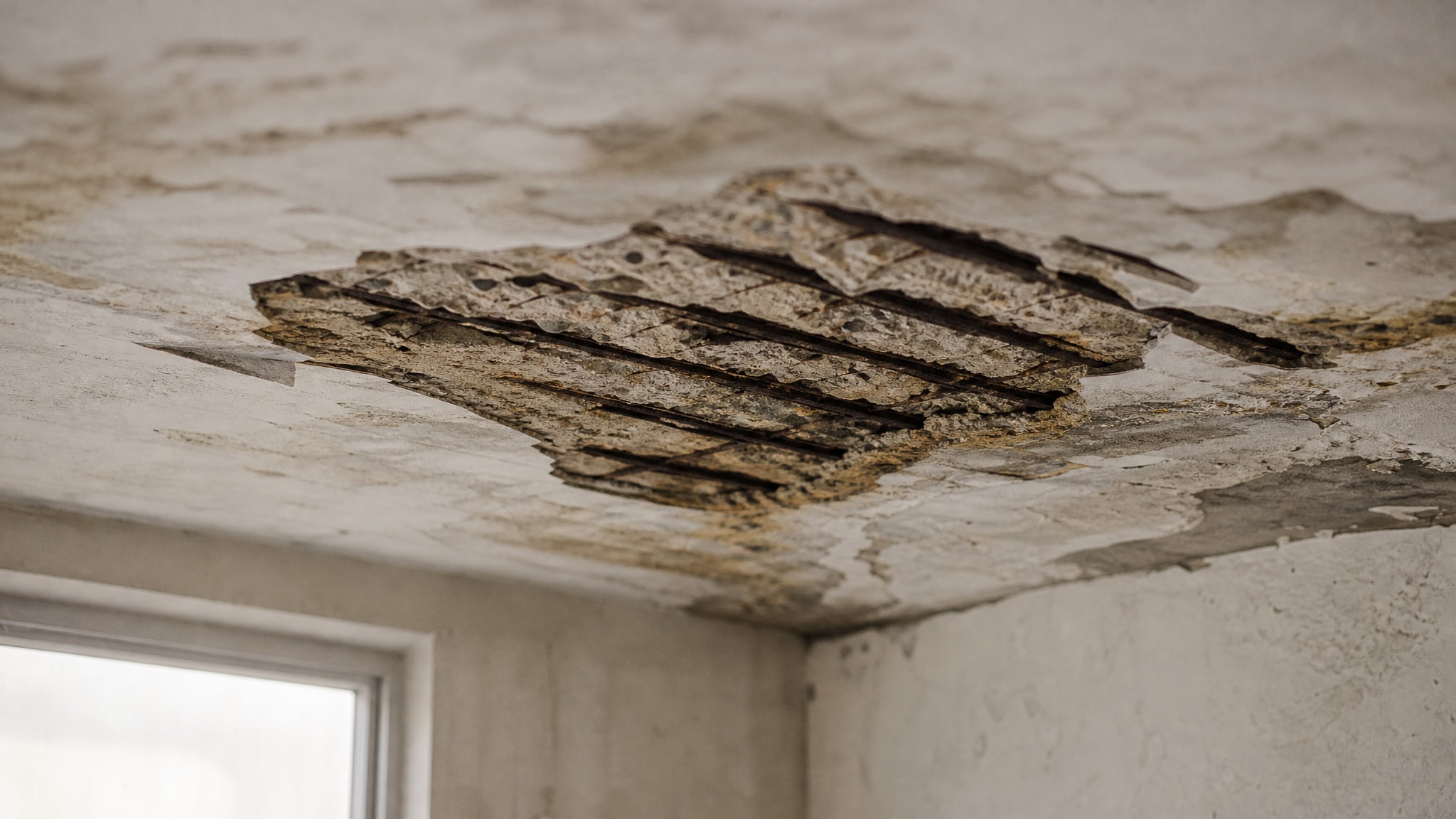
Price gaps in ceiling repair usually come down to method, not profit margin. When you compare HDB ceiling quotes side by side, you're often comparing a surface cover-up against a full structural fix that deals with the actual cause of the deterioration. A contractor offering a low figure may just be planning to skim coat over the damaged area without touching the corroded reinforcement bars hiding under the plaster.
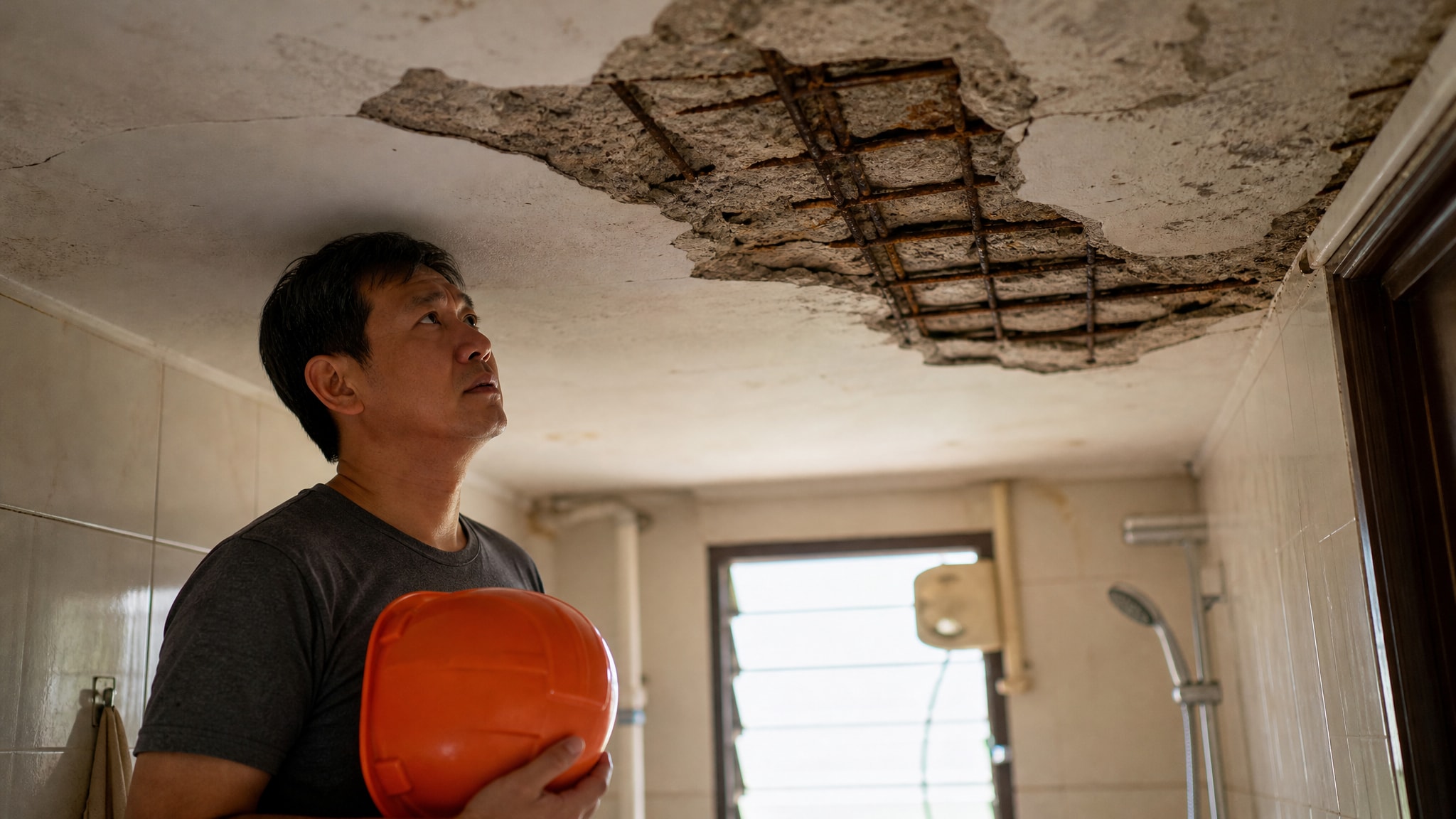
That distinction matters for your long-term maintenance budget and your peace of mind. Structural spalling needs the loose concrete hacked away, the rusted rebar treated with an anti-corrosion coating, and a specialised repair mortar applied before anyone picks up a paintbrush. Contractors who skip these steps can quote cheaper because they're selling less labour and far fewer specialised materials. You need to work out whether each quote treats the concrete cancer underneath or just hides the symptoms for a few months.
Fair ceiling repair pricing reflects the actual condition of your specific HDB slab, not just the square footage of visible damage. Without that baseline, comparing figures is comparing apples to oranges.
Line Items to Compare Across Multiple Quotations
To get ceiling repair quotes you can actually compare, normalise the scope across every bid you receive. A proper quotation breaks down the specifics: hacking depth, rust treatment for exposed rebar, and the number of waterproofing layers going into wet areas. Cheaper bids often leave these line items out altogether, presenting a deceptively simple total that skips the messy, labour-heavy work a lasting fix actually needs.
Check whether the contractor names the exact repair mortar and anti-corrosion primer they'll use on your ceiling. Vague descriptions like "cement repair" or "rust proofing" leave too much room to swap in inferior products once the job starts. A specialist names the material grade suitable for HDB structural elements, because they know how Singapore's humidity affects concrete curing time and bond strength.
Debris disposal and site protection deserve scrutiny too. Hacking concrete throws up a lot of dust and rubble, and that has to be bagged, removed from the estate, and disposed of legally at approved facilities. If a quote doesn't spell out haulage and disposal fees, ask whether those costs will turn up later as a surprise, or whether the contractor plans to leave the mess for you.
Waterproofing testing after the repair is done is another line item that separates thorough specialists from quick-fix operators.
Red Flags in Ceiling Repair Pricing Breakdowns
A vague lump sum with no material specifications is the most common warning sign in a ceiling repair quote. A reputable specialist itemises labour and materials separately, so you know exactly what you're buying. When a contractor won't break down costs, or calls their pricing "all-inclusive" without saying what's included, they keep full control over what work actually gets done.
Exclusion clauses buried in the fine print can turn an affordable quote into an expensive liability once work starts. Watch for language that excludes "unforeseen structural damage" or "additional rebar treatment" without capping what those extras might cost. That leaves you with an open-ended bill, decided entirely by what the contractor later calls unforeseeable, after they've already started hacking your ceiling.
A missing warranty, or a vague guarantee period, should also make you pause. Proper spalling concrete repair comes with a documented warranty covering both materials and workmanship for a set period. Contractors confident in their own work put that in writing. Those expecting callbacks tend to avoid committing to a specific duration.
A quote delivered over the phone or by text, with nothing in writing, gives you no recourse if things go wrong later.
Cheapest vs Best Ceiling Quote: Evaluating Value
On-Site Assessment vs Photo Estimates
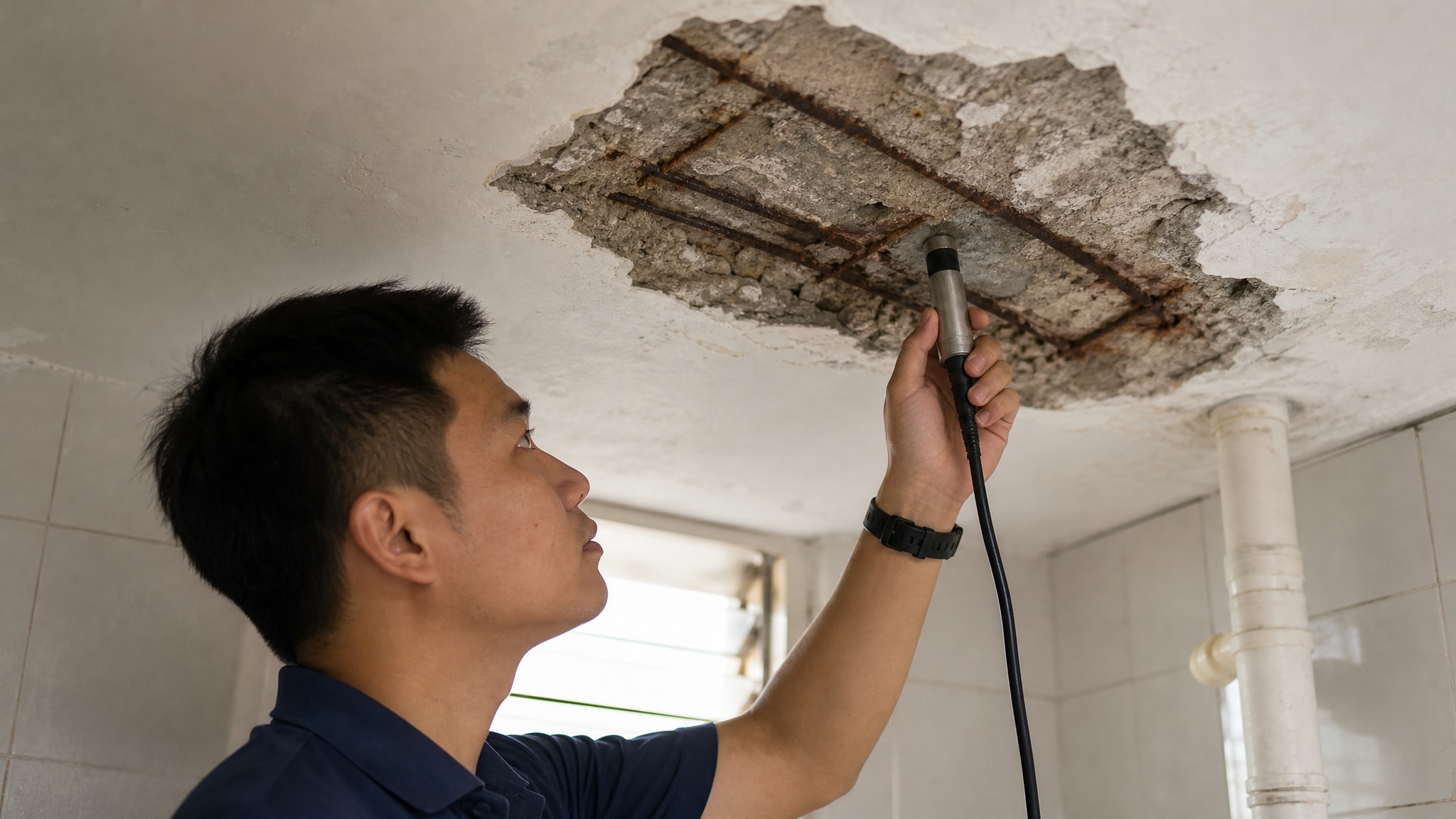
Accurate ceiling repair pricing needs a physical inspection, because that's the only way to see how far the rebar corrosion has spread behind the deteriorated plaster. Photos can't show whether the steel has lost real cross-sectional area, or whether moisture has worked its way deep into the concrete. A contractor who gives you a firm quote from photos alone is either padding the price to cover the unknowns, or planning to upsell you once they open up the ceiling.
You deserve a price based on what's actually there, not a guess. A proper on-site assessment includes tapping tests to find hollow-sounding delamination zones, and moisture meter readings to map where water is getting in. That takes time and know-how, which is why serious specialists usually charge a small inspection fee that comes off the final repair bill. Free photo-based quotes can end up costing more, because they're never precise enough to price complex repair work properly.
A site visit also lets the contractor check access: working around fixtures, managing ventilation in an enclosed toilet, or protecting the unit next door from vibration. All of that affects labour hours and equipment, and all of it affects the real cost of doing the job properly.
Scope Creep Clauses
A contract with no cap on extra charges, once hacking reveals hidden damage, leaves you exposed. Even a thorough site assessment can't see through solid concrete, so some uncertainty is normal in spalling repair work. A professional contractor manages that uncertainty openly, by setting a maximum rate for extra rebar treatment or additional hacking beyond the original scope.
Read any clause on "variations" or "additional works" before you sign anything. A fair contract sets a unit rate for extra work and requires your written approval before proceeding. A problematic one uses blanket wording that allows unlimited charges for anything the contractor later decides was necessary. The best quote pairs a competitive base price with fair, capped terms for genuine surprises, rather than leaving your budget wide open.
Ask directly how the contractor handles it if the damage they find runs more than twenty percent past the quoted scope. The answer tells you whether they treat variation clauses as reasonable risk management, or as a profit opportunity dressed up as contractual necessity.
Specialist Contractors vs General Handymen for Ceilings
General painters and handymen often treat ceiling damage as a surface problem, fixable with filler and paint. They're good at cosmetic touch-ups, but usually lack the diagnostic skill and specialised materials genuine spalling concrete repair needs. Skim coating over rebar that's still actively corroding seals in the problem, and it only gets worse, and harder and more expensive to fix later.
A specialist HDB ceiling contractor knows the local building standards and the particular problems of ageing public housing estates. They know which repair mortars bond properly to decades-old concrete, and how to sequence the work so it doesn't disrupt the neighbours too much. Many also keep up with the spalling repair grants and subsidy schemes that can cut costs for eligible homeowners, knowledge a general tradesperson rarely has.
Specialising doesn't automatically mean a higher price for the same work. Specialists often finish structural repairs faster and with fewer callbacks, because they diagnose it right the first time and use materials built for that specific failure. When you're weighing cheapest vs best, factor in the odds of needing a repeat repair within eighteen months against getting it right the first time. The hourly rate matters less than the total cost over the life of the repair.
Your flat's structural integrity depends on finding someone who treats concrete repair as their actual trade, not as a sideline between painting jobs.
Next Steps After Comparing Your Ceiling Quotes
Check a contractor's credentials before you commit to anything. Confirm their registration with the relevant industry bodies, and make sure they carry valid public liability insurance that covers HDB renovation work. Ask for references from recent spalling repair jobs in similar estates, and actually call those homeowners to ask how the repair has held up. Credentials alone don't guarantee good work, but their absence is a pretty reliable warning sign.
Write down the specific questions the quote comparison raised for you. Ask directly about material brands, warranty length, debris disposal, and the cap on variation charges, rather than accepting vague reassurances. Get the answers in writing, and ask for an updated quote reflecting anything clarified by phone or in person. Vague terms now become expensive arguments later, once memories have faded and only the signed document is left.
If quotes still aren't comparable after all that, pay for a proper site assessment. A modest inspection fee now is cheaper than a misunderstanding halfway through construction, when the leverage has shifted to the contractor. A proper assessment gives you one definitive scope document, and that's what lets you compare bidders fairly.
The goal is finding someone who understands your ceiling problem well enough to price it honestly, not chasing the lowest number attached to the vaguest promise.
Comments