
Best HDB Plastering Contractor for Old Flats in Singapore

Owning an HDB flat built before the 1990s means dealing with maintenance problems that BTO owners never see. The concrete in mature estates has sat through decades of tropical humidity and thermal cycling, and that changes what's actually wrong behind the wall. Standard renovation contractors often misdiagnose it, or patch it in a way that doesn't hold. Finding the best HDB plastering contractor for old flats means looking past general renovation portfolios to find someone who understands aging infrastructure specifically.
This guide covers the repair needs of flats over 30 years old, where the damage you see rarely tells the whole story. Surface plaster damage in a mature estate is frequently a symptom of something deeper, and covering it up doesn't fix it.
Why Older HDB Flats Need Specialist Plastering Repair
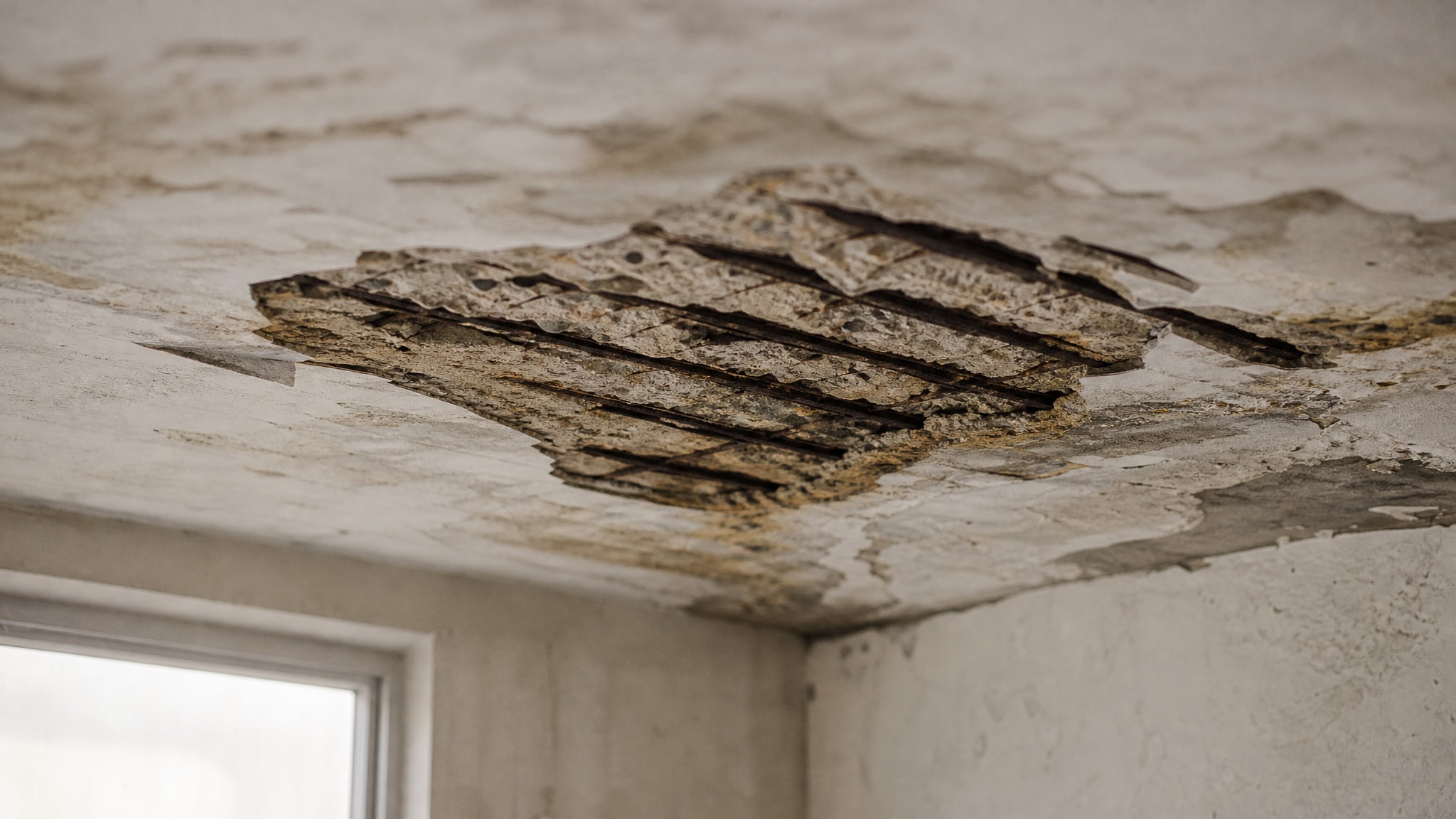
Concrete carbonation works quietly for decades in Singapore's climate. It changes the chemistry inside your walls and ceilings long before you see any damage, lowering the alkalinity that normally protects the steel reinforcement bars. That's why older flats get corrosion-driven spalling that new builds simply don't experience.
Common Deterioration Signs in 30+ Year Old Blocks
In flats built before 1990, surface plaster damage often points to rebar corrosion underneath. That rust has to be exposed and treated before anyone resurfaces anything. Hairline cracks radiating from ceiling joints, or rust stains bleeding through paint, mean the problem runs well past the finish layer. Moisture in aging toilets and kitchens speeds this up, creating pockets of severe deterioration that look nothing like the even, predictable defects you'd find in newer construction.
A standard skim coat over a substrate like that will fail. It treats the symptom while the real cause keeps working underneath. Specialist contractors instead use polymer-modified repair mortars, built specifically to bond with carbonated concrete in older HDB blocks, rather than the standard cement mixes used in new builds. These materials move and breathe the way aged concrete does, so the repair becomes part of the structure instead of just sitting on top of it.
Risks of Using General Contractors on Aging Concrete
We regularly inspect older HDB toilets and kitchens where a previous general contractor's repair failed within months, because the substrate on that degraded concrete was never properly prepared. General renovators are good at making things look finished, but they often can't tell you why the plaster is failing in a 35-year-old flat in the first place. They apply modern finishing techniques to surfaces that needed structural stabilization first. The result is callbacks, and money spent twice.
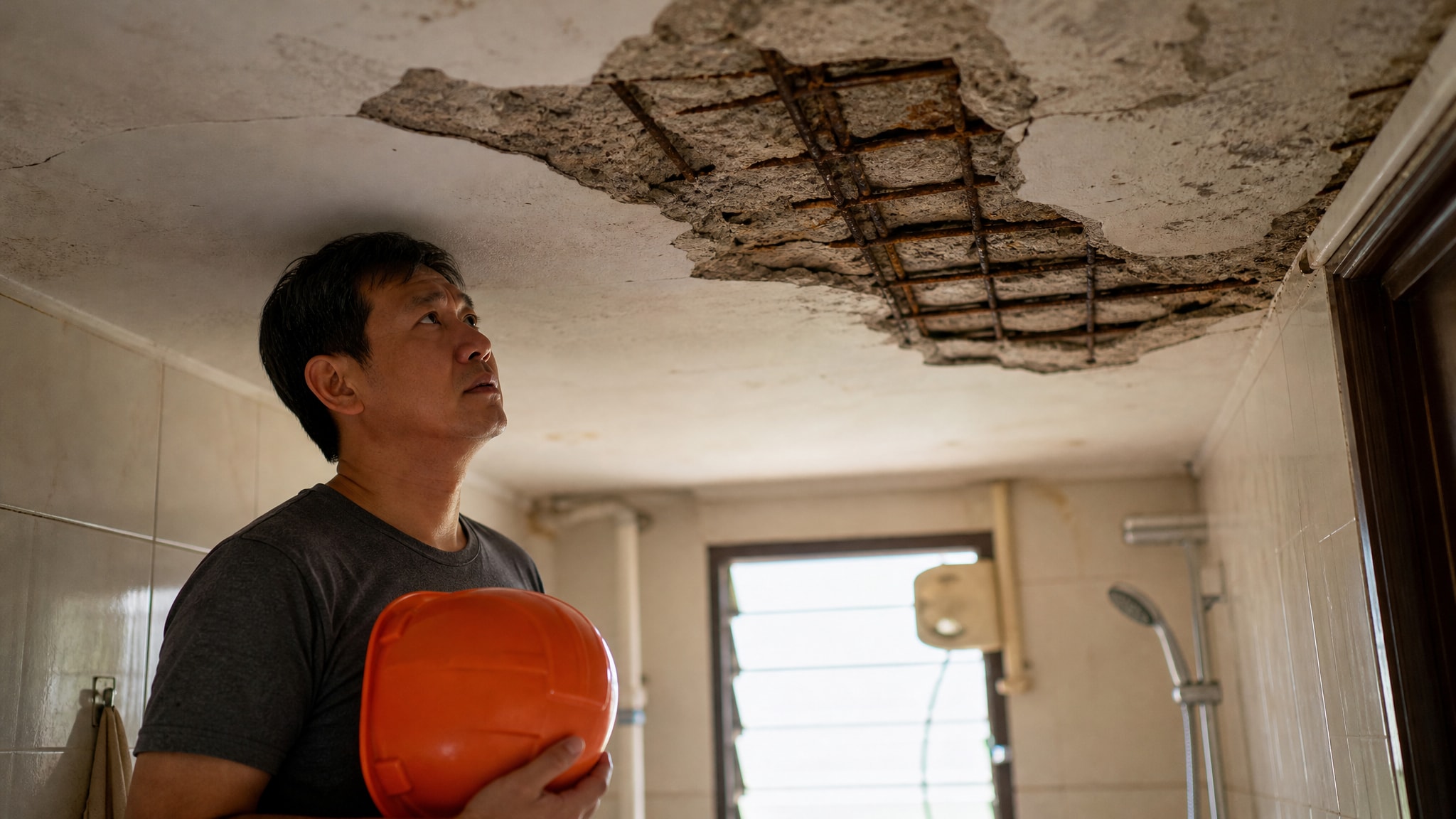
The financial risk doesn't stop at the repair bill, either. New fixtures can get damaged when the underlying issue resurfaces. A contractor who doesn't know aging concrete may also miss real safety hazards, like a loose ceiling slab or a badly corroded structural element. Bringing in a spalling concrete repair specialist from day one breaks the cycle of temporary fixes that plagues so many mature estate renovations.
Key Qualities of the Best HDB Plastering Contractor for Old Flats
Technical competency in aging concrete repair isn't optional for mature estate work, even though you won't find it mentioned in most renovation marketing. Judge a contractor on what they actually understand about how Singapore's older public housing deteriorates.
Proven Experience with Spalling Concrete and Structural Repair
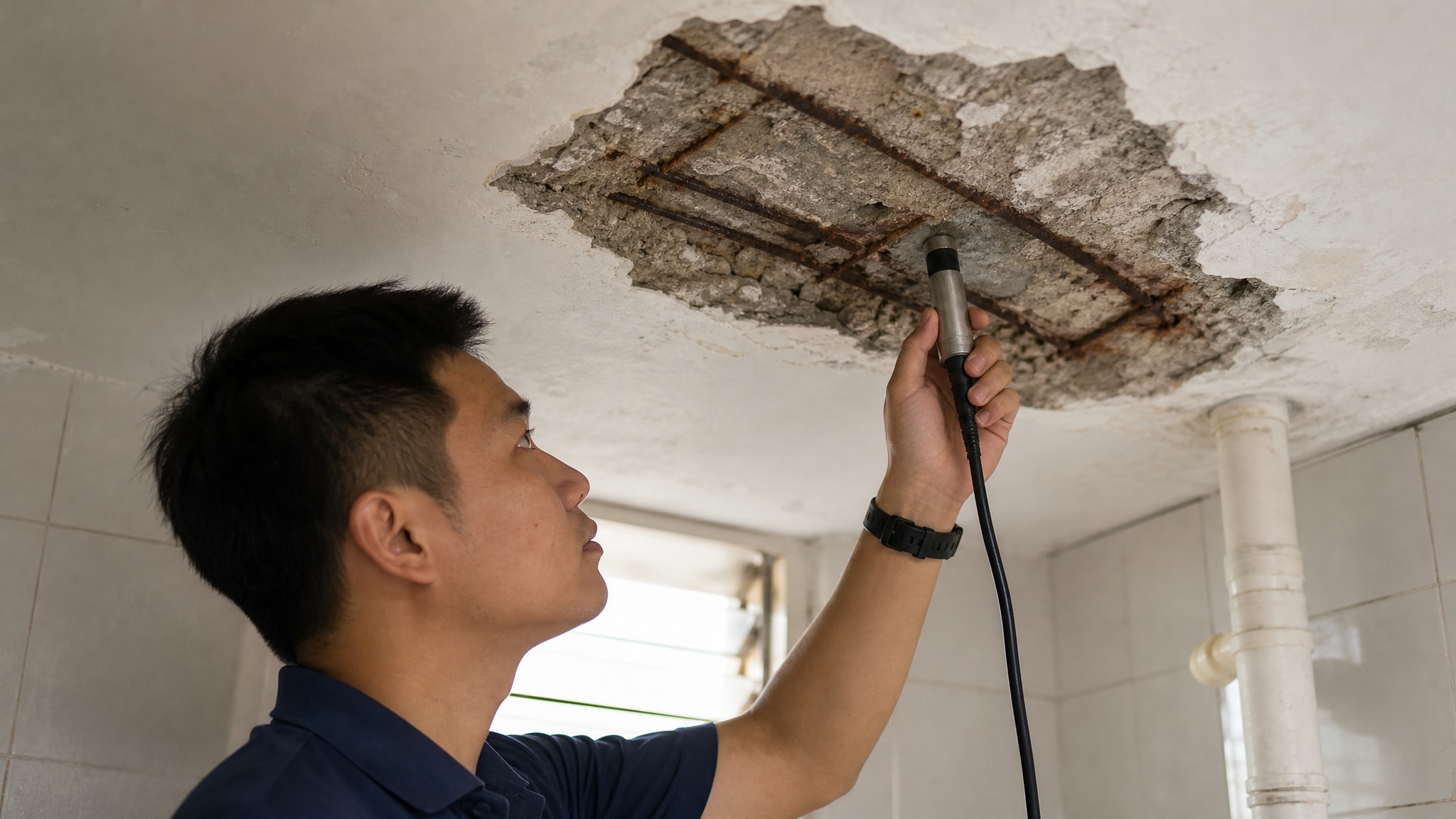
A qualified contractor should be able to spot corroded reinforcement bars behind damaged plaster and tell you the rust treatment plan before any resurfacing starts. That diagnostic step is what separates a real specialist from someone who treats every wall problem as a finishing job. Ask how they assess a substrate, and what specific signs they look for during an initial inspection.
Ask to see completed repairs in flats of a similar age to yours, not just before-and-after photos of cosmetic work. References from other mature estate owners tell you whether the contractor's methods actually hold up over time in Singapore's conditions. Experience with older flat concrete deterioration contractor work shows they've handled the unpredictable conditions that turn up when you open up a decades-old structure.
Understanding of HDB Renovation Guidelines for Mature Estates
HDB guidelines for mature estates can restrict certain hacking methods, or require specific reinstatement standards, and general renovators unfamiliar with older blocks often miss this. Compliance gets more complicated in older buildings too, where a previous owner's unapproved modification may have altered the original structure. Your contractor has to work within these constraints and still deliver a repair that meets current safety standards.
Permitting for structural remediation in a mature estate is different from permitting for a cosmetic renovation in a newer flat. A contractor who knows HDB's rules for aging infrastructure can get approvals through faster and avoid a compliance failure mid-project. That administrative knowledge matters as much as the technical skill, in a sector this regulated.
Assessing Your Flat's Condition Before Hiring a Specialist
Getting the diagnosis right comes before any effective repair, but most homeowners struggle to tell an urgent structural problem from something cosmetic. A bit of basic assessment skill helps you talk to contractors and work out what actually needs doing first.
Distinguishing Surface Cracks from Structural Spalling
Cosmetic shrinkage cracks tend to follow predictable lines along plaster joints or material transitions, and they stay put rather than widening over time. Structural spalling looks and sounds different: a hollow note when you tap it, visible rust staining, or debris actively coming off the ceiling or wall. Knowing the difference stops you from panicking over a minor crack, while making sure a real hazard gets looked at fast.
Dated photographs of how the damage has changed give a contractor useful context, whether they're assessing remotely or in person. Note whether cracks widen with the seasons, whether staining gets worse after rain, or whether new damage shows up next to an area that was already repaired. Those details help a specialist tell active deterioration that needs attention now from old damage that just needs a cosmetic touch-up.
When to Request an On-Site Inspection Versus a Photo Quote
A remote estimate works fine for straightforward cosmetic resurfacing, but it's unreliable for mature estates, where hidden conditions change the scope and cost significantly. A physical inspection lets a contractor probe the suspect areas, check the substrate, and spot secondary damage that a photo simply won't show. Estimates built from photos alone usually need a major revision once the real conditions are exposed, and that means change orders mid-project.
Ask for an on-site assessment whenever the damage involves a wet area, ceiling deterioration, or anything that might be structural. A professional inspection costs far less than discovering an unforeseen problem after work has already started. Recognizing signs your HDB needs inspection early lets you scope the job accurately and budget for it realistically before you sign anything.
Comparing Quotes for Older Flat Plastering and Repair Works
Comparing quotes for mature estate repairs takes more than looking at the bottom line, because an incomplete scope turns into change orders later. Knowing what a comprehensive quote should include protects you from a vendor who won the bid by leaving things out.
What Should Be Itemized in a Fair Quotation
A proper quote for an aging flat spells out substrate preparation, rust treatment, waterproofing reinstatement, and waste disposal as separate line items, not buried contingencies. Vague wording like "make good" or "repair as necessary" means the scoping wasn't done properly, and it will likely cost you more once the work starts. A transparent quote breaks down labour, materials, and ancillary costs separately, so you know exactly what you're paying for.
Check our detailed HDB plastering cost breakdown to see how a quoted price compares with typical market rates for mature estate work. A fair quote reflects how complex aging concrete repair actually is, rather than competing on a base price that only works in a best-case scenario. Contractors who are confident in their own diagnosis welcome a detailed breakdown, because their scope reflects the real work ahead rather than an optimistic guess.
Hidden Costs Specific to Aging HDB Renovations
Rebar replacement you didn't plan for, hacking beyond the original scope, and longer drying times in a humid flat are the usual cost drivers that separate a mature estate repair from new-build finishing work. A quote with no contingency for any of that is practically guaranteeing a variation claim later. A responsible contractor either builds in a reasonable contingency upfront, or tells you plainly when extra charges would apply.
A waterproofing failure found during a toilet or kitchen repair often means a bigger scope than anyone expected at the start. Likewise, an old unapproved modification may need remedial work before an authorized repair can even begin. Knowing these cost drivers helps you tell a genuinely efficient low quote from one that's just deferring the expense to later.
Repair Methods That Last in Mature HDB Estates
A durable repair in an older flat needs materials and techniques matched to the actual deterioration at work, not a generic solution built for new construction. Knowing the options helps you judge a contractor's proposal and ask the right questions about their methodology.
Polymer-modified mortars and anti-carbonation coatings are the standard intervention for Singapore's aging concrete, because they handle structural integrity and future protection in one step. These systems bond to a carbonated substrate while keeping the alkaline environment that stops corrosion from continuing. A temporary patch with ordinary cement render might look identical on day one, but it doesn't have the chemistry to last in degraded concrete.
Wet area repairs need particular care around the waterproofing, since moisture is still the main thing driving deterioration in a toilet or kitchen. A proper repair reinstates the waterproofing membrane as part of the job, not an afterthought, which stops the moisture coming back and undermining even solid plasterwork. Deciding between mould treatment versus re-plastering comes down to whether the moisture source has actually been fixed or just hidden.
The surface finish also has to move with the aged concrete underneath without cracking or peeling early. Flexible paints and breathable sealers outperform rigid finishes in a mature estate, where thermal expansion and substrate movement carry on even after a successful structural repair. Pick a finish that works with the substrate repair you just paid for, instead of one that undoes it.
Planning Repairs Around HDB Resale or Renovation Timelines
When you time plastering repairs matters, both for cost and for outcome, in a mature estate going through any kind of transition. Coordinating structural work with a broader renovation or a resale means understanding how these jobs interact with each other.
Dealing with spalling concrete and deteriorated plaster before starting any cosmetic renovation stops new finishes getting damaged and avoids rework once the underlying issue resurfaces, which it will. Structural repairs kick up dust, vibration, and moisture, and that can ruin fresh paint or new flooring if the sequencing is wrong. Get the foundational work done in full before the aesthetic phase starts, and you protect both the structure and the finish.
For owners thinking about resale, getting repairs done before a valuation inspection supports a fair assessment and an easier negotiation with the buyer. Deterioration flagged during an HDB inspection can delay a transaction or knock down the perceived value by far more than the repair would have cost. Looking into timing repairs before renovation helps you schedule around your transaction milestones and contractor availability.
Catching deterioration early typically costs less than an emergency repair after the damage has spread. Scheduling planned maintenance when contractor demand is lower can also mean better pricing and a faster job than if you wait and have to call someone during peak season.
Getting a Reliable Assessment for Your Older Flat
A professional evaluation from contractors experienced in mature estate restoration is the foundation for any effective repair plan and a realistic budget. A generic renovation quote can't account for the variable conditions you find in decades-old concrete.
Book a no-obligation site inspection with a specialist who knows aging HDB infrastructure, and you get information specific to your flat, not a generalised assumption. That assessment flags urgent safety concerns, separates cosmetic from structural issues, and gives you a realistic idea of scope and timeline. With that diagnosis in hand, you can decide on repair priorities and pick a contractor based on the actual condition of your flat, not guesswork.
A specialist inspection can also turn up chances to combine related repairs, which can bring the overall cost down compared with fixing things one at a time as they come up. Understanding the full extent of the deterioration lets you plan for minimal disruption and a repair that actually lasts. For owners of flats over 30 years old, that kind of targeted expertise is the difference between a lasting fix and a problem that keeps coming back.
Frequently Asked Questions About Older HDB Flat Plastering
How much does spalling concrete repair typically cost in a 30+ year old HDB flat?
Costs vary significantly based on damage extent, location, and accessibility, but mature estate repairs generally exceed new-build plastering due to substrate preparation requirements. Toilet and kitchen repairs involving waterproofing reinstatement typically range higher than dry area work. Obtain itemized quotes from specialists rather than relying on per-square-foot rates designed for new construction.
Can I live in my HDB flat during spalling concrete repair works?
Most repairs allow continued occupancy, though wet area works may temporarily restrict bathroom or kitchen access. Dust containment and noise levels depend on repair scope and methods employed. Discuss phasing options with your contractor if full displacement isn't feasible during the repair period.
How long do properly executed spalling concrete repairs last in older HDB flats?
Repairs using appropriate polymer-modified materials and proper substrate preparation typically last 10-15 years or longer in Singapore's climate. Longevity depends on addressing root causes rather than symptoms and maintaining adequate ventilation in wet areas. Regular inspection of repaired areas helps identify minor issues before they escalate.
Does HDB cover spalling concrete repair costs for flats over 30 years old?
HDB covers spalling repairs only when caused by original construction defects within warranty periods, which have long expired for 30+ year old flats. Owners bear responsibility for age-related deterioration and maintenance in mature estates. Check with HDB directly if you suspect original defect involvement, but plan financially for owner-funded repairs.
Comments