
HDB Bathroom Spalling Concrete Floor Repair Guide

HDB bathroom spalling concrete floor repair is one of the most misunderstood maintenance jobs in Singapore. Most guides focus on ceilings or walls, but the floor is where spalling tends to be most serious, most hidden, and most likely to get worse if you ignore it. If your toilet floor is flaking, pitting, or showing rust stains under or around the tiles, this guide will help you understand what's happening, whether you can patch it, and what a proper repair actually involves.
Why HDB Bathroom Floors Are Prone to Concrete Spalling
The Role of Moisture and Poor Drainage
Bathroom floors face a unique combination of stresses. Unlike a wall or ceiling, a bathroom floor deals with standing water, cleaning chemicals, soap residue, foot traffic, and constant wet-dry cycles, all at once. That combination accelerates concrete deterioration faster than any other area in an HDB flat.
Singapore's tropical climate makes this worse. Year-round high humidity means the concrete substrate in your bathroom floor stays damp for much longer between uses than in cooler climates. Water doesn't just sit on the surface, it finds microcracks, works through the screed layer, and eventually reaches the structural concrete below. If the floor gully drains slowly or the waterproofing layer is breached, the concrete beneath your tiles is sitting in a wet environment most of the time.
Harsh cleaners, bleach, acidic toilet bowl cleaners, also break down the cement matrix over time. Regular heavy use accelerates surface deterioration.
Age and Rebar Corrosion in Wet Areas
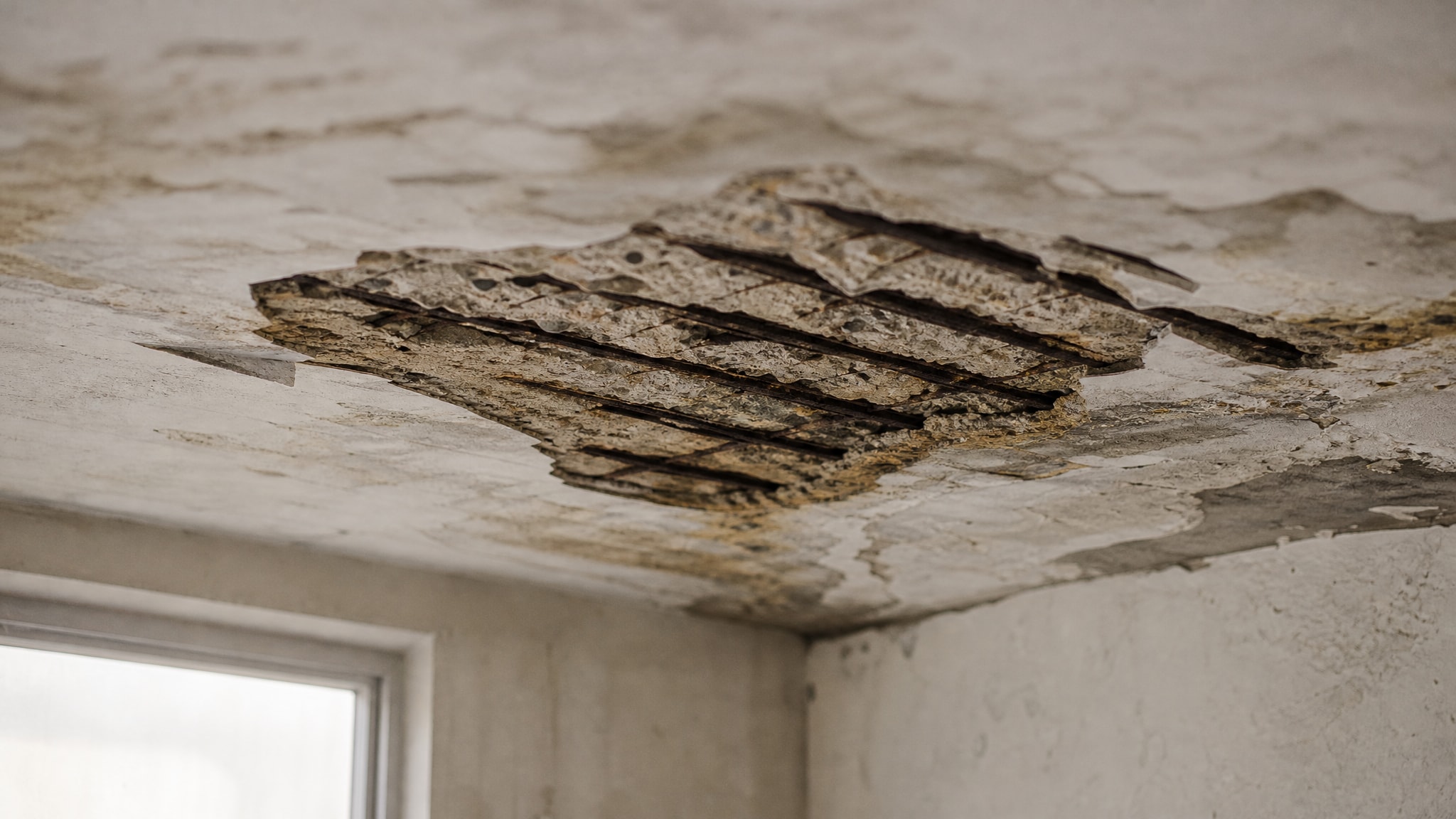
HDB flats built before the 1990s commonly used mild steel reinforcement bars. Those bars are now well past their design service life in high-humidity areas like bathrooms. When water and oxygen reach the rebar, corrosion begins. Rust expands in volume, more than the original steel, and that expansion fractures the concrete from within. The result is flaking, cracking, and eventually the chunks of concrete lifting away from the floor surface.
This is not cosmetic damage. Corrosion-driven spalling is structural in origin, and patching the surface without treating the underlying rust and moisture path just delays the next failure.
Visual Signs of Bathroom Floor Spalling vs Normal Wear
What Spalling Concrete Actually Looks Like Underfoot
Spalling in a bathroom floor often starts subtly. Here's what to look for:
Pitting or cratering, small bowl-shaped depressions in exposed concrete or screed
Flaking layers, sections of the floor surface separating in thin sheets, like pages coming off a book
Rust-coloured staining, orange-brown streaks coming up through grout lines or cracks, indicating rebar corrosion below
Hollow sound, tap the tiled floor with a coin or knuckle; a dull hollow thud (rather than a solid ring) signals delamination beneath
Cracked or lifted tiles, tiles pushed upward or cracked from below, not from surface impact
Floor Spalling vs Grout Failure vs Surface Staining
Not everything that looks like damage is concrete spalling. Here's a simple way to distinguish them:
What you see | Most likely cause | Action needed
Grout lines cracked or crumbling | Grout failure or tile movement | Regrout, not spalling
Tiles stained but sound underfoot | Surface staining or mould | Clean and treat, not spalling
Tiles sound hollow but surface intact | Delamination or void under tile | Investigate, may need repair
Rust staining through grout or cracks | Rebar corrosion, concrete spalling | Repair urgently
Visible pitting, flaking, missing chunks | Active concrete spalling | Repair required
If you see rust staining or hollow tiles alongside surface damage, you are almost certainly dealing with concrete spalling rather than routine wear. That distinction matters because grout repair costs a fraction of what a proper spalling repair costs, and doing the wrong fix wastes money.
Repair vs Replacement: A Simple Decision Tree for HDB Bathroom Floors
The core question most homeowners have is: do I need to hack out the entire floor, or can it be patched? The honest answer depends on the extent and depth of the damage.
Repair is likely sufficient when:
Damage is confined to a localised area, roughly less than one-third of the total floor area
Rebar exposure is limited to one or two spots
Tiles elsewhere are solid and sound underfoot
There is no evidence of widespread delamination across the whole floor
Full replacement is likely needed when:
More than a third of the floor sounds hollow on tap testing
Rebar is extensively exposed or heavily corroded
Multiple tile sections are lifting or cracked from below
The existing waterproofing membrane is compromised across the whole wet area
The waterproofing layer is the deciding factor. Based on our experience repairing HDB bathroom floors across Singapore, the waterproofing membrane is compromised in the majority of spalling cases. A patch-only repair that ignores the membrane typically fails within a year or two, water gets back in through the same path, corrosion continues, and the spalling recurs. Even a localised patch job should include waterproofing treatment of the affected area, not just a fill-and-tile.
Step-by-Step Repair Process for Spalling Concrete Bathroom Floors
Assessing the Damage and Removing Loose Concrete
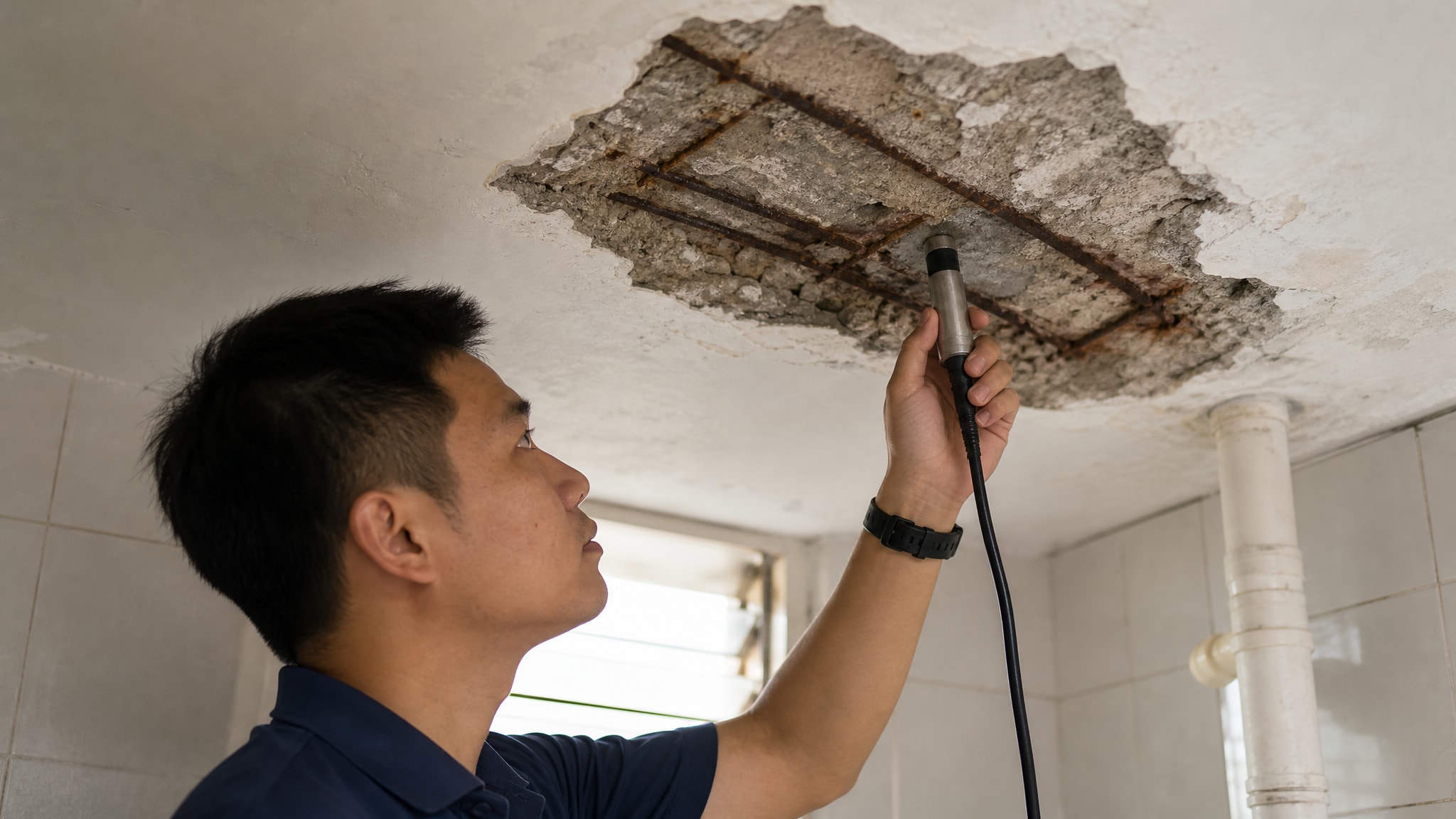
A proper repair starts with sound testing, tapping the entire floor area to map which sections are solid and which are hollow. Don't assume the visible damage shows the full extent. Hollow areas extend further than what you can see, and removing only the obviously damaged material leaves a repair that will fail at its edges.
Once the damaged zone is mapped:
Remove tiles over the affected area carefully, both damaged tiles and sound tiles in the repair zone
Chip out all loose and delaminated concrete, this must go back to solid, sound material, not just the surface layer
Clean the exposed area thoroughly, remove dust, debris, and any weak material
Treat exposed rebar, wire brush off loose rust, then apply a rebar rust-inhibiting primer or treatment before patching. Skipping this step is the most common reason patch repairs fail early
Patching, Waterproofing, and Finishing
With solid substrate exposed and rebar treated, the repair sequence is:
Apply a bonding agent or primer to the prepared concrete surface, this ensures the patch material adheres properly
Fill with a polymer-modified repair mortar, this is more flexible and adhesive than standard cement, which matters in wet areas subject to movement
Allow the patch to cure fully before proceeding, rushed curing causes surface failures
Apply a waterproofing membrane over the patched area and any surrounding zone that may have been compromised. In bathroom wet areas, this is not optional, it is the layer that prevents moisture from reaching the structural concrete again
Allow the waterproofing to cure per the product specification, typically 24–48 hours minimum
Lay new tiles with appropriate adhesive for wet area use, then grout and seal
Skipping the waterproofing step is the single most common reason spalling concrete bathroom floors recur after repair. The concrete may look fixed, but without the membrane restored, water gets in through the same path and the cycle starts again.
HDB Toilet Floor Repair Cost and Timeline: What to Expect in 2026
Costs in Singapore vary depending on the extent of damage, tile choices, and whether waterproofing needs to be fully reinstated. In general terms:
Localised patch repair (small affected area, limited tile replacement, waterproofing patch): the most affordable option, significantly cheaper than partial or full replacement
Partial floor repair (one-third or more of the floor, full waterproofing of the wet zone, tile matching): mid-range cost; tile matching can add cost if original tiles are no longer available
Full bathroom floor replacement (hack out all tiles, full concrete repair, full waterproofing membrane, new tile throughout): the most expensive option, but sometimes the only practical one for older flats with widespread damage
For a localised patch repair, most jobs complete in one to two days, one day for the concrete work and waterproofing application, one day for tiling once the membrane has cured. Full floor replacements take longer because the waterproofing membrane needs adequate curing time before tiling begins, typically adding one to two extra days.
HDB flats are subject to HDB's renovation guidelines. Hacking work and wet area alterations generally fall under permitted renovation works, and some structural works require prior approval. Your contractor should be familiar with these requirements, if they are not, that is a red flag.
Floor Spalling Prevention in HDB Bathrooms: Keep It From Coming Back
Once your floor is repaired, the goal is to extend the life of the work. Prevention is straightforward:
Keep the floor gully clear, a blocked or slow-draining gully means water sits on the floor longer, accelerating moisture ingress
Fix leaks immediately, a dripping tap, a leaking toilet seal, or a gap in silicone sealant around the base of fittings all introduce water at the substrate level
Improve ventilation, use the exhaust fan during and after showers; good airflow shortens drying time
Avoid heavy use of harsh acidic cleaners, occasional use is fine, but daily or heavy application of bleach or acid-based cleaners degrades both grout and the cement matrix over time
Inspect grout and sealant annually, cracked grout is a direct water pathway. Regrout early and it stays cheap; ignore it and water works its way down to the concrete
Floor spalling prevention in HDB bathrooms starts with the repair being done correctly the first time. A proper waterproofing membrane, correctly applied and fully cured, is the best long-term protection you can give a bathroom floor. After that, maintenance is simple, keep water moving off the floor and out of the flat.
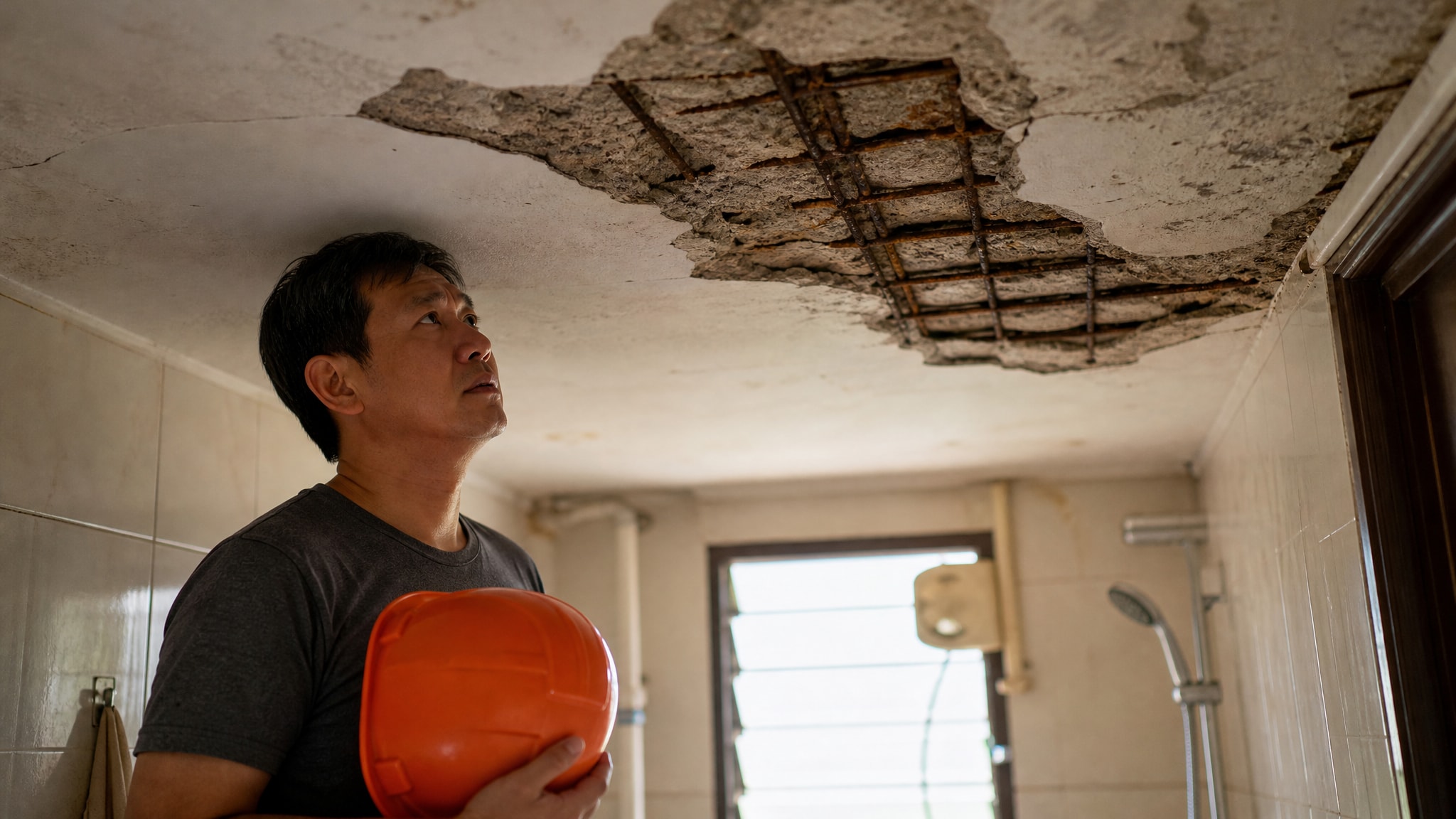
If you are seeing rust stains, hollow tiles, or pitting in your HDB bathroom floor and are not sure how extensive the damage is, get it assessed sooner rather than later. Localised spalling that is repairable today can become a full floor replacement job if left another year.
Comments