
HDB Toilet Ceiling Water Stains Repair: Why Stains Return

Updated: Aug 18

If you've spotted a brown ring or yellow patch spreading across your toilet ceiling, you're not alone. HDB toilet ceiling water stains repair is one of the most common jobs we see in Singapore, and it's also one of the most mishandled. Homeowners bleach the patch, slap on a coat of paint, and call it done. Six weeks later, the stain is back. This guide explains what's actually causing the problem, how to tell a water stain from mould, and what a proper fix looks like from start to finish.
What Causes Water Stains on Your HDB Toilet Ceiling?
Not every ceiling stain has the same origin. Getting the cause right before you start spending money on repairs saves a lot of grief.
Leak from the Unit Above
This is the cause most homeowners jump to, and sometimes they're right. The upstairs neighbour's toilet floor tiles may have a hairline crack or a failed waterproofing membrane. Water seeps through slowly, travels along the concrete slab, and appears as a brown ring on the ceiling below, sometimes several metres away from the actual crack. That's why the stain position doesn't always match the source position.
Signs pointing to an inter-unit leak: the stain appears or worsens after rainfall or after the neighbour uses their bathroom, the plaster feels damp to the touch, and the stain has a defined ring edge where water has dried and left mineral deposits. For a fuller diagnosis, see how to assess a water leak on your HDB ceiling.
Condensation and Poor Ventilation
In Singapore's year-round humidity, bathrooms without exhaust fans are prone to condensation-driven ceiling stains. This is one of the most common jobs Leng Painter is called to assess, and it's frequently misdiagnosed as a leak from the unit above. When a bathroom has no window or an underpowered fan, warm moist air from showers hits the cooler ceiling surface and condenses repeatedly. Over months, this produces diffuse grey or yellow patches spread across a wider area rather than forming a tight ring.
Signs pointing to condensation: staining spreads evenly across the ceiling rather than concentrating in one spot, there's no corresponding wet patch in the unit above, and the ceiling dries out during dry spells but returns when humidity is high.
Ageing Pipes and Internal Plumbing
Older HDB flats, particularly those built before the 1990s, have plumbing that is now several decades old. Corroding pipe joints, slow drips from concealed water supply pipes, and failing waste pipe seals can all introduce moisture into the ceiling slab without any involvement from your upstairs neighbour. The stain often appears directly below a toilet cistern, basin, or concealed pipe run.
Signs pointing to internal plumbing: the stain is directly under a known pipe route, it worsens regardless of what the upstairs unit does, and a plumber finds no active leak from above.
HDB Ceiling Water Stain vs Mould, Knowing the Difference
These two problems look similar at a glance but need different treatments.
Water stains are typically brown, yellow, or rust-coloured. They form defined rings or tide marks, the edge is where the water dried and left behind mineral deposits and rust from the rebar or mesh within the slab. The surface under a pure water stain feels dry once the leak source is resolved.
Mould appears as dark green, grey, or black patches with a fuzzy or powdery texture. It spreads outward from a damp area and doesn't have the clean ring edge of a dried water stain. Mould spores colonise any damp, organic material, plaster included.
The problem is that stains and mould frequently appear together. A brown stain that develops a dark, furry border in the following weeks is a reliable sign that mould spores have colonised the damp plaster. Wiping that border with bleach kills surface spores but doesn't remove the colony embedded in the plaster. Repaint without antifungal treatment and the mould returns through the new paint within weeks.
For persistent or spreading mould, bathroom mould treatment and prevention explains what proper antifungal treatment involves before any repainting starts.
Why Toilet Ceiling Brown Stains Keep Coming Back
The short answer: the source was never fixed.
Water travels through concrete before it becomes visible on the surface. By the time you see a brown stain on your toilet ceiling, moisture has already been moving through the slab for some time. The stain is the last sign, not the first.
Surface treatment without source repair is the single biggest reason ceiling stains recur. Until the moisture pathway is closed, whether that's a pipe joint, a failed tile bed, or poor ventilation, any cosmetic fix will fail within weeks in Singapore's climate. Bleaching a stain removes the discolouration temporarily. Painting over it covers it up. Neither stops water from moving through the slab, so the stain reappears as soon as moisture wicks back through the new paint layer.
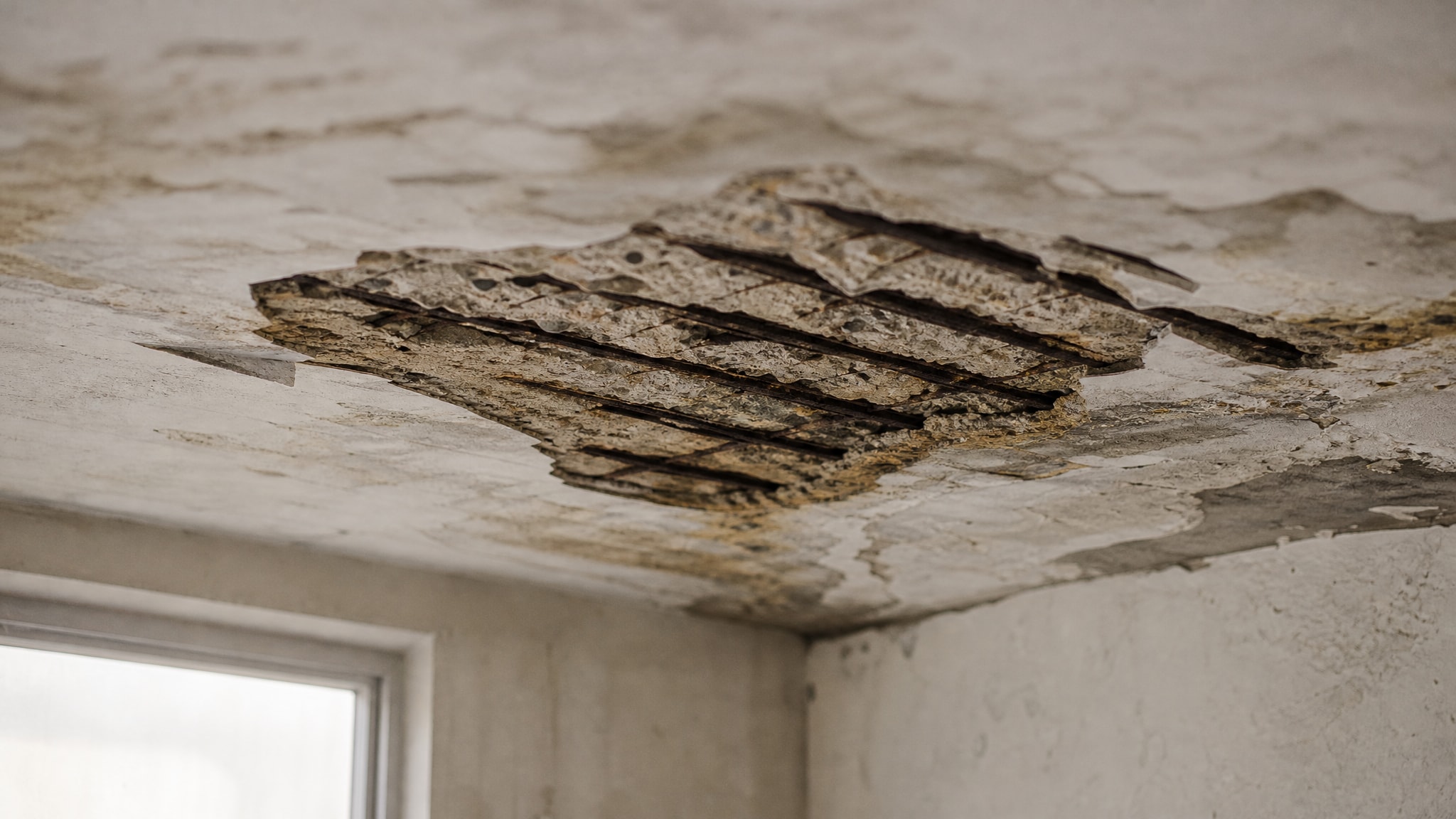
HDB flats built before the 1990s used plaster finishes that are now several decades old. When water repeatedly saturates aged plaster, it softens and loses adhesion. At that point, a repaint won't hold regardless of how good the paint is, the substrate itself has failed.
Can You Paint Over Water Stains on an HDB Ceiling?
Technically, yes, but only under the right conditions.
A stain-blocking primer (shellac-based or oil-based alkyd) applied over a fully dried, structurally sound ceiling will seal the stain and stop it bleeding through the topcoat. This is a legitimate cosmetic fix when the leak source has been confirmed resolved and there is no mould or soft plaster.
The two conditions that make painting a bad idea:
The ceiling isn't fully dry. In Singapore's humidity, a ceiling that feels dry to the touch may still hold moisture deeper in the slab. Painting over residual moisture causes the paint to bubble and peel, often within weeks.
The plaster is soft, bulging, or crumbling. Press the stained area gently. If it gives, sounds hollow when tapped, or shows hairline cracks radiating from the stain, the plaster substrate has failed. Paint over it and the plaster will continue to detach beneath the coating. Replastering is the only fix.
For guidance on what replastering involves and what it costs, see HDB plastering repair costs in Singapore.
If your ceiling is also showing flaking or peeling alongside the stain, paint peeling from water damage on HDB ceilings covers that scenario specifically.
The Right Repair Process: Dry, Plaster, Treat, Paint
Step 1, Stop the Source and Dry the Area
No repair holds until the source of moisture is resolved. That means confirming whether the leak is from the unit above, an internal pipe, or condensation, and fixing it before touching the ceiling surface. Once the source is stopped, the affected area needs time to dry fully. In Singapore's climate, this can take several days even with a dehumidifier running. Rushing this step is the most common reason repairs fail.
If the leak involves the unit above, HDB requires affected parties to engage licensed contractors for any structural or waterproofing repair. Read more about what to do when the leak is coming from the unit above.
Step 2, Remove Damaged Plaster and Check for Mould
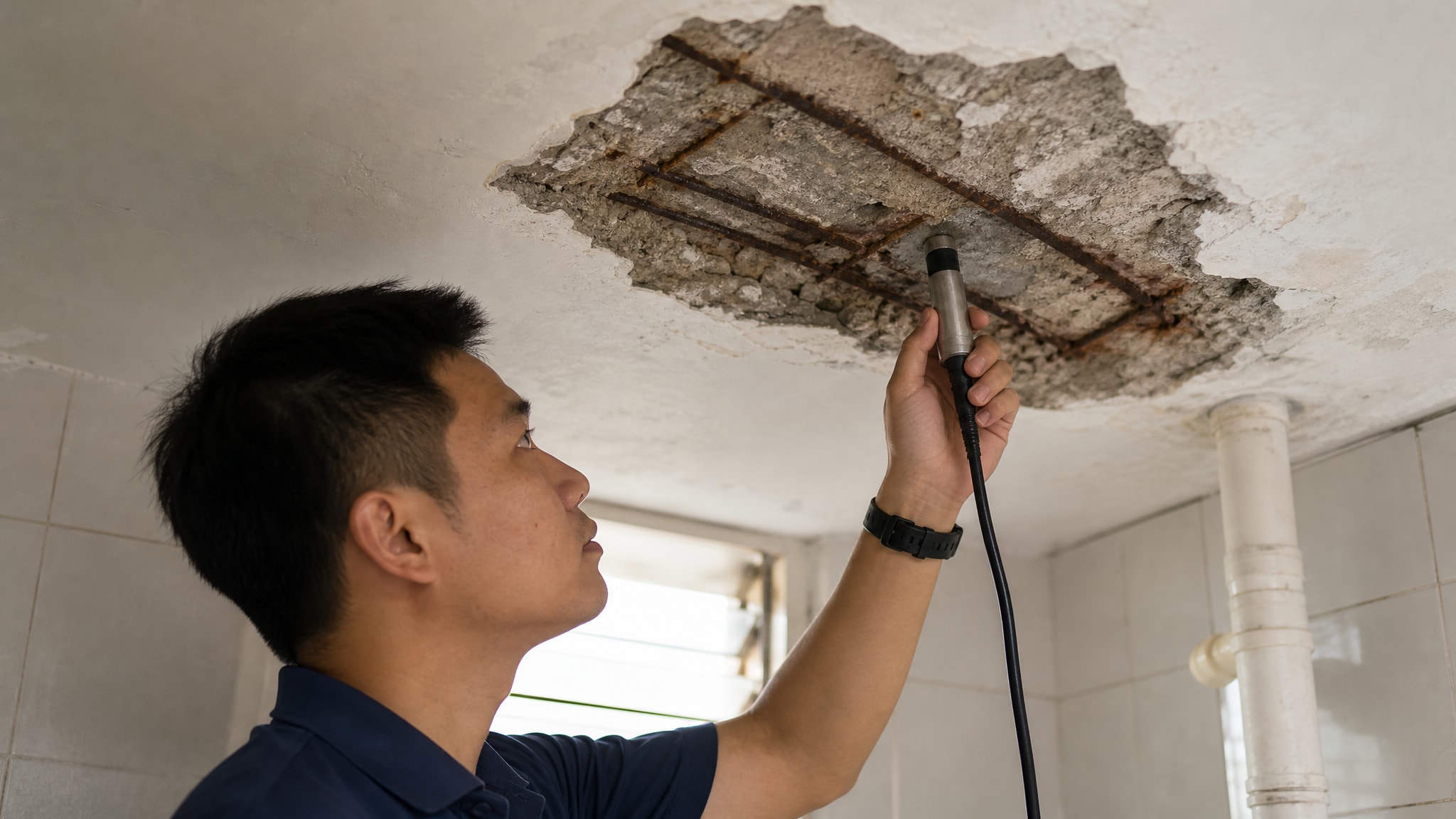
Once the area is dry, the damaged plaster must be hacked out, not painted over, not patched on top of. Soft, delaminated, or spalling plaster has lost its bond to the concrete slab. Applying new plaster over it is like tiling over an unsound screed: the repair fails from below.
After hacking, the exposed concrete is inspected for mould. If mould is present, antifungal solution is applied and left to cure before any new material goes on. Skipping this step means the mould colony survives beneath the new plaster. A professional clean-down of the substrate is standard practice before the replastering stage, see toilet ceiling stain removal in Singapore for what that involves.
Step 3, Replaster, Prime, and Paint
New plaster is applied to the hacked-out area, feathered to match the surrounding ceiling level, and left to cure. In Singapore's humidity, curing time matters, new plaster applied too wet or painted too soon will crack or fail to bond.
Once cured, a stain-blocking primer goes on before the finish coat. This seals any residual mineral deposits that might bleed through. Two topcoats of a quality interior ceiling paint complete the job. If the plaster work is done well, the result should be invisible against the surrounding ceiling.
Repair costs vary depending on the size of the affected area, whether structural hacking is needed, and whether the source unit is also involved in waterproofing work. If the damage covers a large area, it's worth reading about whether to repair or replace your HDB ceiling before committing to a repair approach.
When to Call a Specialist for Your HDB Toilet Ceiling Leak
DIY cleaning is reasonable when:
The stain is small and isolated
The ceiling surface is dry, hard, and structurally sound
The leak source has been confirmed resolved
There is no visible mould or fuzzy growth
Call a specialist when:
The stain keeps coming back after cleaning or painting
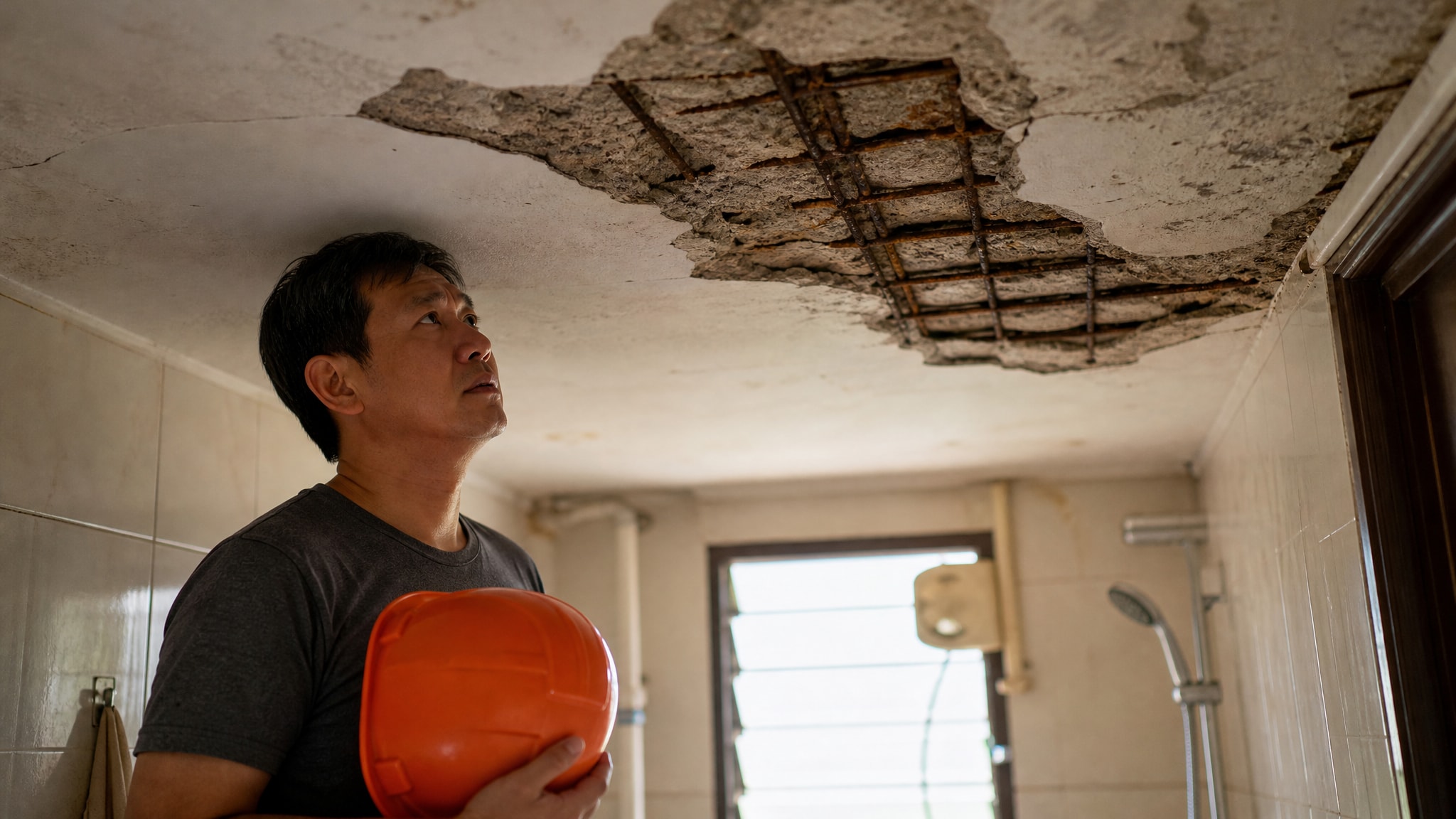
The plaster feels soft, sounds hollow, or is visibly bulging
There is mould alongside or spreading from the stain
The stain is growing in size
The leak appears to involve the unit above, HDB's guidelines require licensed contractors for inter-unit leak repairs
If you're unsure how extensive the damage is, an on-site assessment is the only reliable way to find out. Leng Painter carries out no-nonsense ceiling assessments across Singapore, we identify the source, tell you what needs doing, and give you a clear repair plan before any work begins. If your toilet ceiling stain is recurring or getting worse, get in touch and we'll come and take a look.
Comments