
HDB Outdoor Area Spalling Concrete Repair

Updated: Aug 18

Spalling concrete is a common problem in HDB flats, but when it happens on a balcony or void deck, the stakes are higher and the repair is more demanding. HDB outdoor area spalling concrete repair is a different challenge from fixing a bedroom ceiling, and treating it the same way is a mistake that leads to patches failing within months. If you've noticed crumbling concrete, rust stains, or bubbling paint on your balcony slab, or loose chunks above a void deck, this guide covers what you need to know.
For broader background on what drives spalling in the first place, see our article on what causes spalling concrete in HDB flats.
Why Outdoor Spalling Concrete Is a Different Problem
Indoor spalling, say, a kitchen ceiling or bathroom soffit, happens in a relatively stable environment. Humidity is a factor, but temperatures stay moderate and rainfall never touches the surface directly. Outdoor concrete on balconies and void decks has none of those advantages.
How weather exposure accelerates outdoor concrete deterioration
Singapore's average annual rainfall exceeds 2,300 mm, and relative humidity routinely stays above 80%. Those conditions drive chloride ingress and rebar corrosion in exposed concrete far faster than anything seen indoors. Add direct UV exposure, which degrades the surface layer, and thermal cycling, concrete expanding in afternoon heat and contracting in overnight rain, and you have a recipe for accelerated deterioration.
The result: rebar corrosion begins earlier, travels deeper, and produces more aggressive surface pop-offs. In our experience repairing HDB balconies across Singapore, outdoor jobs consistently show deeper rebar corrosion than equivalent indoor cases. The combination of tropical rain and direct sun speeds up carbonation noticeably.
That's why HDB outdoor area spalling concrete repair requires materials and methods rated for Singapore's climate, not standard interior patch products.
Common Outdoor Areas Affected in HDB Flats
Balcony spalling concrete repair
The balcony slab, including the soffit underneath and the slab you walk on, belongs to the flat owner. HDB is not responsible for repairing it; the cost falls on you. A typical mid-floor HDB balcony slab develops spalling at the soffit edge first, where rainwater pools and drains poorly, rather than at the centre. That makes edge inspections the most important early check.
Balcony spalling concrete repair is also complicated by access. Working on a soffit edge several floors up requires proper scaffolding or rope access, not a ladder. Any contractor who suggests otherwise is cutting corners on safety.
Void deck concrete repair
Void deck columns, overhead slabs, and common corridor ceilings are classified as common property under HDB's framework. That means repair responsibility and cost allocation differ from a privately owned balcony, a distinction many flat owners don't discover until a defect notice arrives.
For void deck concrete repair, the Town Council or HDB manages the works. If you spot spalling in a void deck area, report it to your Town Council promptly. For spalling on your own balcony or the underside of your unit's slab, that's your call to act on.
Balcony Safety and Spalling: How Serious Is the Risk?
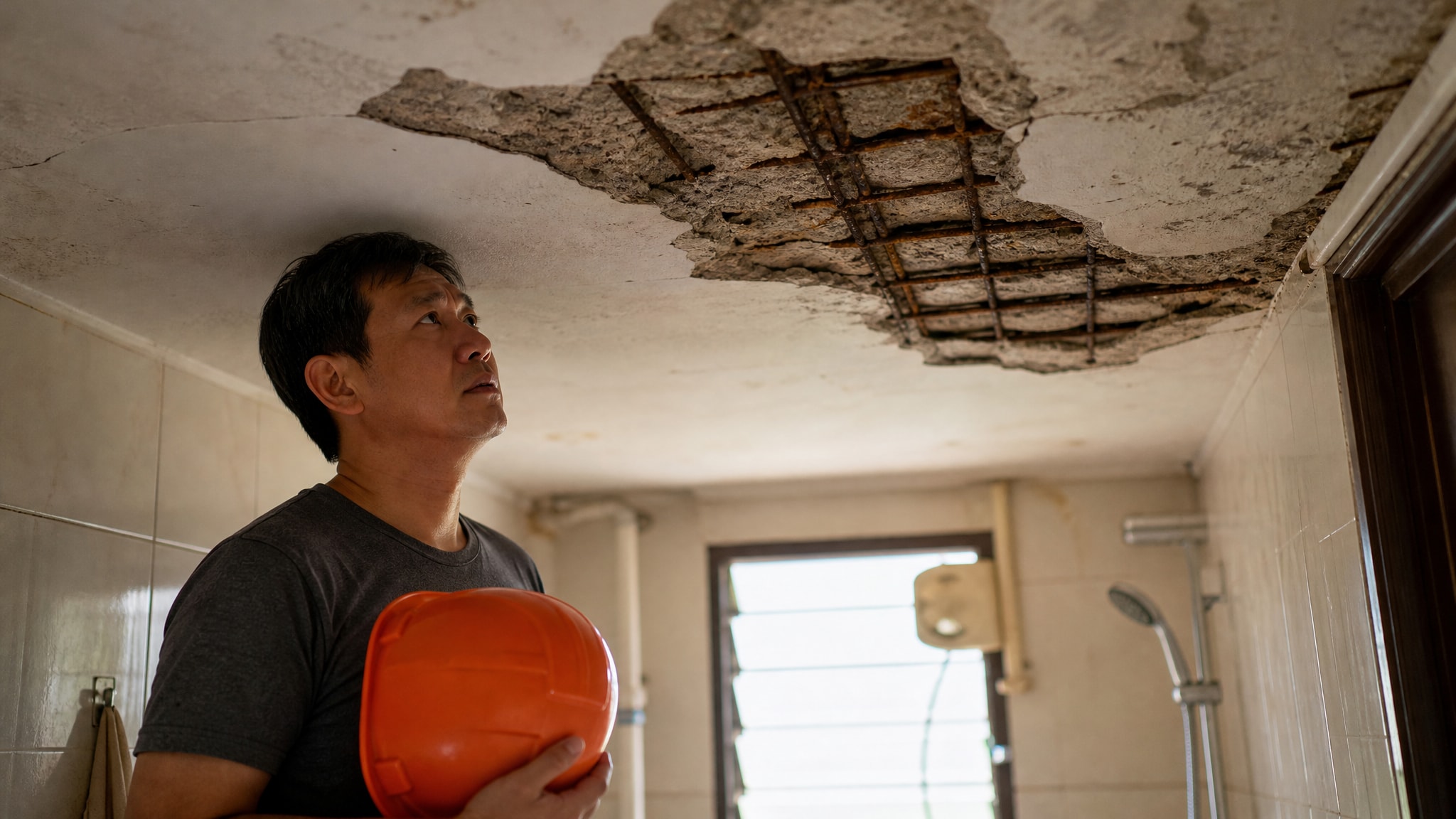
Balcony safety and spalling is not a cosmetic issue. Concrete chunks falling from a balcony soffit can injure residents on lower floors, damage property, and pose a serious risk to children and pets. In Singapore, where balconies overhang common walkways, a falling piece of concrete has nowhere safe to land.
The risk grows the longer you wait. Once rebar corrodes and expands, it pushes off more surrounding concrete. What starts as a small flake can become a loose slab section within a year or two under Singapore's weather conditions.
Watch for these warning signs:
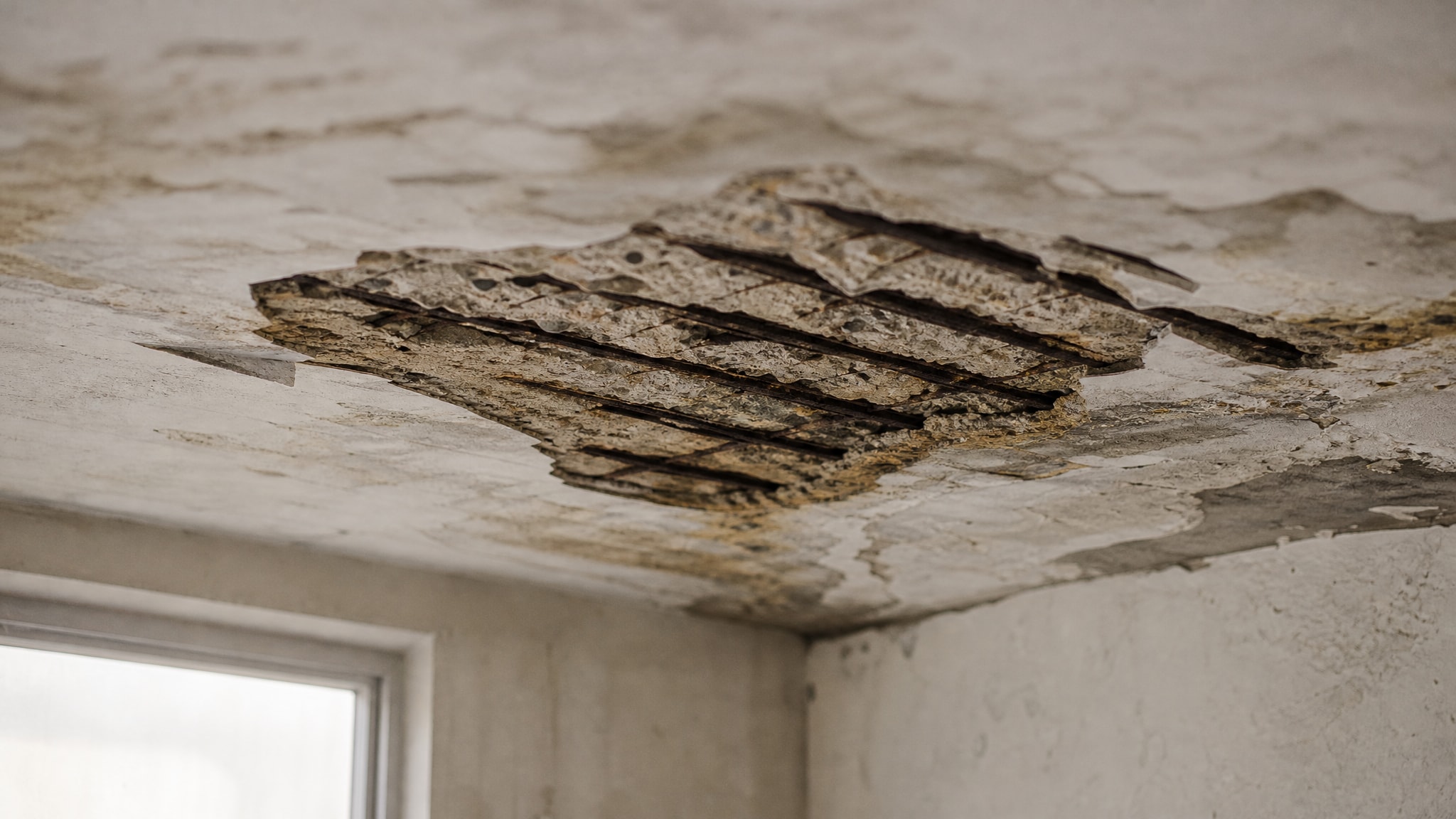
Rust-coloured staining running down the balcony face or soffit, rebar corrosion is already underway
Hairline cracks along the slab edge or around fixing points
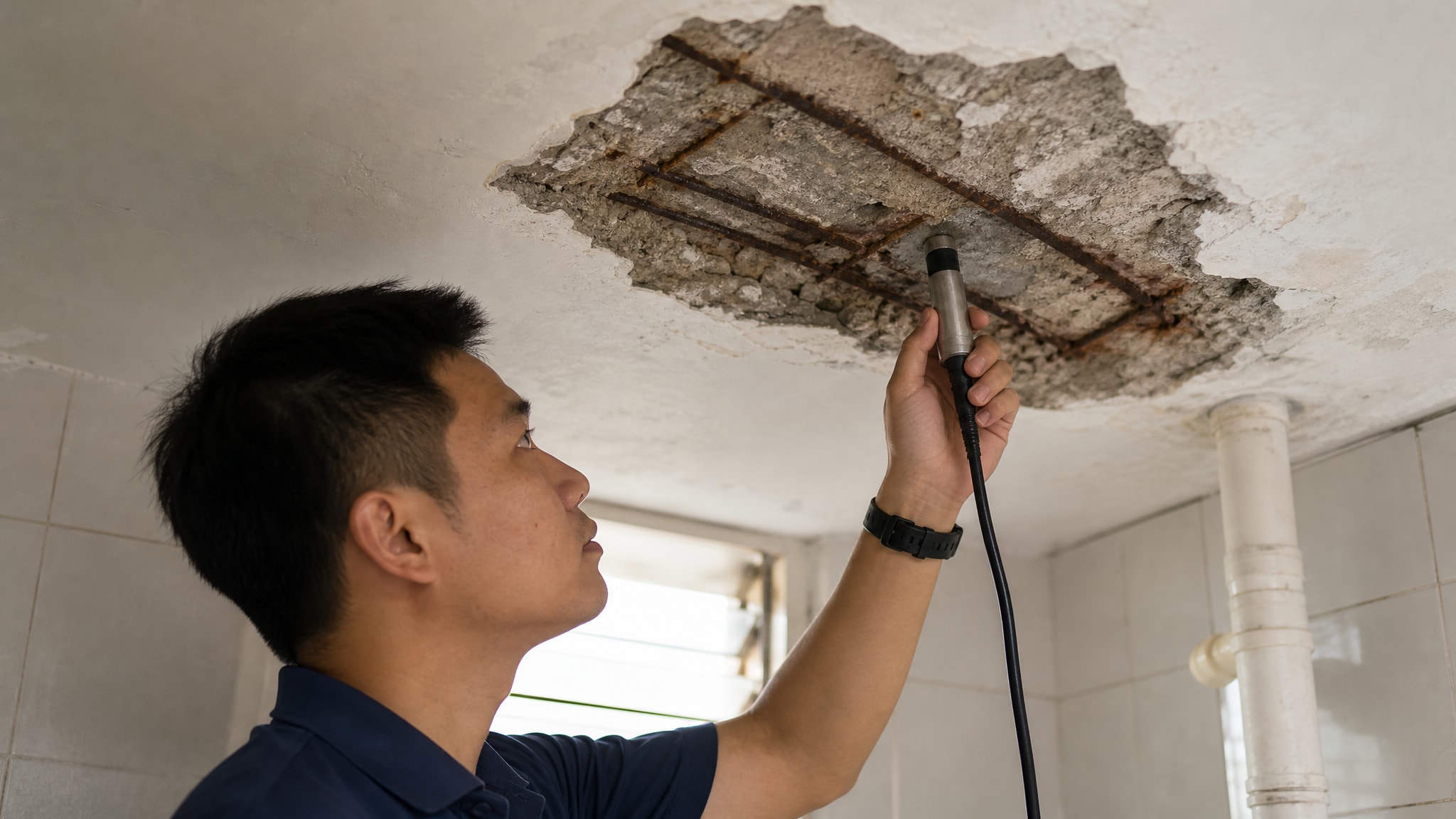
Hollow sound when you knock on the concrete surface, a dull thud means the concrete has delaminated beneath
Visible rebar or concrete chunks already missing
If you see any of these, treat it as urgent. Don't wait for the next inspection cycle.
Rapid Assessment: Spotting Outdoor Concrete Damage Early
You don't need a contractor to do a first-pass check. Walk around your balcony and look at the soffit from below (use your phone camera if the angle is awkward). Run through this quick checklist:
Cracks, any crack wider than a hairline on an outdoor slab deserves attention. For help distinguishing crack types, see our guide on identifying hairline vs structural cracks in HDB concrete.
Paint bubbling or blistering, this often means moisture is trapped beneath the surface and spalling is forming underneath.
Rust staining, orange or brown streaks signal corroding rebar below.
Exposed or visible rebar, if steel is already showing, the repair is no longer optional.
Missing chunks or pitting, surface pitting means the concrete matrix is breaking down from weathering.
Dark damp patches, persistent wet spots that don't dry after a sunny day indicate water is sitting inside the slab.
Catching problems at stages 1–2 is always cheaper than waiting until stage 4–6. For a fuller picture of what repair costs look like, see our article on budgeting for spalling concrete repairs in your HDB flat.
How Outdoor Spalling Concrete Repair Works
Outdoor spalling repair follows a structured process. Shortcuts at any stage lead to patches that crack and fall away within months.
Repair methods built for weather exposure and durability
Step 1, Chipping out loose concrete. All delaminated and loose material is removed. This goes beyond the visible damage; the edges of the repair zone are cut back to sound concrete. Leaving weak concrete beneath a patch is the most common cause of early repair failure.
Step 2, Treating corroded rebar. Exposed steel is cleaned of rust by wire brushing or grinding, then coated with an anti-corrosion primer. Skip this step and corrosion continues under the new patch, the problem returns.
Step 3, Applying polymer-modified mortar. Polymer-modified repair mortars are the right choice for outdoor concrete patches in tropical climates. They resist the moisture cycling and thermal expansion that cause ordinary cement patches to crack and delaminate within a year. Standard cement mix is not suitable for balcony soffit or void deck repairs in Singapore's conditions.
Step 4, Weatherproof sealing. Once the mortar has cured, a waterproof coating or sealant is applied over the repair and the surrounding area. This slows future water ingress and extends the life of the repair significantly.
The full process takes longer than an indoor job and requires materials that cost more. Done properly, a repair should last well over a decade. Our complete guide to spalling concrete repair in Singapore covers the repair process in more detail if you want to go deeper.
If you're unsure whether your balcony soffit needs patching or something more significant, our guide on when to repair versus replace your HDB ceiling walks through the decision.
Getting the Right Contractor for Outdoor Concrete Repair
Not every contractor who handles indoor spalling has experience working on exposed outdoor slabs. Ask specifically: What mortar system do you use for outdoor repairs? Do you provide a warranty on the patch? Have you worked on HDB balcony soffits before?
A contractor who answers those questions with specific product names and a written warranty is worth talking to. One who gives vague answers is a risk you don't need when you're dealing with spalling at height.
Get an honest assessment before the problem gets bigger.
If you've spotted any of the warning signs above on your balcony or noticed spalling in your void deck area, contact Leng Painter. Send us a photo or give us a call, we'll tell you honestly what needs to be done. Our site assessments are free, quick, and focused on catching problems early before they turn into costly structural work. Don't leave outdoor concrete damage until it becomes an emergency.
Comments