
Ceiling Stain Removal Toilet Singapore

Updated: Aug 18
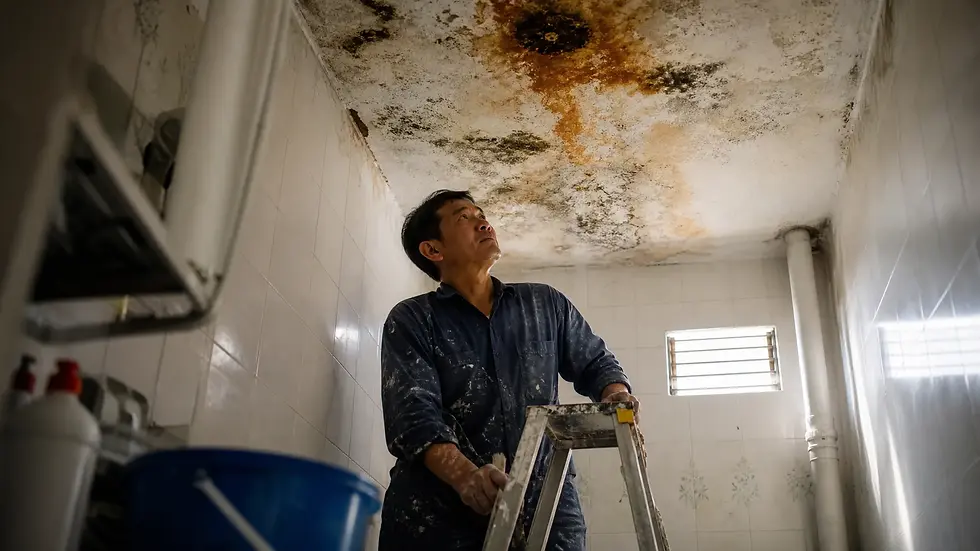
Ceiling stain removal in toilet Singapore is one of the most common painting jobs we get called out for, and the one most likely to be done wrong the first time. The stain gets painted over, it comes back within weeks, and the homeowner calls again. The reason it keeps happening is simple: different stains have different causes, and each one needs a different fix. Getting the diagnosis right before you touch a brush is the only way to stop it coming back.
Leng Painter handles ceiling stain jobs across HDB flats in Singapore. The most common call-outs in toilets involve three stain types: mould growth, rust bleed from reinforcing bars, and mineral deposits from chronic slow leaks. Each needs a different treatment.
Why Your Toilet Ceiling Keeps Staining
Singapore's year-round humidity sits above 80% on most days. Toilet ceilings with poor ventilation are under near-constant moisture stress, which accelerates both mould growth and mineral salt migration through the concrete. Stains don't stay surface-level for long in that environment.
Mould (Black or Green Patches)
Mould grows where moisture and warmth combine, exactly the conditions inside a poorly ventilated HDB toilet. It appears as black, dark green, or grey patches, often fuzzy in texture. It spreads outward from a central point and may carry a musty smell.
Mild mould is a surface problem. Persistent mould that keeps returning despite cleaning signals a deeper moisture issue, often from inadequate airflow or a slow drip above the slab.
Rust (Brown or Orange Streaks)
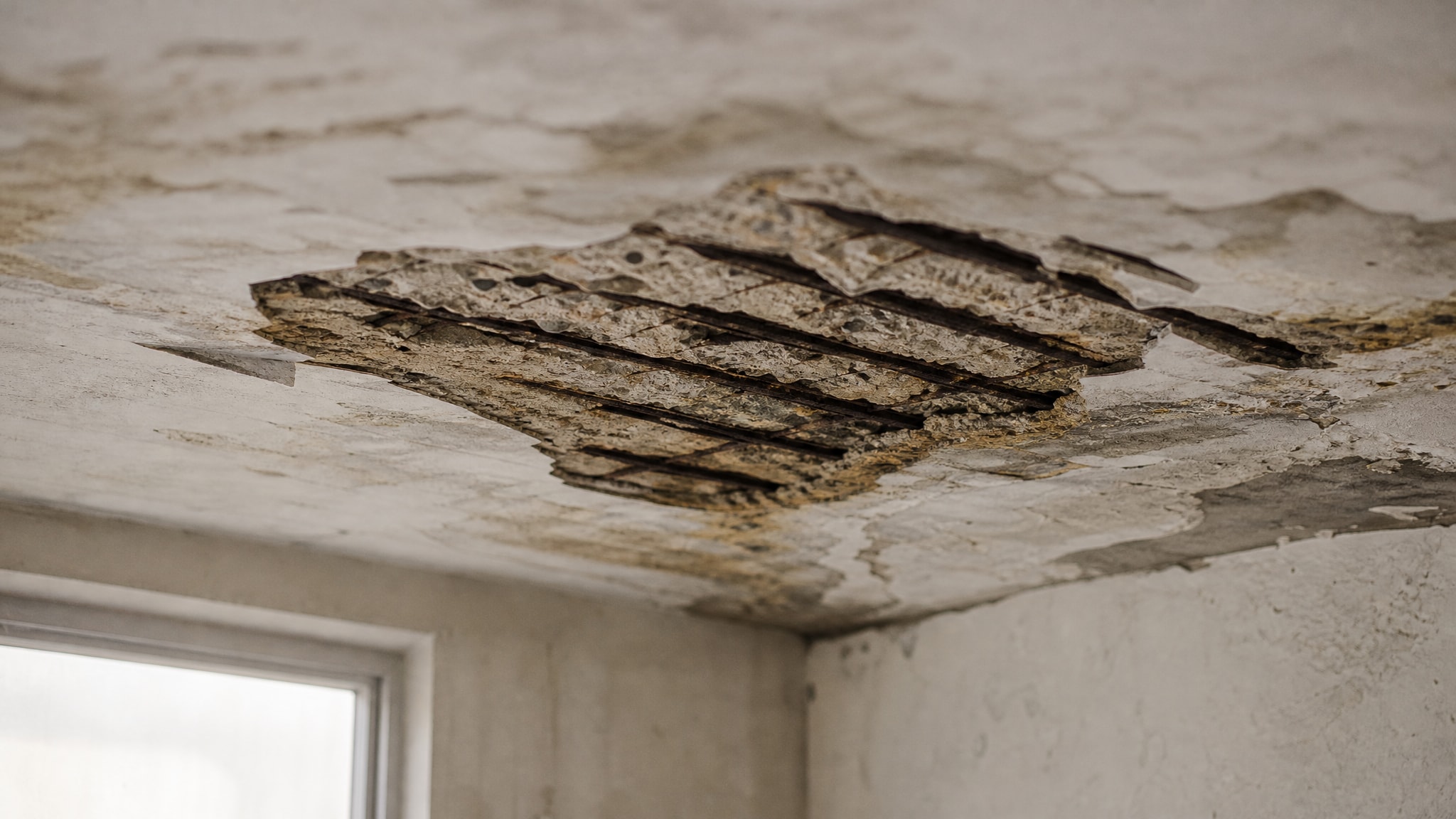
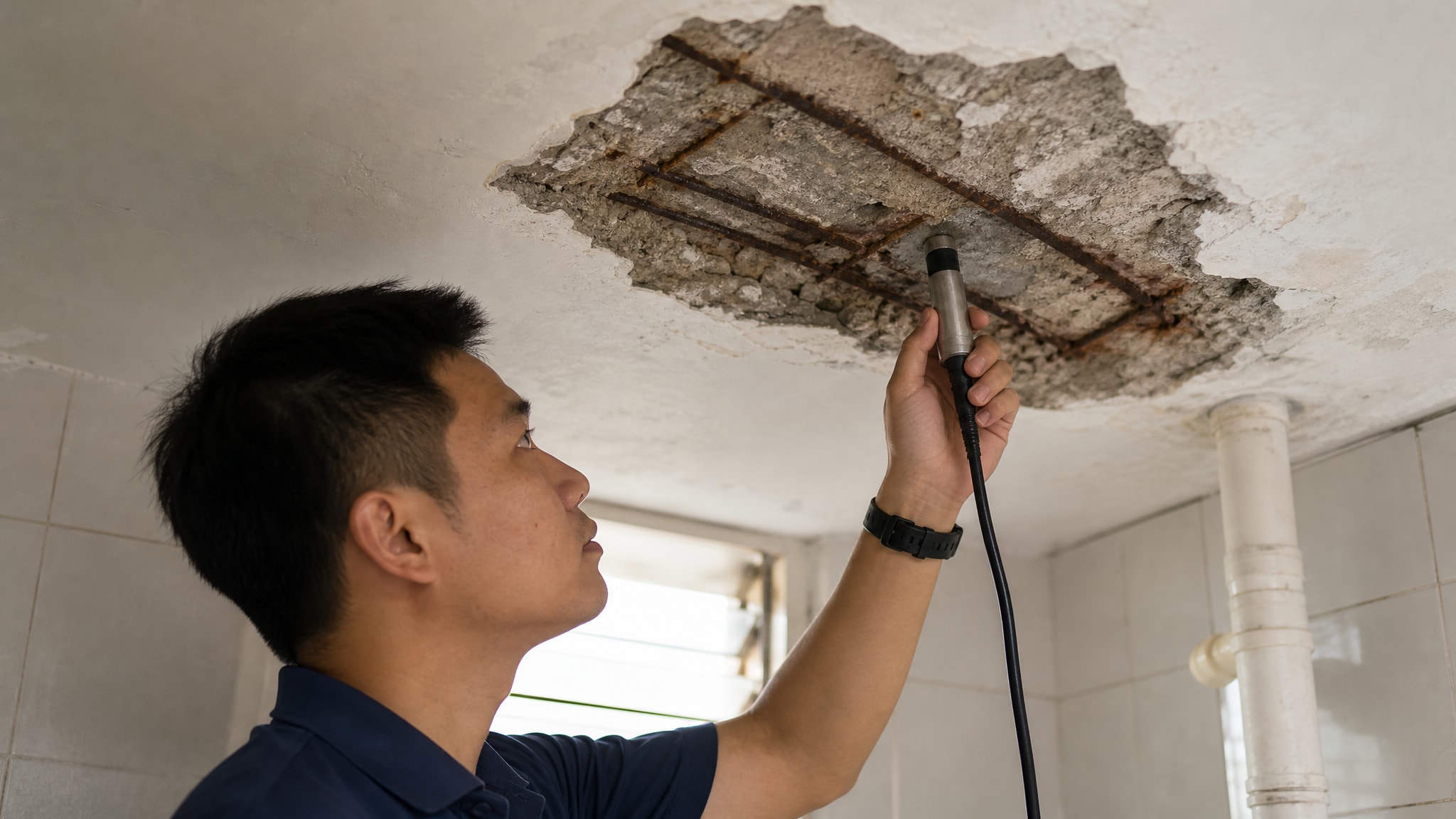
Brown stains on a toilet ceiling are frequently rust bleed from corroding steel reinforcing bars (rebar) embedded in the concrete slab above. The stain appears as orange-brown streaks or patches, often following a linear pattern that mirrors the rebar layout underneath.
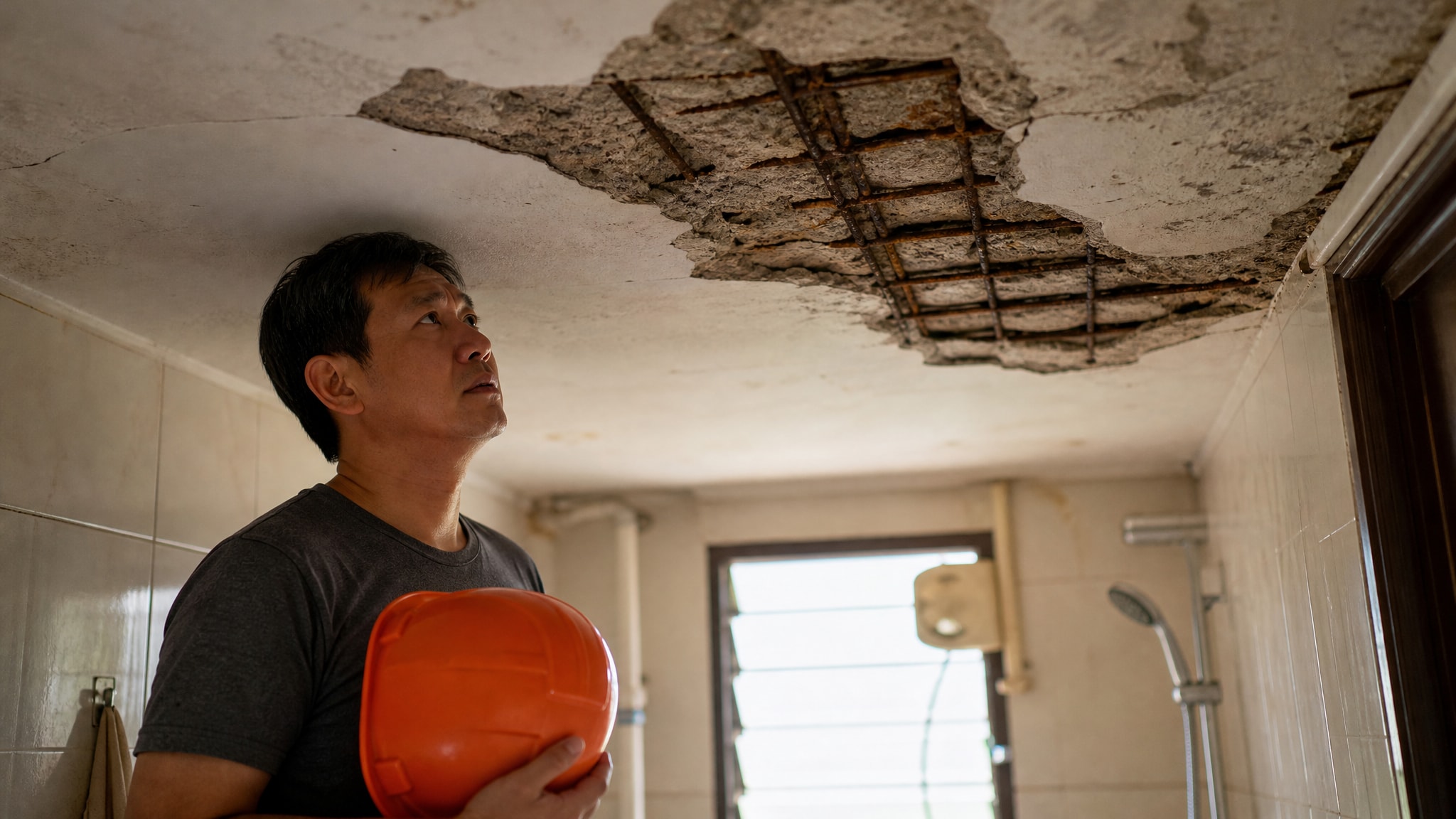
Painting over it without treating the rust means the stain returns within months. Left untreated, rust damage progresses toward spalling concrete above the toilet ceiling, which is a more serious structural repair.
Mineral Deposits (Yellow or White Stains)
Yellow ceiling stains in bathrooms are frequently caused by mineral-rich water seeping through hairline cracks in the slab above, a sign the unit upstairs may have a slow pipe drip or grout failure in their toilet floor. The stain is often chalky, slightly raised, or leaves a tide-mark ring as it dries. White mineral deposits form the same way. Both indicate an active or historic water intrusion path through the concrete.
How to Tell Which Ceiling Stain You're Dealing With
A quick visual check usually identifies the stain type before any work starts. Here's what to look for:
Stain appearance | Likely cause | Key clue
Black or green patches, fuzzy edge | Mould | Musty smell, spreads from one spot
Brown or orange streaks, linear | Rust from rebar | Follows a straight line, hard to wipe
Yellow or white, chalky ring | Mineral deposits | Tide-mark edge, slightly raised surface
Dark watermark with no colour change | Old water stain, dried | No smell, no texture, static shape
Ceiling stain causes in Singapore toilets almost always involve moisture. The colour and texture tell you whether the moisture came from above (leak or rebar corrosion) or from within the room (condensation and poor airflow). If you can see hairline cracks in your HDB ceiling slab, mineral-rich water is likely migrating through them.
DIY Ceiling Stain Removal: What Works and What Doesn't
Knowing how to remove ceiling stains yourself is useful for mild, early-stage cases, but only for mould, and only when it's truly surface-level.
A diluted bleach solution (one part bleach to ten parts water) wiped onto fresh mould growth can clear it temporarily. Improving ventilation, adding an exhaust fan or leaving the bathroom door open after showers, removes the moisture that feeds regrowth. These steps work for light cases.
Where DIY falls short:
Rust stains cannot be removed by cleaning or repainting. The corrosion is inside the concrete. Wiping the surface changes nothing underneath.
Mineral deposit stains caused by an active leak will return until the leak source, upstairs pipe, grout failure, or cracked slab, is fixed first.
Recurring mould that clears and returns within weeks needs anti-fungal treatment, not just bleach.
Applying a standard emulsion paint over an active mould or rust stain without a stain-blocking primer is one of the most common mistakes homeowners make. It masks the problem for a few weeks before the stain bleeds through again. If the ceiling is also peeling, you may be looking at ceiling paint peeling from water damage, a separate but related issue that needs addressing at the same time.
Professional Ceiling Stain Removal Treatment Options
A professional approach treats the cause, not just the surface. Here's what each stain type actually requires.
Mould Treatment and Sealing
A specialist applies an anti-fungal solution to kill existing mould spores across the affected area, not just the visible patch. The surface dries fully before any primer or paint goes on. For ongoing mould treatment for bathroom ceilings, the treatment includes a mould-resistant sealer coat before the topcoat. Without this step, new mould recolonises the painted surface quickly.
Rust Stain Remediation
Rust treatment requires a rust converter or rust-inhibiting primer applied directly to the stain. This chemically neutralises the iron oxide and stops further oxidation from bleeding through. The converter has to penetrate to the source, which is why the surface paint is often removed first. Once treated and dry, a stain-blocking primer goes over the top before repainting. If the rebar damage is advanced, the repair may involve cutting out loose concrete, which is where the question of repairing versus replacing your HDB ceiling becomes relevant.
Stain-Blocking Repainting
Regardless of stain type, the final step is always an alkali-resistant primer followed by a quality topcoat. Standard emulsion paints are not designed to hold back moisture-based stains. A proper stain-blocking primer creates a barrier so the stain cannot bleed through to the finished surface. This is what separates a repair that lasts from one that fails in six weeks.
Ceiling Stain Removal Cost in Singapore: What to Expect
Stain removal cost in Singapore varies, and understanding what drives the price helps before you get quotes.
What affects the cost:
Stain type, Rust remediation takes longer and uses specialist products, so it costs more than surface mould treatment.
Ceiling area, A small patch above one HDB toilet costs less than a ceiling stained across multiple bays.
Whether the leak source needs fixing first, If there's an active drip from the unit above, that has to be resolved before repainting. This may involve a separate waterproofing or toilet floor tile repair in the unit above, costed separately.
HDB vs condo, Older HDB flats often have more extensive concrete degradation, which adds time and materials.
For straightforward jobs, a single toilet ceiling with surface mould or a small mineral deposit stain, no active leak, turnaround is typically fast, sometimes within a day. Rust or spalling jobs take longer because the treatment products need dwell time before repainting can start.
Get an on-site assessment before agreeing to any quote. A contractor who quotes remotely without seeing the stain type or checking for active moisture is likely to underprice the job and cut corners on treatment.
Preventing Toilet Ceiling Stains from Coming Back
Once the ceiling is treated and repainted, a few habits keep it clean long-term.
Improve ventilation. Run the exhaust fan during and for at least 10–15 minutes after every shower. If your toilet has no exhaust fan, adding one is the single most effective thing you can do to reduce moisture build-up.
Fix drips early. A slow drip from the unit above causes mineral stains that get worse over time. If you see a new tide-mark ring appearing, report it to your upstairs neighbour and building management before it becomes a larger repair.
Use mould-resistant paint. When the ceiling is repainted, specify a mould-resistant or anti-fungal topcoat. It costs marginally more and meaningfully extends the time before any mould re-establishes.
Do an annual ceiling check. Once a year, look at your toilet ceiling in good light. Early mould or a new tide-mark is easy and cheap to treat. The same problem left for two years is not.
Keep grout and tile joints sealed. If you're renovating the toilet upstairs, proper waterproofing of the floor and wall junctions prevents the inter-floor seepage that causes yellow stains in the ceiling below.
If you're dealing with a toilet ceiling stain that's come back after painting, or you're not sure what type of stain you're looking at, contact Leng Painter for a site assessment. We'll diagnose the stain cause, check for active moisture, and give you a clear quote for the right treatment, not just a coat of paint over the problem. Fast response, local HDB experience, and a fix that actually holds.
Comments