
Concrete Spalling Early Warning Signs HDB Owners Must Recognize

Updated: Aug 18

Concrete spalling early warning signs HDB owners should know are easy to miss, until the damage is already expensive. A few hairline cracks or a patch of bubbling paint might seem cosmetic, but in Singapore's humid climate they often signal something more serious happening inside the slab. Catching these signs early is the difference between a quick patch repair and a full ceiling hack. This guide walks you through exactly what to look for, where to look, and when to pick up the phone.
What Is Concrete Spalling and Why HDB Flats Are Vulnerable
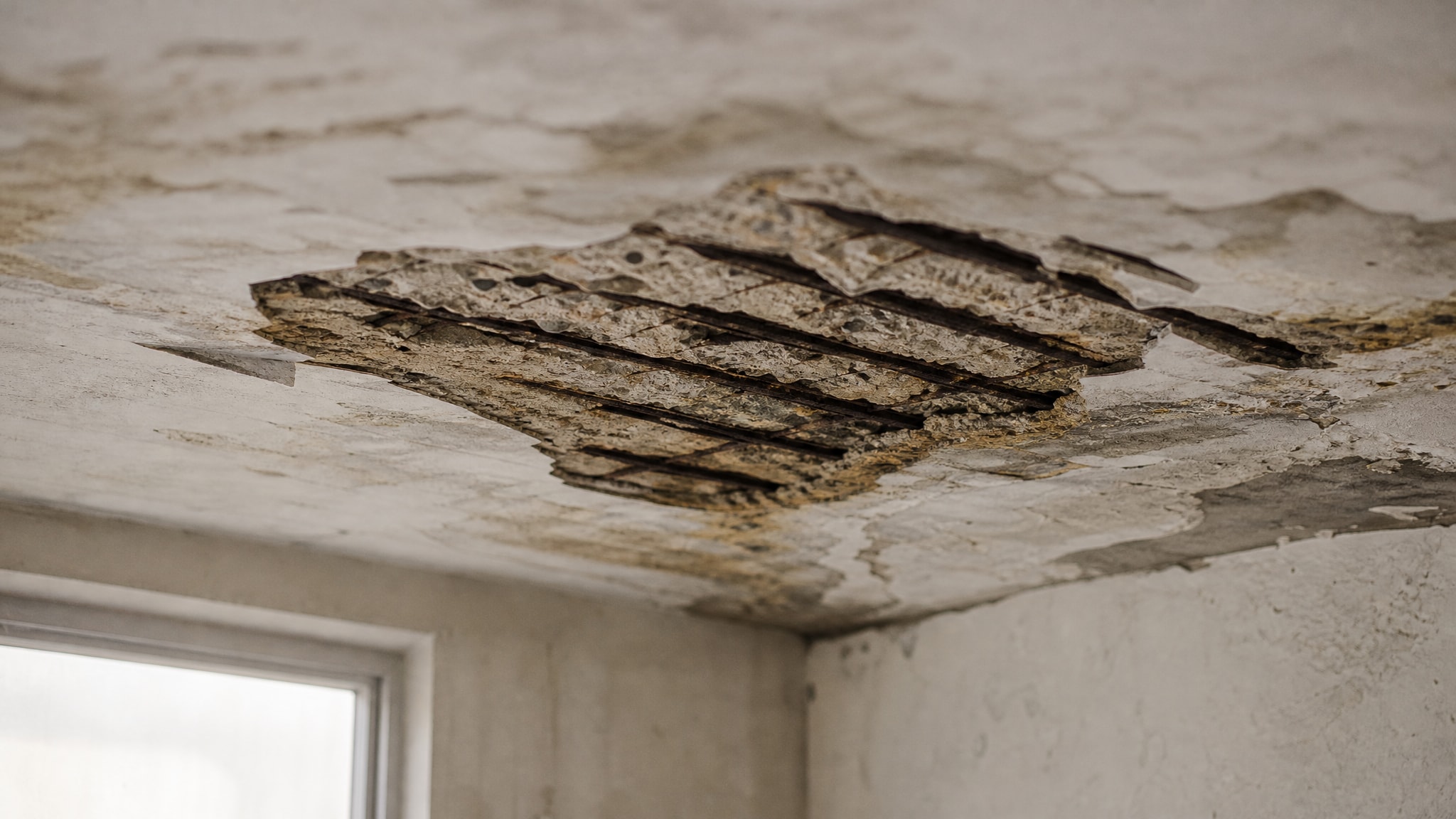
Concrete spalling happens when the steel reinforcement bars (rebar) inside a concrete slab start to corrode. Rust expands, it takes up more volume than the original steel, and that expansion pushes outward, cracking and eventually dislodging the concrete cover above it.
Moisture is the trigger. Once water penetrates the surface through cracks or aging concrete, it reaches the rebar and starts the corrosion cycle. Singapore's tropical climate makes this worse: high humidity year-round combined with frequent thermal cycling accelerates corrosion in older slabs. HDB flats built before the 1990s are more susceptible than newer builds, simply because the concrete has had more years of moisture exposure.
For a deeper look at the mechanics, see what causes concrete spalling in HDB flats.
The 5 Early Warning Signs of Concrete Spalling to Look For
These concrete spalling early warning signs HDB owners often dismiss as "just surface wear" are the clearest signals that internal corrosion is underway. Each one below is still at the fixable stage, but not indefinitely.
1. Hairline Cracks on Ceilings or Walls
Hairline cracks are fine, shallow lines, often less than 0.3 mm wide, running across a ceiling or down a wall. You'll commonly spot them in toilet ceilings, kitchen soffits, or along the edges where the wall meets the ceiling. On their own, not every hairline crack points to spalling. But a crack that appears alongside discolouration or paint changes is a red flag worth acting on. For help telling these apart, read about the difference between hairline and structural cracks.
2. Paint Bubbling, Peeling, or Staining
When moisture trapped beneath the paint layer pushes upward, the paint film lifts, bubbles, or peels away from the surface. This is one of the most common early-stage indicators in HDB bathrooms and kitchens. It looks similar to ordinary paint wear, but if it keeps recurring after repainting, or appears in patches with no obvious plumbing leak above, the source is likely moisture coming through the slab itself. See why HDB ceiling paint peels and bubbles for a more detailed breakdown.
3. Rust-Coloured Streaks or Brown Water Marks
Rust-coloured streaks running down a wall or ceiling are almost always iron oxide leaching from corroding rebar beneath the surface. Unlike a damp stain from a one-off plumbing leak, rust streaks don't fade when the area dries out, they persist and widen. That's a clear signal that internal corrosion is active. Brown water marks that reappear after cleaning, or that have an orange-red tinge, deserve the same attention.
4. Hollow Sounds When You Tap the Surface
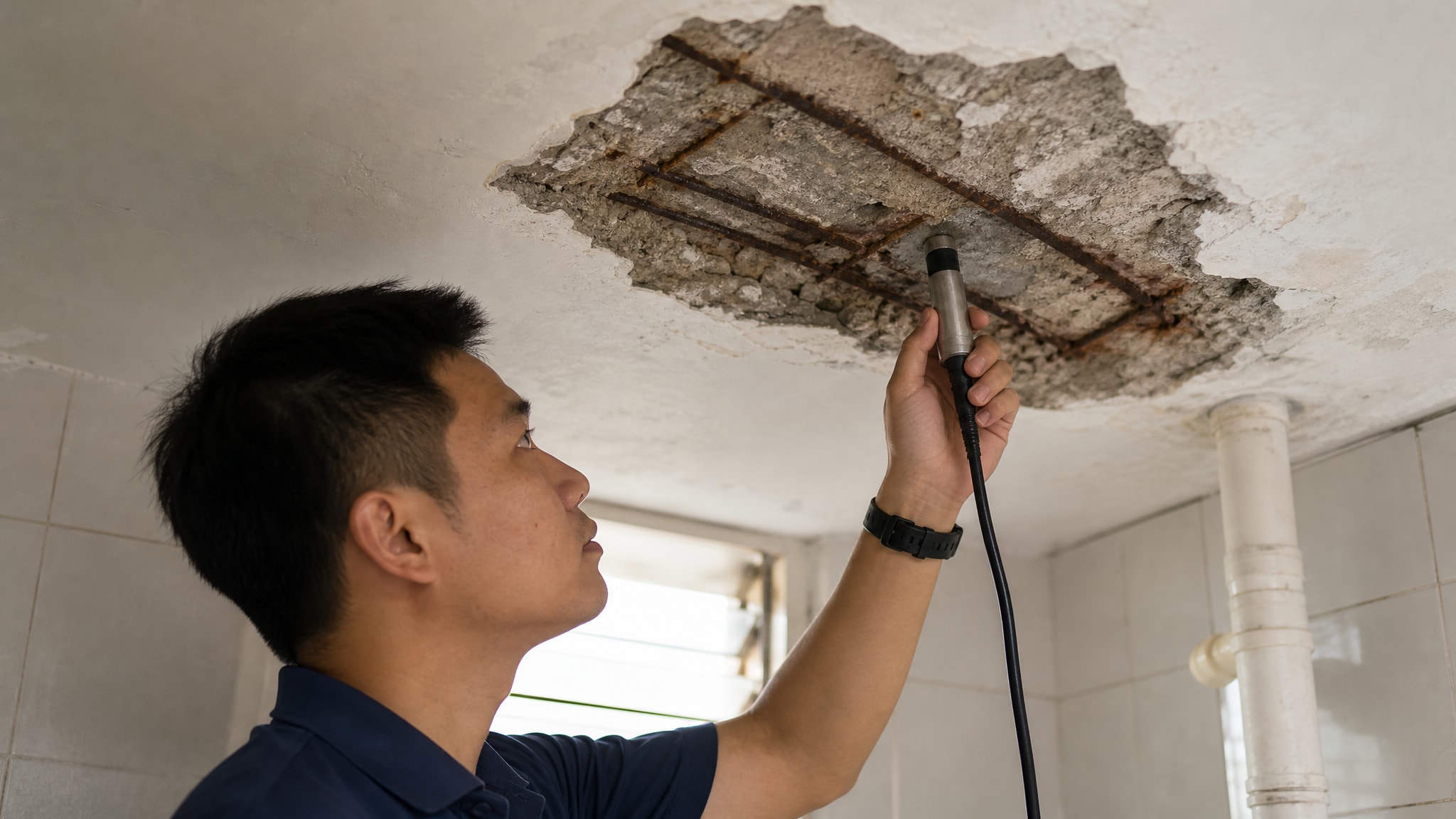
Knock on the ceiling with your knuckle or a coin. A solid slab sounds dense and dull. A hollow, drum-like sound means the concrete layer has separated from the substrate above, this is called delamination. The surface hasn't fallen yet, but it is no longer structurally bonded. Catching this before chunks detach is the difference between a patch repair and a full ceiling replacement. Run the tap test across the ceiling in a grid pattern, moving slowly.
5. Small Chunks or Powder Falling from the Ceiling
Finding grit, fine powder, or small chips on your floor or toilet lid is the most urgent early warning sign. The spalling cycle has progressed past delamination, material is actively dislodging. This is still repairable without major hacking if caught now, but it is no longer a "watch and wait" situation. Act on this immediately.
Where to Check: A Room-by-Room Inspection Guide
Spotting concrete damage early means knowing where to look first. Not all rooms carry the same risk, moisture concentration is the key variable.
Toilet and Bathroom Ceiling
The toilet ceiling is the highest-risk location in any HDB flat. Steam, poor ventilation, and water splashing directly onto the ceiling create near-constant moisture exposure, the single biggest driver of rebar corrosion. This is consistently the first place where HDB owners notice surface damage like paint bubbling or brown streaks. Check the full ceiling area, especially the corners and directly above the shower or bath. Look at the ceiling stains in HDB toilets page if you've already spotted discolouration there.
Kitchen Ceiling and Walls
Cooking produces steam and grease, both of which accelerate moisture penetration into ceiling surfaces. The area directly above the stove and the soffit above overhead cabinets are common problem spots. Walls near the sink or behind the hob may show early discolouration or paint peeling. These areas are worth inspecting every six months, they deteriorate faster than living room or bedroom ceilings.
Outdoor Corridor or Yard Area
The outdoor corridor and yard are often inspected last, or not at all, because they're not inside the living space. That's a mistake. These areas face direct rain exposure, temperature swings, and higher humidity. Chunks falling from a common corridor ceiling also create a safety risk for neighbours and visitors. Check these surfaces regularly and don't assume they're HDB's problem to spot first. For specific guidance, see spalling in HDB outdoor corridors and yard areas.
Damage Progression: What Happens If You Wait
Concrete spalling follows a predictable pattern: surface staining comes first, followed by visible cracking, then delamination (the concrete layer separates internally), and finally chunks detach and fall. Each stage is faster to reach than the previous one because the damage creates new pathways for moisture.
Early-stage repairs, at the staining or cracking phase, involve cleaning, targeted patching, and recoating. Late-stage repairs, once delamination or falling chunks are present, require hacking out the affected concrete, treating the rebar, pouring or applying new concrete, and refinishing. That's a bigger job, a longer disruption, and a significantly higher cost.
Based on jobs handled by Leng Painter, most spalling repairs that require full concrete hacking reach that stage because the homeowner waited until chunks were actively falling. Homeowners who acted on early paint-peeling or rust-stain warnings needed significantly less hacking and shorter job durations. Acting on the first signs isn't overcautious, it's cheaper.
For a realistic cost comparison between early and late intervention, see how much spalling repair typically costs.
Concrete Damage Checklist: Quick Reference Before Calling a Contractor
Run through this concrete damage checklist in about 10 minutes. Stand under each ceiling, use a torch, and tap as you go.
Hairline cracks visible on the ceiling or upper walls in the toilet, kitchen, or corridor?
Paint is bubbling, blistering, or peeling from the ceiling surface, not just at edges?
Rust-coloured or orange-brown streaks visible, either wet-looking or dried in?
Hollow sound when tapping, does any section sound drum-like rather than solid?
Grit, powder, or small chips found on the floor, toilet lid, or kitchen surface beneath the ceiling?
Persistent damp smell in the toilet or kitchen even when dry, with no obvious plumbing source?
Ceiling stains or watermarks that have reappeared after previous repainting?
If you ticked yes on 2 or more items, get a specialist to assess before the damage advances. One item ticked may still be worth a call, especially if it's the hollow-tap test or falling debris.
When to Call a Contractor for Concrete Damage
Some situations need a call today, not next month. Knowing when to call a contractor for concrete damage keeps a manageable repair from becoming a major job.
Call immediately if:
Chunks or significant debris have already fallen from the ceiling
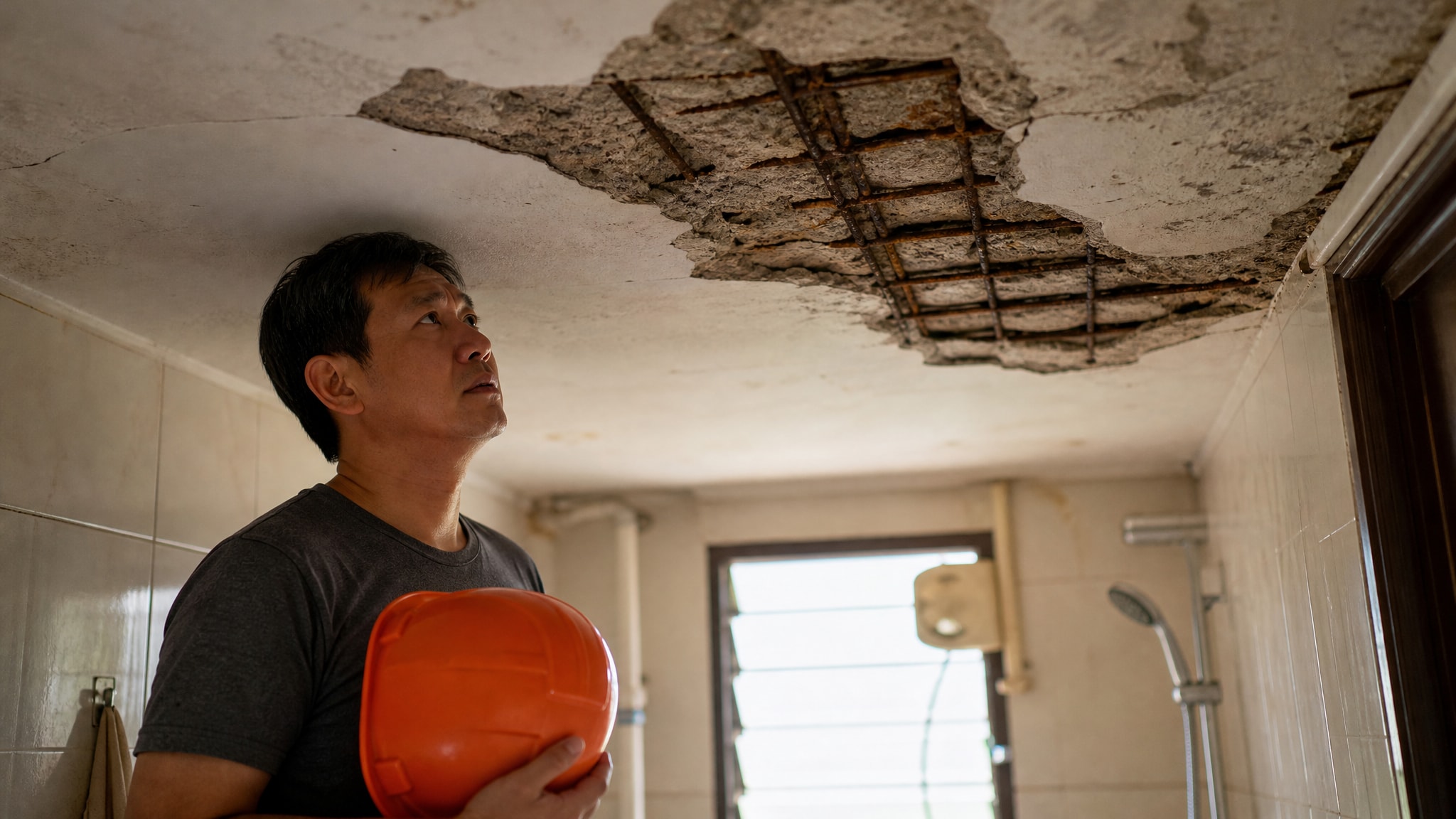
You can see exposed rebar, bare metal showing through cracked concrete
The damage is in a common corridor shared with neighbours, where falling material is a public safety risk
Call soon if:
You ticked 3 or more items on the checklist above
The same spot has been repainted before and the problem has returned
You can hear a hollow sound across a large section of ceiling, not just a small patch
An early assessment is low-cost and often free. A contractor who knows spalling can usually tell you within 15 minutes whether you need a patch repair now or just monitoring. The risk of calling too early is negligible. The risk of calling too late is not.
If you've spotted any of the signs above, get a spalling concrete assessment from a specialist before the damage progresses further.
Comments