
HDB Corridor Ceiling Repair Cost: What Drives the Price

You've spotted a rust stain, flaking concrete or a damp patch on the ceiling outside your front door. Before anyone gives you a number, you need to know three things: who owns that ceiling, what is causing the damage, and how hard it is to work in a space your neighbours walk through every day.
Those three answers drive HDB corridor ceiling repair cost far more than the size of the patch. This guide walks through them in order, so you can ask the right people the right questions.
What counts as a common corridor ceiling repair
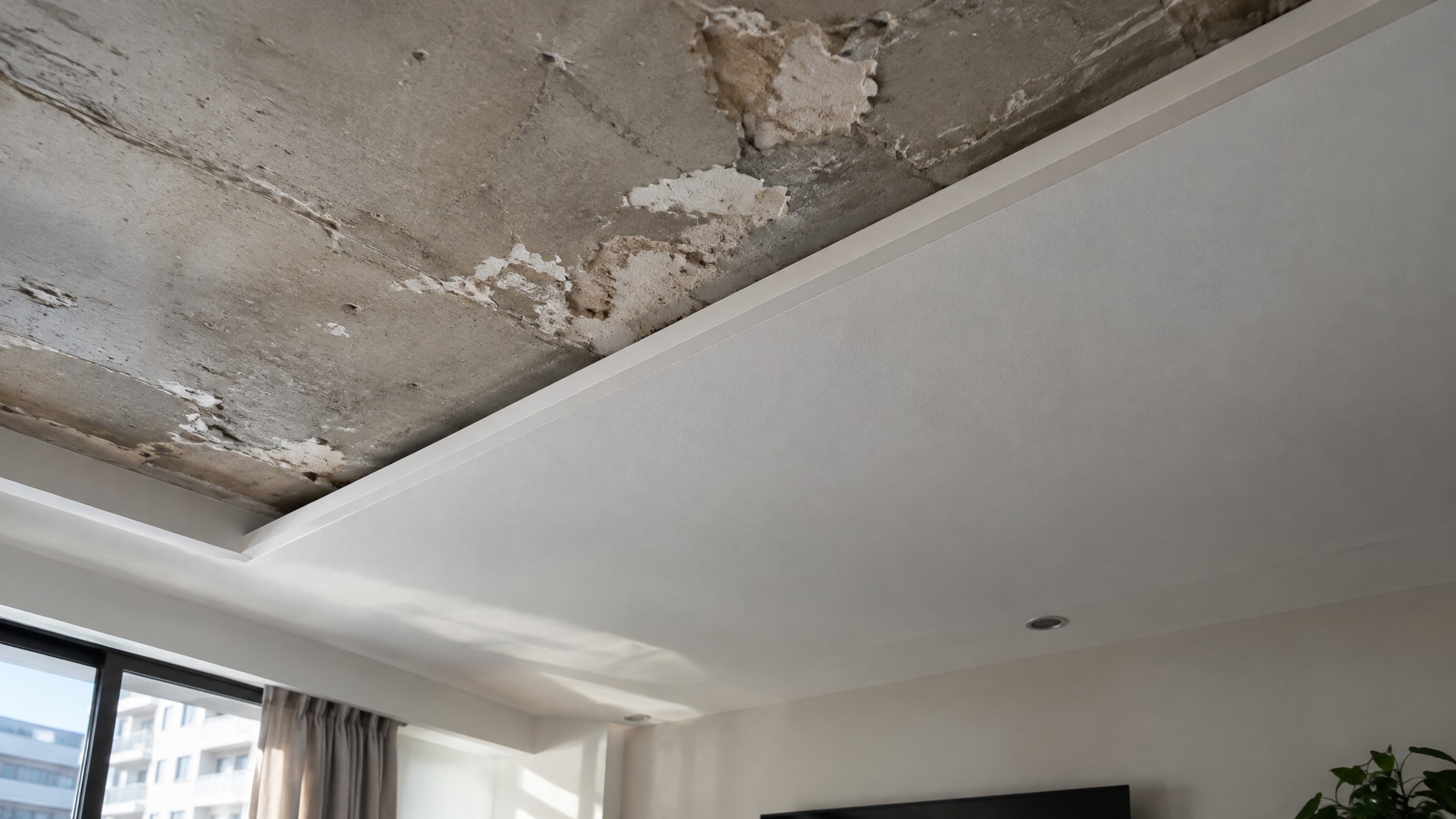
A common corridor ceiling repair covers the underside of shared spaces: the corridor outside your unit, the lift lobby, the stairwell landings and the void deck. The trade word for that underside is the soffit. It is simply the concrete slab you see when you look up.
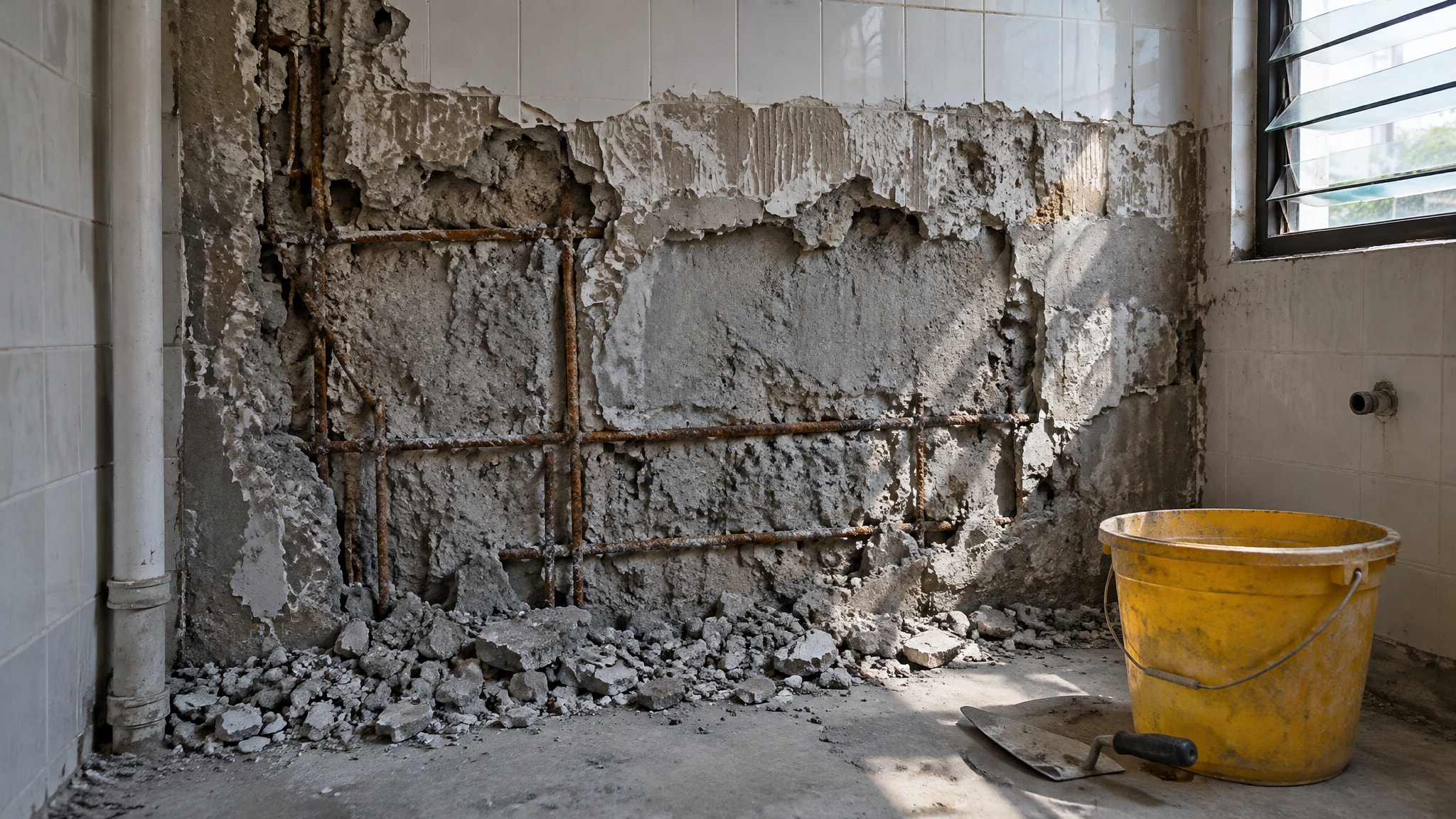
Inside that slab sits steel reinforcement, called rebar. When water reaches the rebar, it rusts and swells, and the swelling pushes the concrete off in chunks. That is spalling.
On a corridor soffit it usually shows up as a rust stain, a hairline crack and a hollow sound when you tap the area. If you're not sure what you're looking at, these warning signs that point to spalling are a good first check.
The ceiling inside your own flat is a separate matter. Its paint and finish belong to you, and you can hire anyone you like to fix them. The corridor soffit is common property, and that split decides who signs off the work.
This guide is about the shared side only. It won't help you price a bedroom or living room ceiling.
Who approves and pays for HDB corridor ceiling repairs
A lot of people assume corridor ceilings are looked after by an MCST. That does not fit most HDB blocks, because they are not strata-titled. HDB or the estate's Town Council is the default, and an MCST applies only to strata-titled buildings.
Common property in HDB blocks: HDB or the Town Council
In most HDB estates, the Town Council looks after common property such as corridors, lift lobbies and void decks. The Town Councils Act sets that out. HDB itself handles some matters, so the first job is confirming who maintains your block.
You, as an individual owner, usually can't order work on common property. The cost normally sits in the managing body's budget, not in your pocket.
So don't call a contractor first. Find out who maintains your block, then ask whether a defects period or an upgrading programme already covers the corridor. If it does, the repair may already be funded.
MCST ceiling repair cost: when a strata-titled block applies
An MCST, or Management Corporation Strata Title, runs strata-titled developments such as private condominiums. The Building Maintenance and Strata Management Act governs it. If your building is one of these, the MCST is the route, and it pays for common-area repairs from the building's maintenance funds.
In that case the MCST orders the work and chooses the contractor. You report the defect to the management office, and any MCST ceiling repair cost is the corporation's to approve. This is not legal advice, so check your own block's title and who sends your maintenance bills.
What drives HDB corridor ceiling repair cost
We won't print a price range here, because a number that doesn't match your block's scope would only mislead you. What we can do is show you what moves the price, so a quote makes sense when it arrives.
Size, depth and rebar condition of the spalling
Area and depth come first. A shallow flake the size of a palm needs less chipping than a deep section where the concrete has let go all the way to the steel.
Rebar condition matters next. The repair starts by chipping back to sound concrete, cleaning the exposed rebar, then applying bonding agent and patch mortar. That prep takes more labour than the paint ever will, which is why the same prep logic shows up in how spalling repair packages are priced.
If the rebar is badly corroded, patching isn't enough. Heavily rusted bars need a structural engineer's view before anyone puts mortar over them.
Small jobs also cost more per square metre. Mobilisation, protection and approval time don't shrink when the area does, so a small corridor patch can quote high even though the work itself looks minor.
Access and working conditions in a shared space
Height changes the method. A low corridor soffit can be reached with a ladder or a small platform, while a taller lobby or stairwell may need a proper working platform, and that adds time and cost.
Then there are the residents. Your contractor has to protect the walkway, keep a clear path, and work at hours that suit people living below and beside the site. You pay for that care in the quote.
Finish is the last driver. Once the patch cures, the repaired area has to be painted, and matching the surrounding colour and texture on a long corridor ceiling often means painting a wider stretch than the patch itself.
Corridor ceiling leak: find the source before you price the job
A stain on a corridor ceiling doesn't always mean the concrete is the problem. A corridor ceiling leak is often the reason the rebar rusted in the first place.
If you price the ceiling before you find the water, you may be pricing the wrong job.
Where the water is really coming from
Three sources come up again and again:
A cracked slab, where water seeps through from above.
A failed seal around a ledge above, which lets rain track in.
A leaking pipe in a shared service riser.
A surface patch over a live leak tends to fail. Water keeps tracking through the crack, and the new finish stains again, sometimes within a few months. The source has to be found and sealed first.
The source may also sit inside a private flat above. That makes it a different owner's job and a different owner's cost, so scope the leak before anyone prices the ceiling itself.
Getting the repair approved before work starts
Approval is where many corridor jobs stall. A contractor who starts without a go-ahead from the managing body can be stopped at the door, and you may be left with a bill and an unfinished ceiling.
Do the paperwork first, and let the quote follow it.
What to report and what to keep on file
Report the defect to HDB or the Town Council, depending on who maintains your block. Keep a simple file as you go:
Dated photos of the defect, wide and close-up, taken from the same spot over time.
A note of when you reported it and who you spoke to.
The reference number the managing body gives you.
The written go-ahead, kept safe before any contractor mobilises.
A quote only becomes useful once the scope, the access rules and the approval route are known. Until then, a number on paper is a guess.
HDB void deck ceiling repair: how the job differs
An HDB void deck ceiling repair can look like a corridor job when you see the spalling. The soffit is common property, the cause is often the same, and the patch steps are the same too.
The difference is everything around the patch. Void decks have more height, heavier foot traffic and often more protection work, so access and public-safety measures can move the cost even when the damage looks identical.
A void deck is also open to the public all day. Your contractor will usually need barriers, signage and a safe walkway for people passing underneath, and the managing body will have its own say on how that is set up. Approval is the same route as a corridor, but expect more detail in the scope.
If you're the one reporting the defect, say plainly that it is a void deck. It helps the right team look at the right kind of job.
How to pick a shared corridor repair contractor and compare quotes
Shared spaces are not like private flats. A shared corridor repair contractor should have worked in common areas before, carry public liability insurance, and put the scope in writing.
Trade also matters. A general handyman can paint over a stain, but chipping back to rebar is a different skill, and this piece on contractor or handyman for concrete repair explains why. Run the vendor through how to verify a repair vendor before you agree to anything.
What a comparable written quote should itemise
Two quotes are only comparable if they list the same things. A written quote should itemise:
Chipping extent, with the area stated.
Rebar treatment.
Bonding and patch materials.
Paint and finish.
Access method.
Protection for residents and the public.
The patch warranty.
You can compare ceiling quotes line by line once each one has that detail. A quote that lumps everything into one figure makes the cheapest option look better than it is.
Before you sign, check two points. Ask for a copy of the public liability insurance, and confirm the dates are current. Then read the warranty: what it covers, how long it runs, and whether it excludes damage from a leak that was never fixed.
What to send us for a written quote
Common-area work usually needs the managing body's go-ahead first, so we'd start with a written scope and quote, not a promise to turn up and start chipping. We'll look at what you send and tell you what we see.
Send us:
The block and level.
Wide photos and close-up photos of the ceiling.
Any reference from HDB or the Town Council.
Then request a ceiling repair quote and we'll reply with a written scope and quote.
Frequently asked questions
Can I hire my own contractor to fix the ceiling outside my flat?
Usually not for the corridor soffit, because it is common property. Work on it normally needs the go-ahead of HDB or the Town Council first. You can hire your own contractor for the ceiling inside your flat.
Who pays if the leak on the corridor ceiling comes from the flat above?
If the source sits inside a private flat, it is that owner's repair and cost. The corridor ceiling is then repaired only after the leak is sealed, or the stain will come back. Report it to the managing body and keep dated photos.
Why does a small corridor patch quote so high per square metre?
Mobilisation, protection for walkways and approval time stay the same however small the area is. Spread over a small patch, those fixed costs make the rate per square metre look steep. Ask for them to be itemised so you can see what you're paying for.
Does a patch last if the rebar is already rusted?
It lasts only if the repair chips back to sound concrete and cleans the rebar before any mortar goes on. Badly corroded bars need a structural engineer's view first. Patching over rust hides the problem and it comes back.
Is a void deck ceiling repair approved differently from a corridor repair?
The route is the same, through HDB or the Town Council, but the scope is usually bigger. A void deck has more height, more foot traffic and more public protection to set up, so expect more detail in the approval and the quote.
Comments