
Hdb Spalling Concrete Repair. What Is It Causes and How to Fix.

Updated: Aug 31
https://www.lengpainter.com/If you've noticed rust stains creeping across your ceiling or chunks of concrete breaking away from the corner of your toilet wall, you're likely dealing with spalling concrete. Knowing spalling concrete, what it is, causes, and why Singapore HDB flats are so vulnerable gives you a real head start on fixing it before it gets worse. This isn't a cosmetic problem you can paint over. It's a structural detehttps://www.lengpainter.com/rioration process, and in Singapore's climate, it moves faster than most homeowners expect.
Hdb spalling concrete repair.What Is Spalling Concrete?
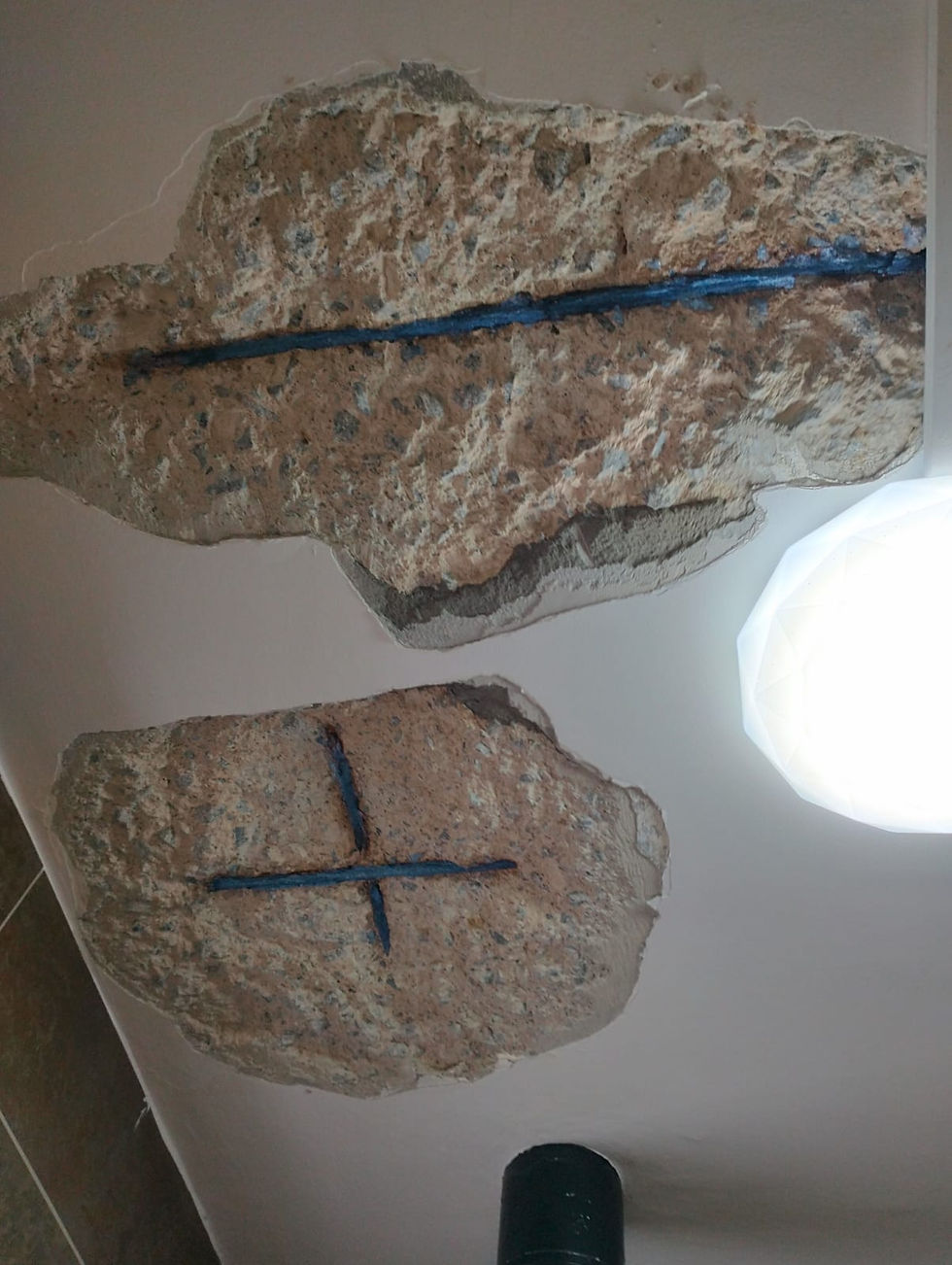
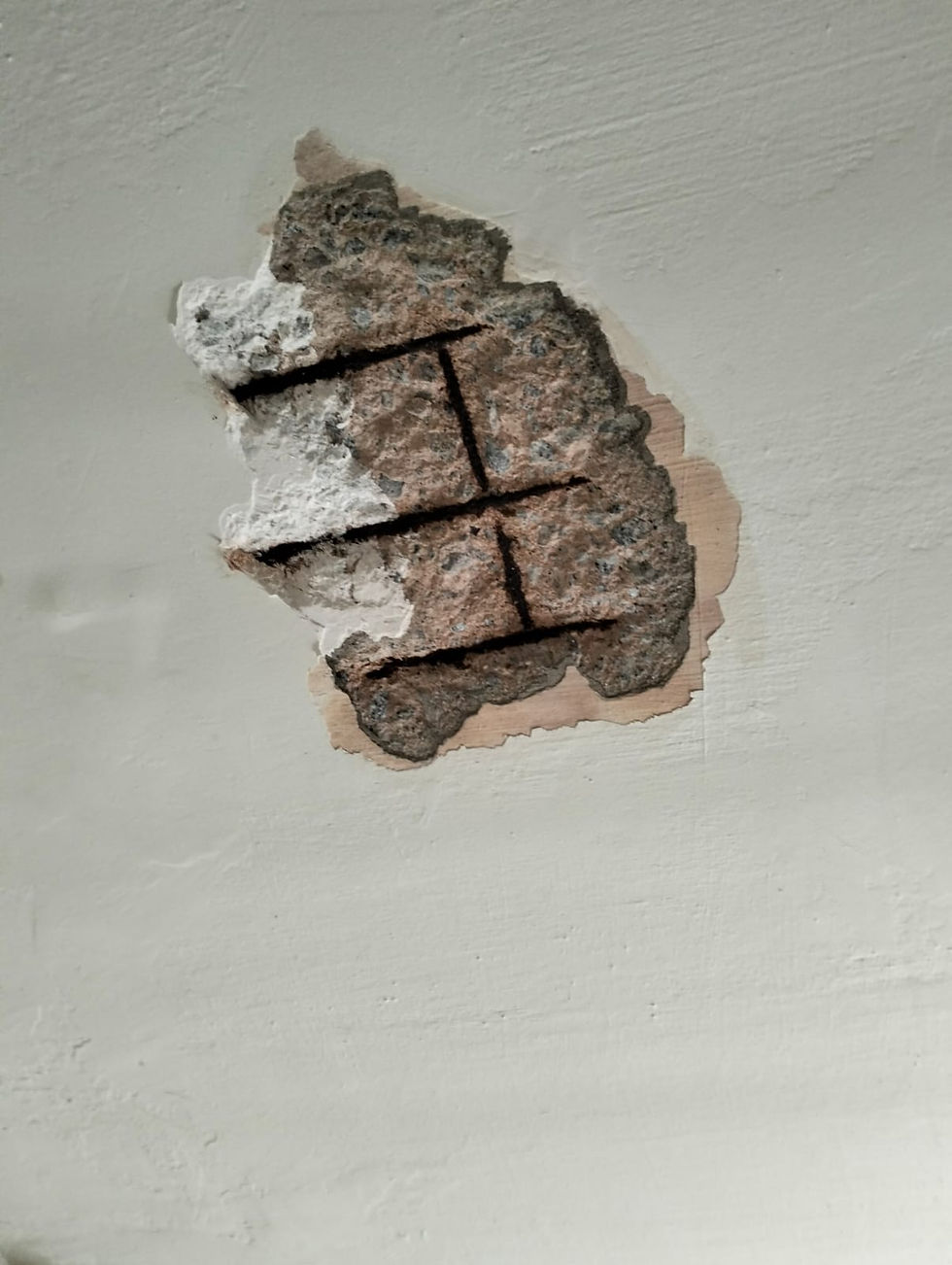
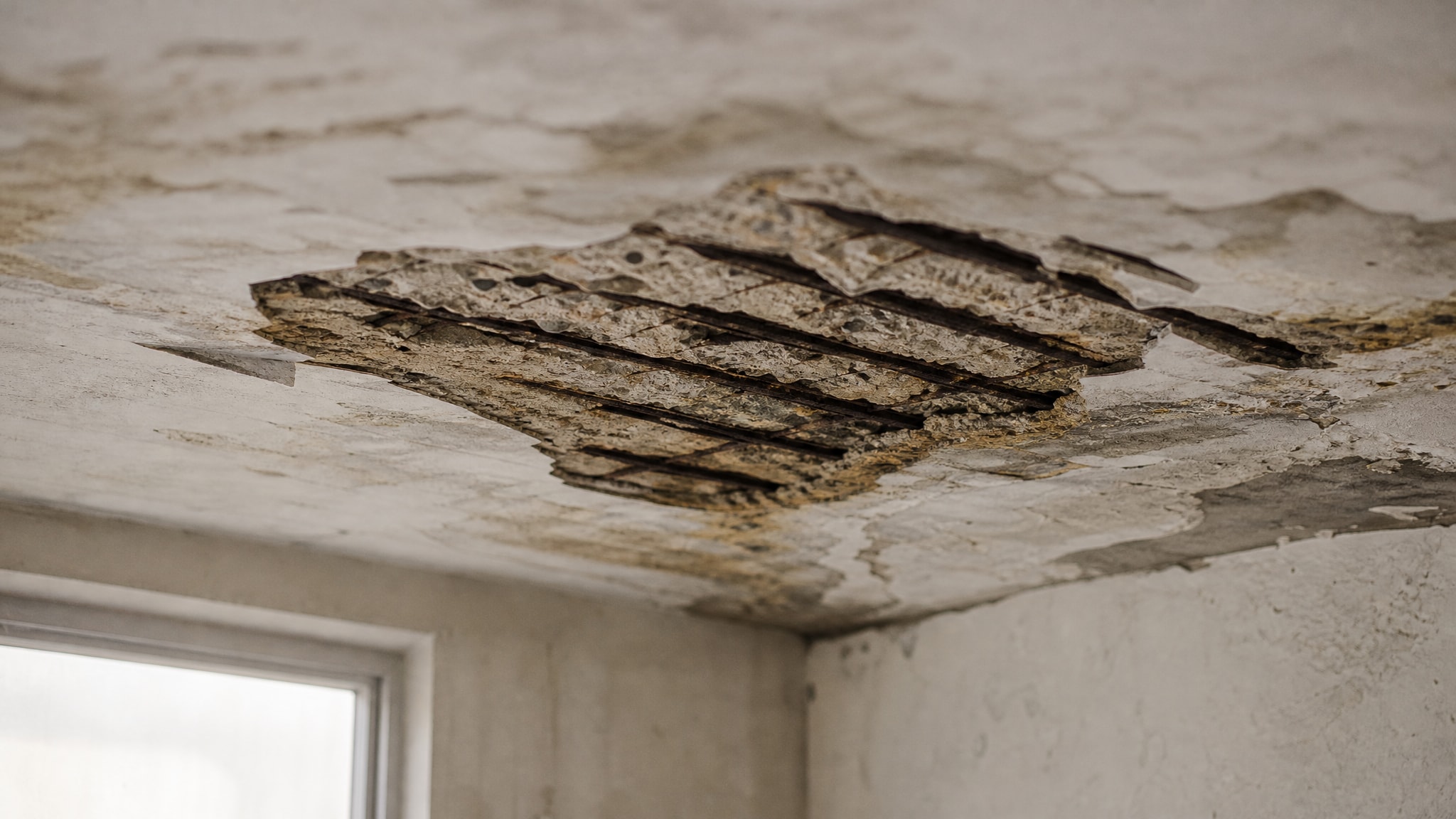
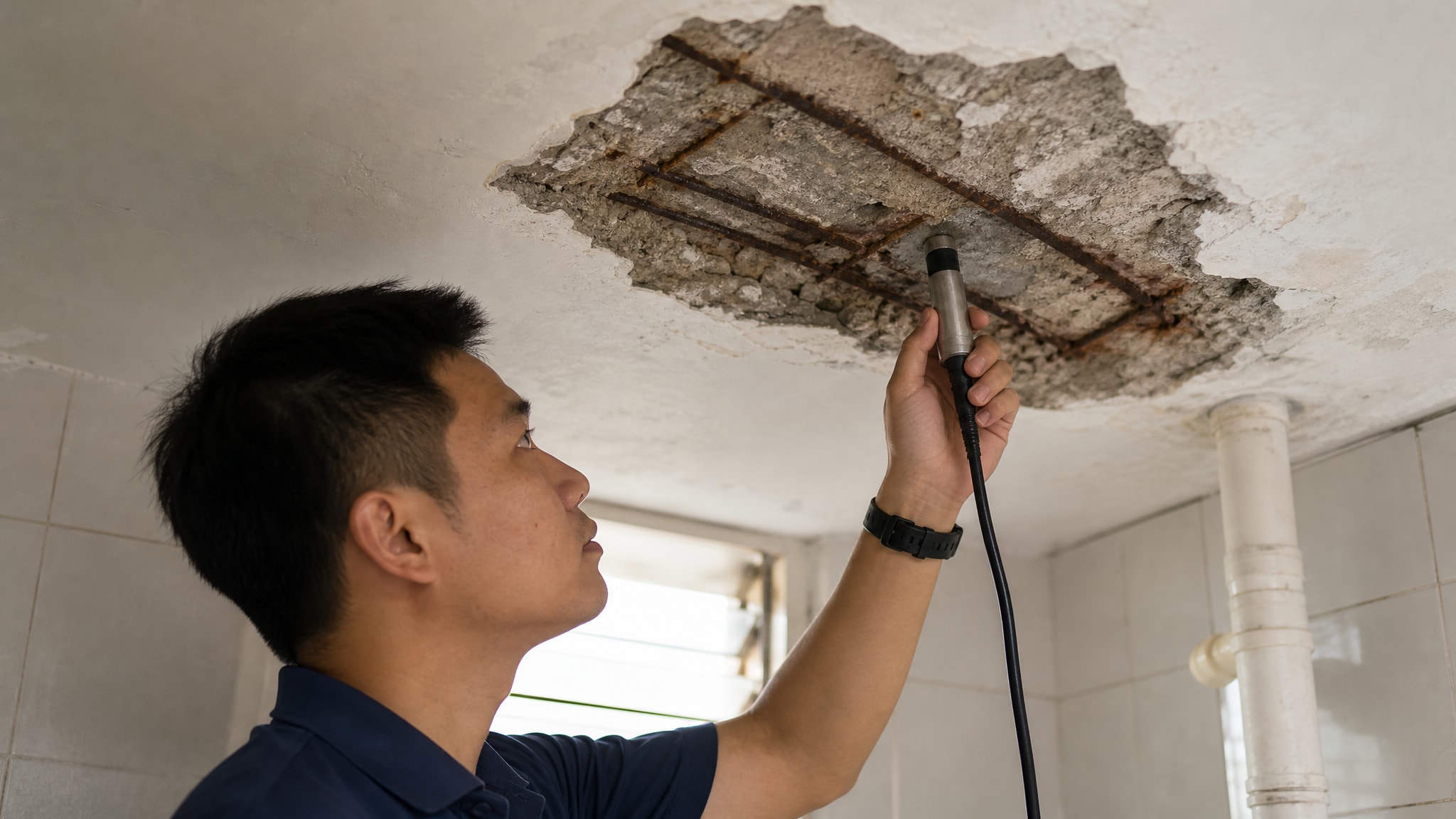
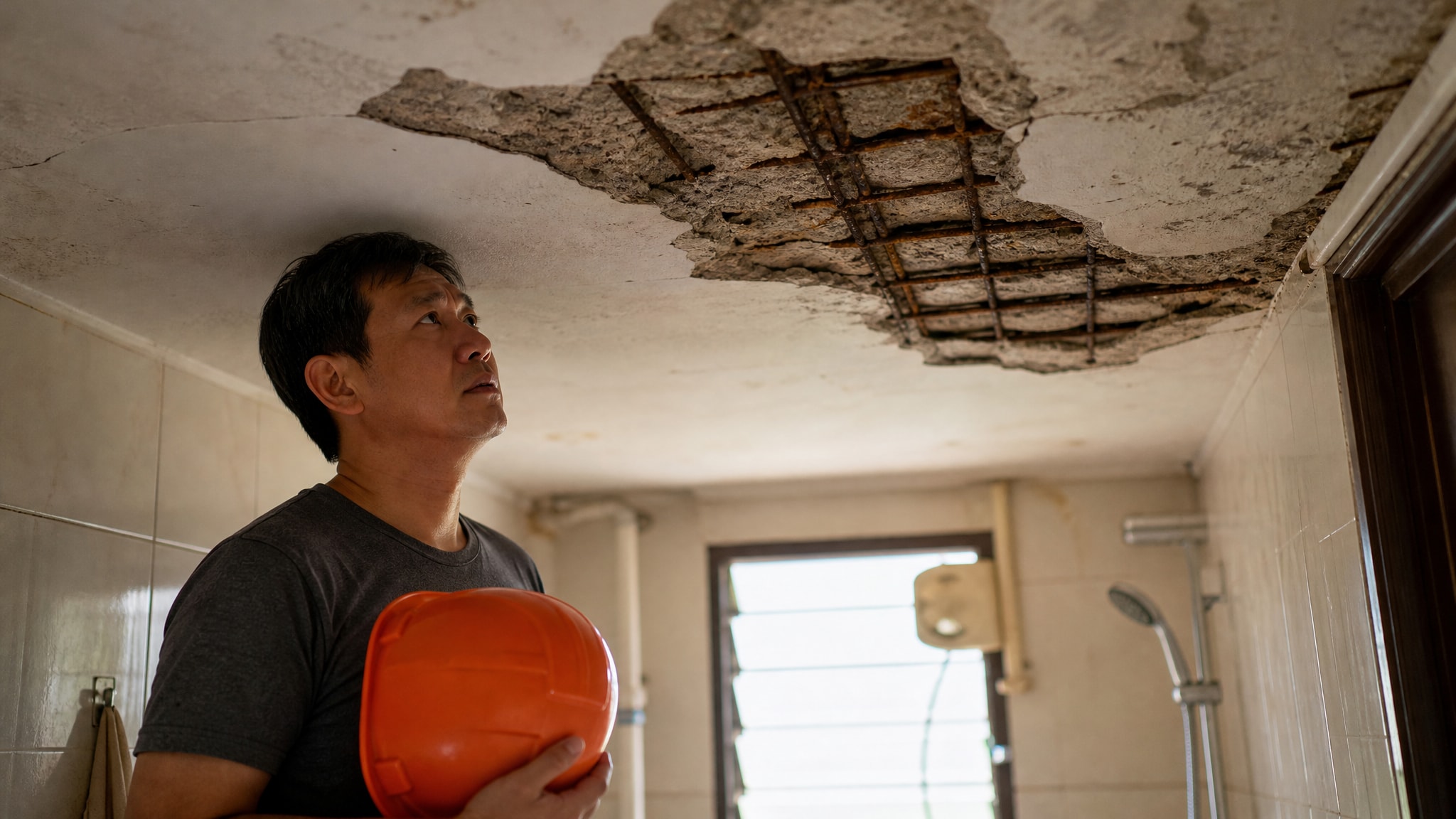
Spalling is the breaking away or flaking of concrete from a surface. It starts as a small crack or blister, then pieces of concrete begin to detach, exposing the steel reinforcement bars (rebar) beneath. Once that rebar is exposed, the problem accelerates quickly.
It matters because concrete isn't just a finish layer. It protects the steel inside. When it breaks away, both the structural integrity and the safety of the space are compromised. A falling chunk of concrete from a ceiling or corridor soffit is a real hazard.
Hdb spalling concrete repair.How Spalling Differs from Surface Cracks or Paint Peeling
It's easy to confuse early spalling with other common wall and ceiling problems. Here's a quick way to tell them apart:
Hairline cracks run along the surface but don't involve material loss. Learn more about how to tell hairline cracks from structural ones if you're unsure which you're looking at.
Paint peeling lifts the coating but leaves the concrete itself intact. Ceiling paint peeling and water damage in HDB flats is a related but separate issue.
Spalling involves actual concrete material breaking away, often with a hollow sound when you tap the surface, and usually with rust staining or visible rebar underneath.
If you tap a wall or ceiling and hear a dull, hollow sound rather than a solid knock, that's a warning sign worth taking seriously.
Hdb spalling concrete repair.The Main Causes of Concrete Spalling.
Understanding concrete spalling causes helps explain why the damage comes from the inside out, not the surface in.
Hdb spalling concrete repair.Corrosion of Steel Reinforcement Bars.
Rebar corrosion is the primary driver of spalling. When moisture reaches the steel inside the concrete, it begins to rust. As steel corrodes, it expands in volume. That internal expansion fractures the surrounding concrete from within, pushing it apart and eventually breaking it off. By the time you see the damage on the outside, the degradation inside has often been underway for years.
Hdb spalling concrete repair.Chloride Attack in Concrete.
Chloride attack is a major concrete spalling cause in coastal environments. Chloride ions, carried in salt air and rainwater, penetrate the concrete over time and break down the passive protective layer around the steel. Once that layer is gone, corrosion sets in rapidly. In Singapore, buildings face persistent chloride exposure from the surrounding sea air, making this one of the most significant deterioration mechanisms in the region.
Hdb spalling concrete repair.Carbonation and Moisture Ingress.
Concrete is naturally alkaline, and that alkalinity is what protects embedded rebar from rusting. Over time, carbon dioxide from the atmosphere reacts with moisture in the concrete in a process called carbonation, gradually lowering its pH. As the concrete becomes less alkaline, it loses its ability to protect the steel. Combined with moisture ingress through cracks and porous surfaces, carbonation strips the rebar of its last line of defence. Older concrete, with decades of exposure, is far more carbonated than new work.
Hdb spalling concrete repair.Why Singapore's Tropical Climate Makes Concrete Spalling Worse.
Singapore's environment is particularly hard on concrete. High annual rainfall, sustained humidity above 80%, and coastal salt air create one of the more aggressive concrete deterioration environments in the region, conditions that compress a building's effective concrete lifespan compared to drier or more temperate climates.
Hdb spalling concrete repair.High Humidity and Heat Cycles.
Moisture is the engine behind concrete spalling, and Singapore has it in abundance. Year-round humidity means concrete rarely fully dries out, so any pathway for water ingress stays active. Heavy tropical downpours saturate surfaces; then intense heat and sun drive rapid drying. That repeated wet-dry cycling stresses the concrete, widening micro-cracks and opening new pathways for moisture and chlorides to penetrate deeper with each cycle.
Temperature in Singapore stays high year-round. That sustained warmth speeds up the chemical reactions behind both carbonation and rebar corrosion, so deterioration that might take 40 years in a cooler, drier climate can develop significantly faster here.
Hdb spalling concrete repair.



Salt-Laden Coastal Air and Chloride Exposure
Singapore is a small island with no building far from the sea. Airborne chlorides from the sea breeze settle on building surfaces constantly. Even buildings several kilometres inland receive meaningful chloride deposition over years. For older HDB blocks with thinner concrete cover over the rebar, built to the standards of their era, that persistent chloride exposure is a serious problem. Chloride attack on concrete doesn't need a flood or a leak; slow accumulation over decades is enough.
HDB Building Age and Concrete Spalling in Singapore
This is the core context that makes concrete spalling in Singapore a particularly widespread issue in 2026. HDB blocks built between the 1970s and 1990s, a large slice of Singapore's public housing stock, are now 30 to 50 years old, well beyond the typical design service life of their original concrete finishes and rebar cover depths.
Construction standards have improved significantly since those decades. Many older blocks used thinner concrete cover over the rebar, which means moisture and chlorides have a shorter distance to travel to reach the steel. Original concrete mixes weren't always formulated to resist the chloride and carbonation exposure that Singapore's climate delivers over multiple decades.
The result is that concrete deterioration in HDB flats built in that era has become a common maintenance challenge. Toilets, kitchens, and external corridor ceilings are the most frequently reported spalling sites, all areas where persistent moisture, poor ventilation, or exposed pipework create ideal conditions for rebar corrosion. In our repair work across older HDB blocks, we consistently find that flats in buildings over 30 years old present more severe spalling depth and wider rebar rust spread than newer units, meaning earlier intervention saves significantly on repair cost and scope.
Early Warning Signs Every HDB Owner Should Know
Catching spalling early keeps the repair manageable. Look out for these signs in your flat, particularly in the toilet, kitchen, and any external-facing ceilings or walls:
Brownish or orange rust stains on ceilings or walls, this means the rebar inside is corroding and leaching through
Hairline cracks forming in clusters, especially in damp areas
A hollow or dull sound when you tap the surface with your knuckle, solid concrete sounds crisp; compromised concrete sounds dead
Bubbling or blistering of the concrete surface, often just before pieces start to detach
Visible chunks of concrete that have already broken away, or loose fragments sitting in corners
Don't wait until pieces are falling. By that stage, the repair area is almost always larger than it looks from the surface, and the rebar treatment required is more extensive. If your block was built before 1995, it's worth doing a walk-through of your toilets, ceilings, and corridor soffit now if you haven't recently. Persistent bathroom moisture issues are also worth looking at alongside this, bathroom mould treatment in Singapore often goes hand-in-hand with early-stage spalling investigation.
Why Early Repair Matters, and What to Do Next
Spalling is progressive. Once moisture reaches the rebar, the corrosion-expansion cycle speeds up, so the damage grows faster the longer it's left. A small spalled patch today can become a large section of delaminated ceiling within a few years in Singapore's climate.
For a full walkthrough of what the repair process involves, what questions to ask a contractor, and what to expect in terms of scope and cost, read our complete guide to spalling concrete repair for Singapore HDB flats.
If you've spotted any of the warning signs described here, or you're simply not sure what you're looking at, get in touch with Leng Painter for a direct assessment. We work across HDB flats throughout Singapore and can tell you quickly what you're dealing with and what it will take to fix it properly. WhatsApp or call us to arrange a visit.
Comments