
HDB Ceiling Hacking & Re-Plastering Cost Guide

Updated: Aug 18
If your HDB ceiling is bubbling, flaking, or dropping chunks of concrete, a coat of paint won't fix it. At some point, surface damage stops being cosmetic and becomes structural. That's when hacking and re-plastering, not a quick patch, is the only repair that holds. This guide breaks down HDB ceiling hacking and re-plastering cost, how the process works, and how to tell whether your ceiling has reached that point.
What Ceiling Hacking Involves and Why It's Sometimes Unavoidable
Ceiling hacking means physically breaking away loose, cracked, or spalled concrete and plaster until the contractor reaches sound, solid material underneath. Once that base is exposed and treated, the ceiling gets rebuilt in layers: render, then skim coat, then paint.
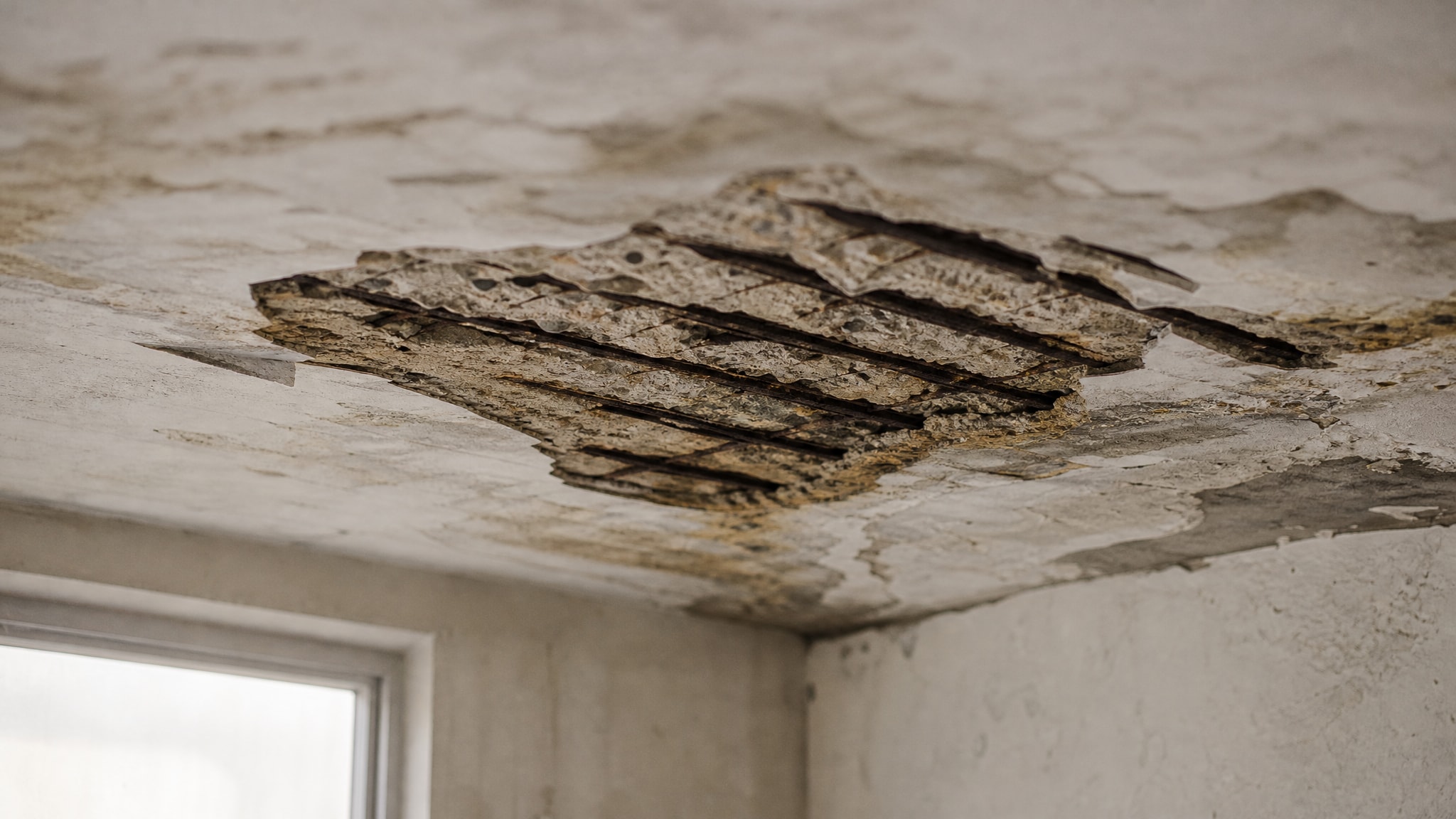
It sounds drastic compared to a simple repaint. But it's often the only way to stop the problem coming back. Concrete spalling happens when moisture reaches the steel reinforcement (rebar) inside the slab. The steel rusts and expands, and that expansion cracks the concrete around it from the inside out. Painting or skimming over that kind of damage just hides it. The rot keeps spreading underneath, and the same patch fails again within months.
Hacking vs surface skim coating: what's the difference
A skim coat is a thin layer of plaster or filler applied over an existing surface to smooth out minor imperfections. It works well for hairline cracks, old paint stains, or uneven patches, where the concrete underneath is still structurally sound.
Hacking is a different job entirely. It removes the damaged layer down to the substrate, so the repair starts from solid ground instead of covering up a weak spot. Most articles on ceiling problems focus on leak sources or mould treatment. This one deals with what happens when the damage has gone deeper than either of those fixes can reach.
When Is Ceiling Hacking Necessary vs a Simple Patch?
Not every stained or cracked ceiling needs hacking. Plenty of HDB ceilings just need a clean, a skim coat, and a repaint. The trick is knowing which category yours falls into before you pay for either.
Signs your ceiling needs hacking, not just a repaint
Watch for these warning signs:
Bulging or sagging patches, where the concrete surface has visibly lifted
A hollow sound when you tap the ceiling, instead of a solid thud
Rust-coloured staining, which usually means water has reached the rebar
Chunks of concrete flaking off or already fallen
Cracks that keep reappearing after previous repainting
If you're only dealing with a faint yellow-brown watermark and no texture change, you're likely looking at a leak stain rather than structural damage. Reading up on early warning signs of concrete spalling helps you catch the problem before it reaches the hacking stage.
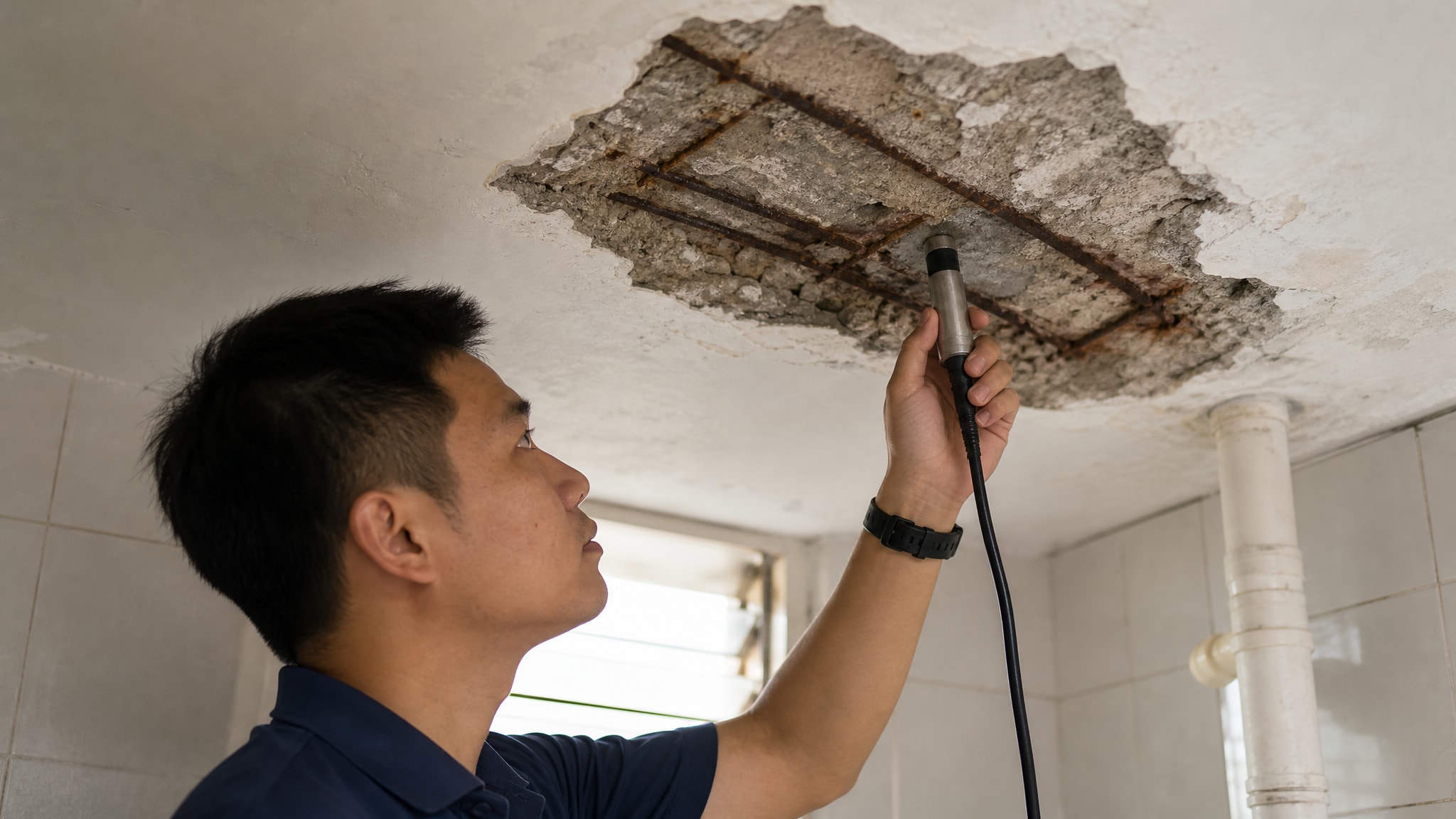
How a contractor tests for hidden spalling
Visual checks only tell part of the story. Spalling often starts inside the slab before it shows on the surface. A contractor will usually tap-test the ceiling in a grid pattern, listening for hollow or drummy sections that mean the concrete has separated from the layer above it. They'll also check for moisture with a meter, since damp concrete is more likely to have active rebar corrosion underneath. This is similar to how contractors assess a leaking ceiling, except the focus here is on structural soundness rather than tracing the water source.
Ceiling Hacking Cost in Singapore: Price Breakdown
Ceiling hacking cost in Singapore isn't a single fixed number. It depends heavily on how much of the ceiling is affected and how deep the damage goes. A contractor should always inspect the ceiling in person before quoting. Photos alone can't confirm what's happening above the visible surface.
Cost per square foot for hacking and re-plastering
As a general guide, cost per square foot for ceiling plastering rises the moment hacking is involved, compared to a plain skim-and-paint job. A small, localised patch, say, one spot of spalling around a light fitting, costs far less than hacking an entire toilet or kitchen ceiling. Whole-ceiling jobs also tend to cost more per square foot than large-area jobs elsewhere in the flat. Ceiling work is slower and dirtier, and it needs more protective setup underneath.
For a closer look at pricing specific to wet areas, the HDB bathroom ceiling repair cost guide breaks down costs for that particular room type. If you want pricing across other plastering jobs in the flat, general HDB plastering service prices covers that ground too.
What drives the price difference between mild and severe cases
A few factors push the price up or down:
Area size, a small patch costs less than hacking the full ceiling span
Severity, surface spalling is cheaper to fix than damage that's reached the rebar
Height and access, void decks, stairwells, or awkward ceiling angles need more scaffolding or ladder work
Rebar treatment, exposed steel needs rust removal and anti-corrosion coating before any render goes back on, which adds time and material cost
Hacking and re-plastering usually costs more per square foot than a simple skim coat, because it involves extra labour, debris removal, and a longer drying-and-curing period before finishing. That's the trade-off: it costs more upfront, but it actually solves the problem instead of buying a few months of clean paint.
Step-by-Step: The Hacking and Re-Plastering Process
Every hacking job follows roughly the same sequence, whether it's a one-metre patch or a full ceiling.
From hacking to plastering to finishing
Cordon and protect the area, floors, fixtures, and furniture get covered before any hacking starts, since it's a dusty, debris-heavy job.
Hack the affected concrete, the contractor chips away loose and spalled material until reaching solid, sound concrete.
Treat exposed rebar, any exposed steel gets cleaned of rust and coated with an anti-corrosion primer before being covered again.
Apply bonding agent and render, a bonding layer helps the new render grip the old concrete, followed by the structural render itself.
Skim coat, a smoother finishing layer goes over the render to prepare the surface for paint.
Sand and finish, the skim coat gets sanded flat once cured.
Repaint, the ceiling gets a fresh coat of paint to match the rest of the room.
Skipping the rebar treatment step is exactly why some patch jobs fail. Covering rusted steel without treating it first just restarts the corrosion cycle under a new layer of plaster.
Typical Timeline for a Hacking and Re-Plastering Job
Timelines vary a lot depending on scope. A small patch, one localised spot of spalling in a toilet ceiling, might be finished in a day or two, including drying time for the render and skim coat.
A larger job, like hacking an entire kitchen or bathroom ceiling, usually stretches over several days. This isn't because the labour itself takes that long. Each layer (render, then skim coat, then paint) needs proper curing time before the next one goes on. Rushing that sequence leads to cracking or poor adhesion later. If your ceiling has deteriorated badly and you need it addressed sooner, a same-day emergency ceiling repair service can assess urgent cases faster than a standard scheduled job.
How Leng Painter Quotes and Handles Ceiling Hacking Jobs
Leng Painter's crews assess whether a ceiling needs full hacking or just a skim coat during the same site visit, so homeowners get a straight answer instead of a guessing game. That inspection is free, and it happens before any quote is written up.
What to expect during Leng Painter's site inspection
The crew tap-tests the ceiling, checks for moisture and rust staining, and looks for exposed rebar before deciding on scope. A contractor who specialises in spalling concrete and plastering repairs will typically check for exposed or rusted rebar before quoting, since that's the clearest sign surface patching won't hold.
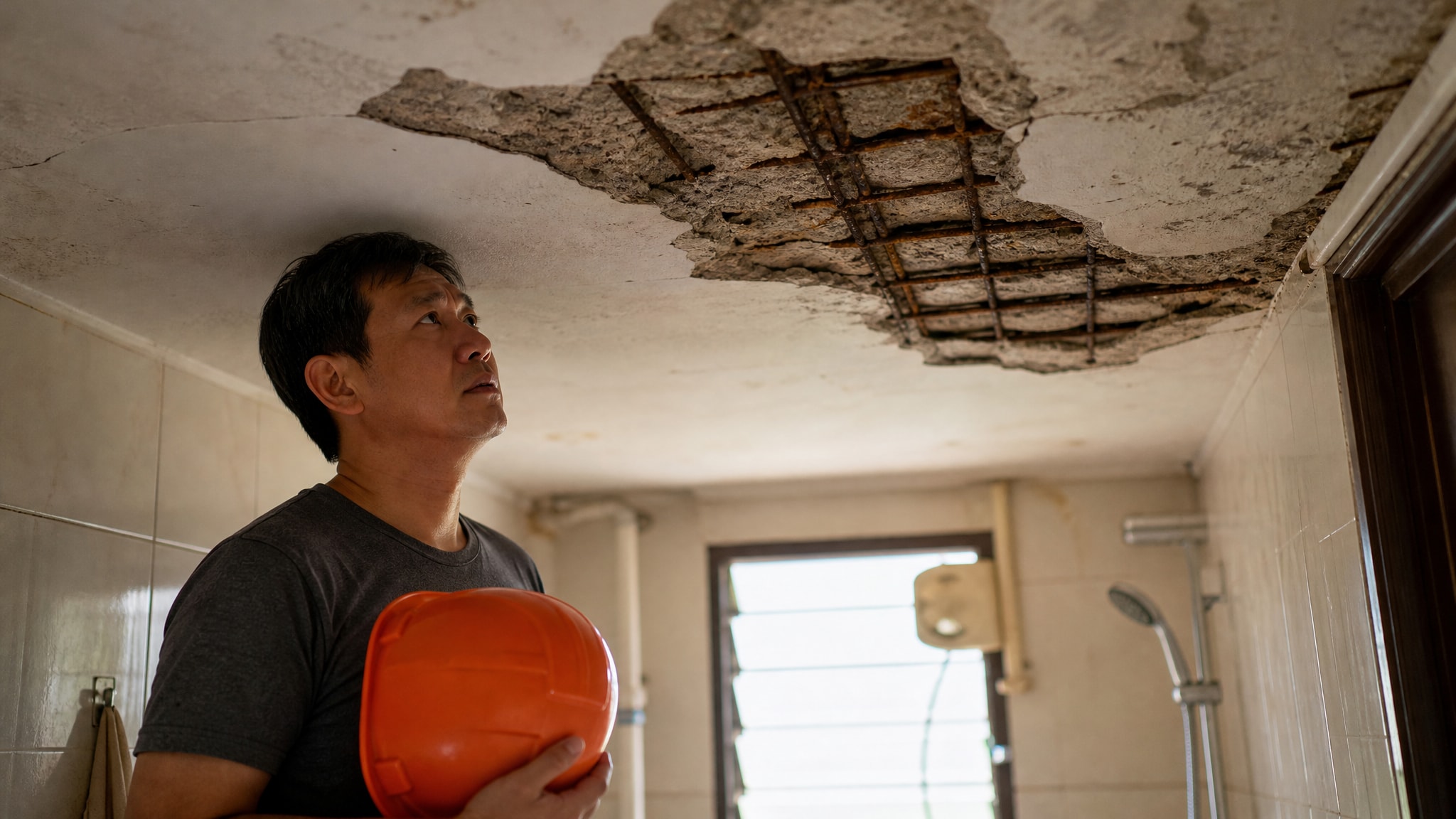
A typical HDB toilet ceiling with a small patch of spalling concrete around a rebar exposure may only need partial hacking of the affected section rather than the whole ceiling. Ceilings above bathrooms and kitchens get hacked more often than bedroom ceilings, because prolonged moisture exposure speeds up concrete spalling in those wet areas.
Once the scope is clear, you get a fixed quote before any work starts. No surprise charges once the ceiling is opened up. For more detail on how that quotation is structured, what to expect in a spalling concrete repair quotation walks through the process. If you're comparing hacking against other repair options, finding a specialist ceiling plastering contractor covers how to choose the right contractor for the job.
If your ceiling shows bulging, rust stains, or hollow sounds when tapped, don't wait for it to get worse. Request a free on-site inspection and quote from Leng Painter, and find out whether you're looking at a full hacking job or something far simpler.
Comments