
HDB Wall Crack Repair Contractor in Singapore: What to Know

Updated: Aug 18
A crack in your wall is never just cosmetic until you've actually checked it. Some cracks are harmless, a bit of shrinkage in the plaster, nothing more. Others point to water seepage or rebar corrosion working away behind the surface. As an HDB wall crack repair contractor in Singapore, we get called out to both kinds every week. The trick is knowing which is which before you reach for the filler.
This guide walks through how to tell a hairline crack from a structural one. It also covers what actually causes wall cracks in HDB flats, and why a proper repair job goes a lot deeper than a tube of sealant.
Hairline Crack or Structural Crack? How to Tell the Difference
Not every crack means trouble. But some do. The difference usually comes down to width, depth, and pattern. Here's a simple way to check before you decide whether it's a DIY touch-up or a job for a specialist.
Signs of a Harmless Hairline Crack
Hairline cracks are thin, usually under 1mm wide. You can barely fit a fingernail edge into them.
They tend to run in straight lines, often vertically or in a web-like pattern across a plastered surface. Most sit within the top plaster or skim coat layer, not the concrete underneath.
They don't grow noticeably over months. If you marked the ends last year and they look the same today, that's a good sign.
These are common in newer paintwork. They don't usually signal a structural crack vs hairline crack problem at all, just normal material shrinkage.
Warning Signs of a Structural Wall Crack
Structural cracks are wider, often more than 2-3mm, and you can usually see some depth to them.
Builders widely recognise diagonal cracks running from the corners of door or window frames as a stronger indicator of structural movement than straight vertical hairline cracks.
Watch for cracks that keep growing, ones you can feel with a fingernail as a distinct ridge or gap, or cracks paired with a hollow-sounding wall when tapped. Any of these calls for a proper inspection, not a paint job.
What Causes Wall Cracks in HDB Flats
Cracks don't appear for no reason. In HDB flats, the causes usually fall into a few well-known categories tied to how the building ages and how water moves through it.
Building Settlement and Age
Every building settles slightly after construction, and concrete keeps shrinking as it cures for years afterward.
Older HDB blocks, especially those over 30 years old, tend to show more settlement-related hairline cracking. The concrete has simply had decades to shrink and cure fully. This is normal ageing, not a defect. It's also one of the most common HDB wall crack causes homeowners ask us about.
Water Seepage and Rebar Corrosion
The more serious cause is water. Seepage from a bathroom, kitchen, or an external wall works its way into the concrete over time.
A hairline crack running along a wall near a bathroom or kitchen is often the first visible sign of water seepage working through the concrete from the other side, well before any staining appears. If you've noticed this pattern, it's worth reading about kitchen wall moisture damage as a related issue.
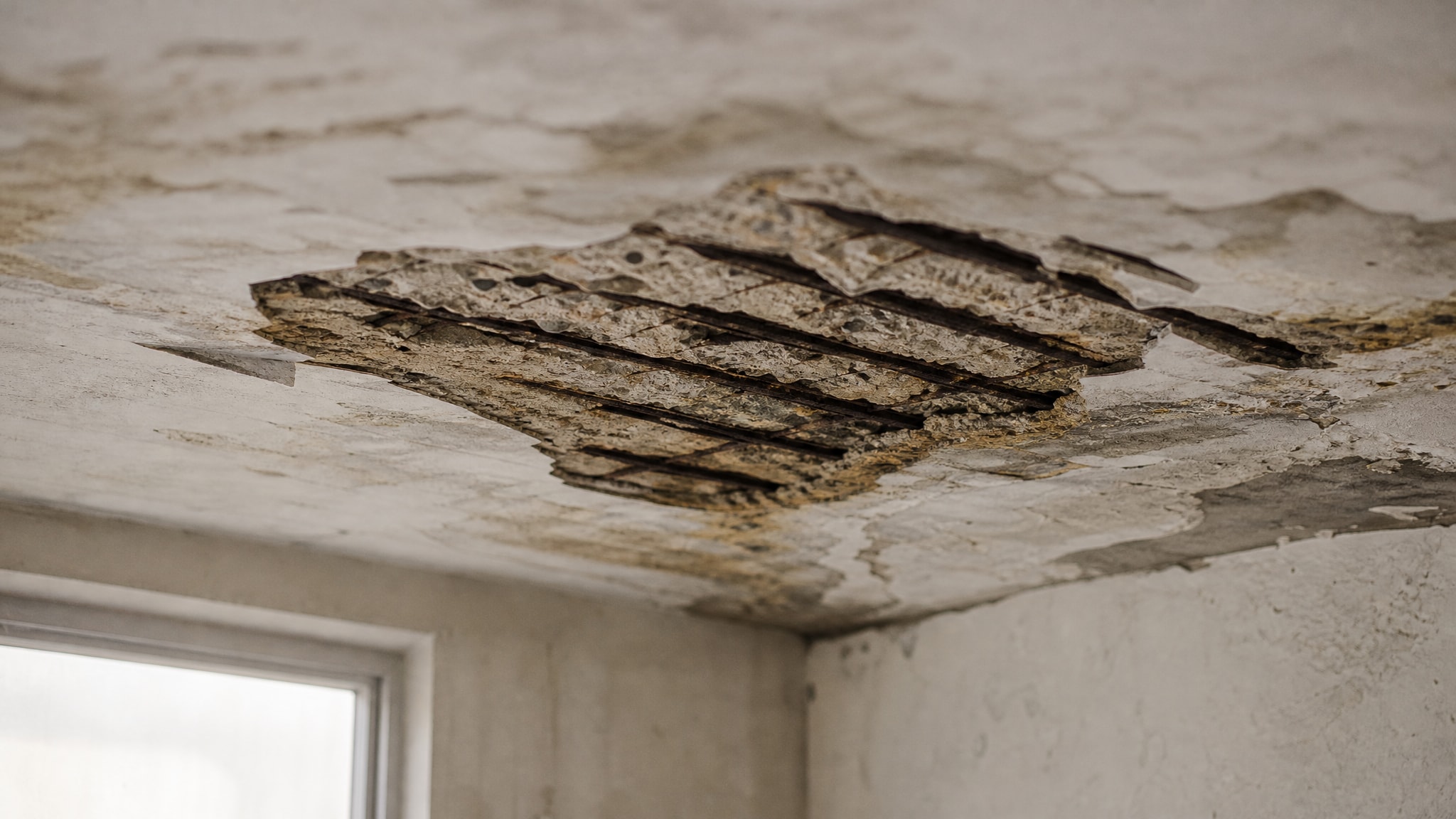
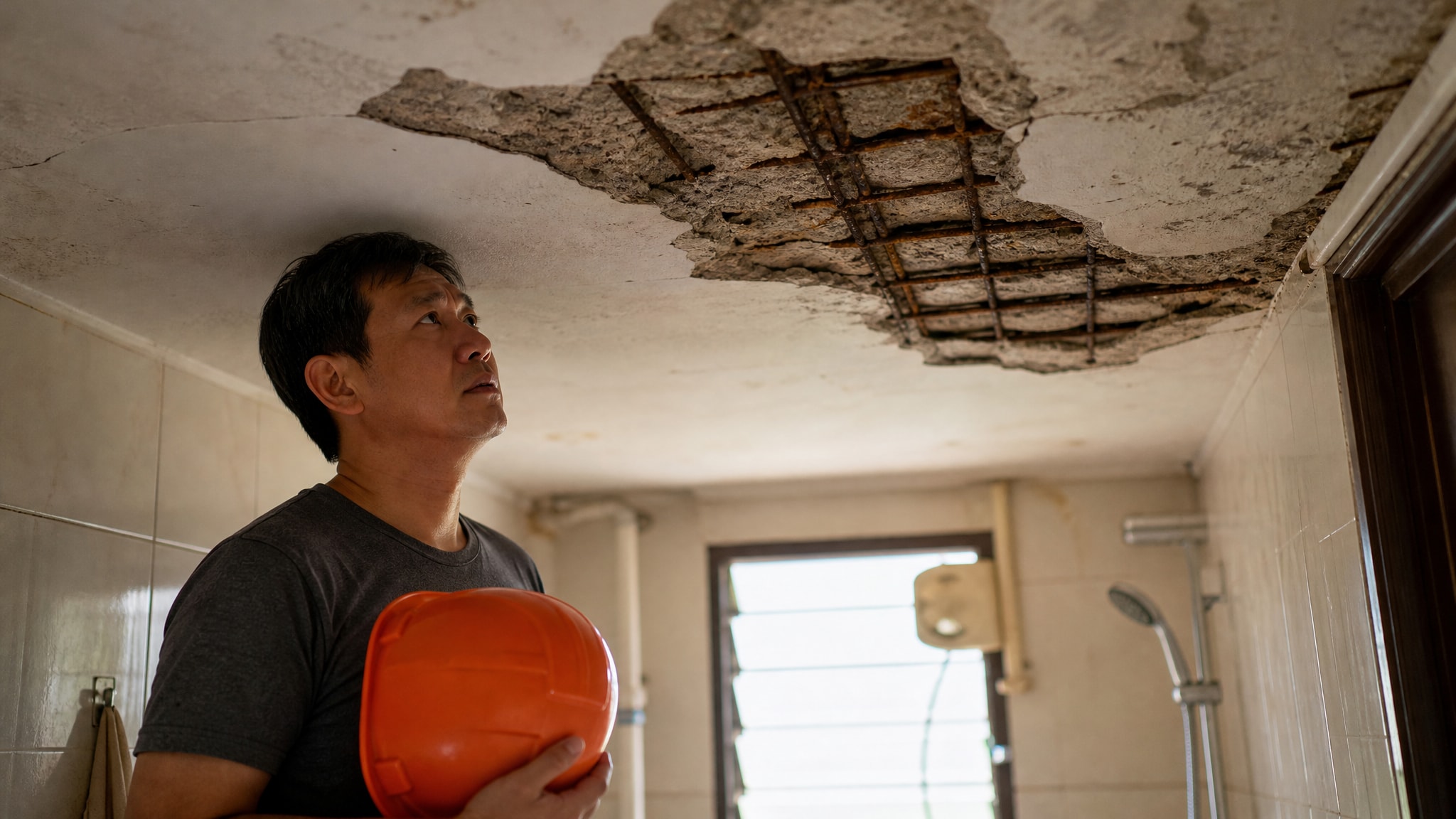
Once moisture reaches the steel reinforcement bars inside the concrete, they start to rust and expand. That expansion pushes outward, cracking and eventually spalling the concrete around it. This is exactly why cracks near wet areas deserve more attention than cracks on a dry internal wall. Check the early warning signs of concrete spalling if you're seeing bubbling paint or rust stains alongside the crack.
Why Filler Alone Doesn't Fix the Real Problem
It's tempting to grab a tub of filler, smooth it over, and repaint. For a genuine hairline crack, that's often fine. For anything caused by seepage or rebar corrosion, it's a temporary cover-up at best.
Filler and skim coat sit on the surface. They don't stop water getting in behind the wall, and they don't treat rusting rebar underneath. The moisture keeps working. The rust keeps expanding. The crack comes back, usually wider than before.
Leng Painter's crews commonly find that cracks homeowners report as "small and cosmetic" are sitting directly above corroding rebar once the plaster is chipped away for inspection. From the outside, it looked like nothing. Underneath, the steel was already compromised.
This is the core reason DIY patching on anything beyond a true hairline crack usually ends up costing more later. You pay for the filler, then pay again for the proper repair once the wall reopens.
What a Proper HDB Wall Crack Repair Involves
A specialist repair doesn't start with filler. It starts with figuring out why the crack is there in the first place.
Diagnosis and Moisture Testing
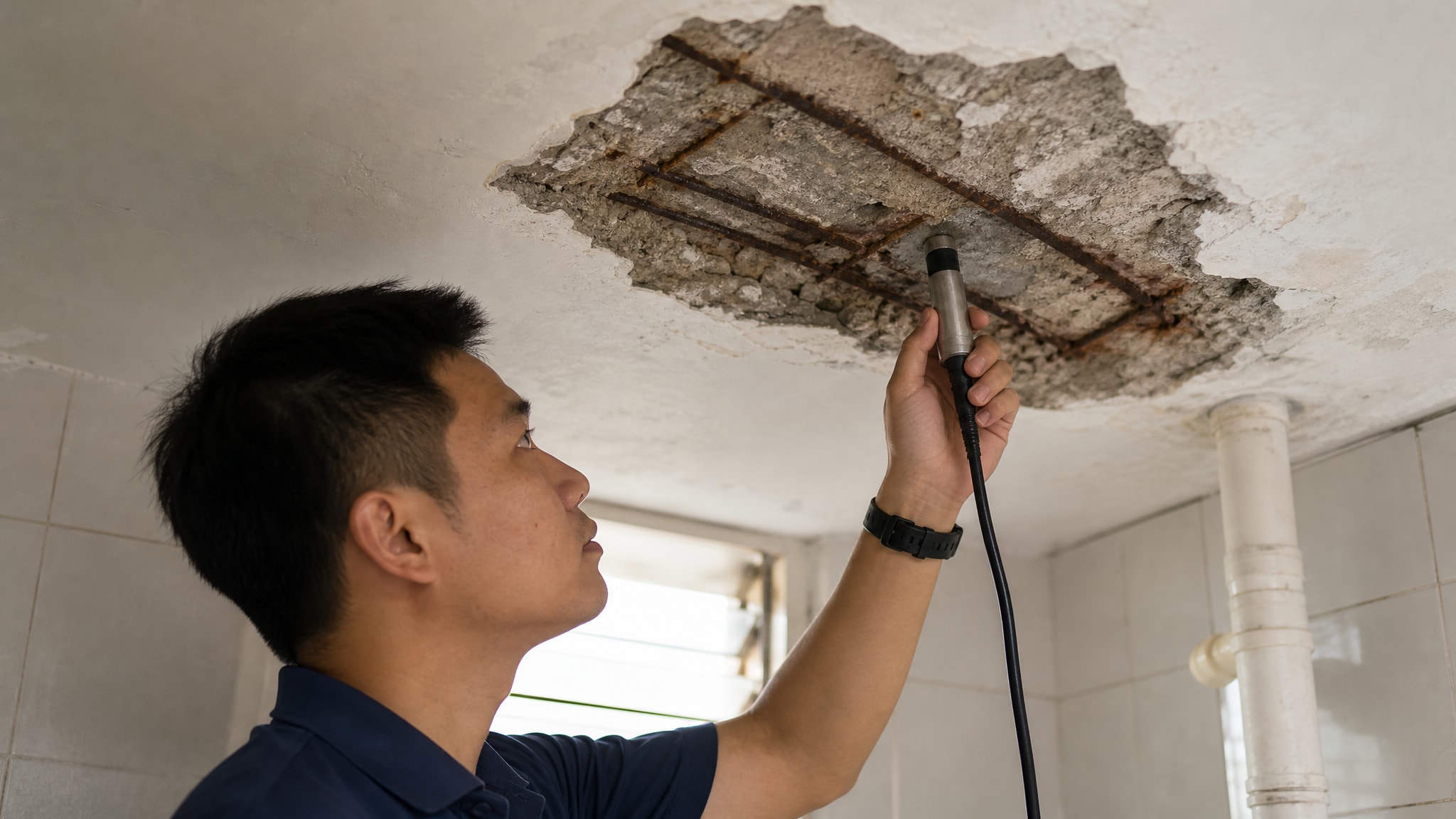
The first step is a physical inspection of the crack: its width, direction, and location relative to plumbing, external walls, and wet areas.
Where we suspect seepage, we use moisture testing to check how far the damp has spread inside the wall. This tells us whether the issue is confined to one spot or has already travelled along the wall. We often check cracks near bathrooms against known patterns of bathroom concrete spalling and waterproofing, since the two issues frequently show up together.
Repair Steps: From Chipping to Refinishing
Once the diagnosis is clear, the repair itself usually follows this sequence:
Chipping out the affected plaster or concrete around the crack to expose what's underneath
Treating any exposed rebar for rust, or removing corroded sections entirely
Patching the concrete with the right repair mortar, layer by layer where needed
Waterproofing the area if seepage was the root cause
Skim coating, sanding, and repainting to match the surrounding wall
Every step matters. Skip the corrosion treatment and the crack returns. Skip the waterproofing and the seepage finds a new path out.
Wall Crack Repair Cost in Singapore: What Affects Pricing
There's no single number for wall crack repair cost in Singapore HDB flats. So much depends on what's actually behind the crack.
A short, shallow hairline crack on one wall costs far less to fix than a crack that's spread across several walls with active seepage underneath. Length and depth are the first factors that push price up or down.
The number of affected walls matters too. One crack in a bedroom is a much smaller job than cracks appearing in a bathroom, an adjoining bedroom wall, and a kitchen, all from the same seepage source.
Whether the job needs waterproofing or rebar treatment adds real cost, since both involve extra materials and labour beyond a simple patch. Unit accessibility (high floors, tight corridors, or scaffolding needs) can shift pricing as well.
For a sense of how contractors typically break down these costs, it helps to see what a spalling concrete repair quotation should cover, since wall crack jobs are often quoted the same way. The only reliable way to get an accurate figure for your flat is an on-site assessment.
When to Call a Specialist Wall Crack Repair Contractor vs a Handyman
A general handyman can paint over a hairline crack and it'll probably be fine. But once seepage, corrosion, or structural movement is in play, you need someone who knows how to diagnose and treat the cause, not just the surface.
Red Flags That Need a Specialist, Not a Handyman
Call a specialist wall crack contractor if you notice:
Cracks wider than 2-3mm or ones that keep growing
Diagonal cracks near door or window frames
Cracks near bathrooms, kitchens, or external walls
Rust stains, bubbling paint, or a hollow sound when tapping the wall
A crack that's returned after a previous filler-only fix
If you're searching for a wall crack contractor near you in Singapore, look for one with a track record in structural and spalling repair specifically, not just general painting or patching work. It's a similar consideration to choosing a spalling concrete contractor, and the two skill sets overlap heavily. If your issue turns out to be more about surface plastering than a structural crack, finding a local plastering specialist and comparing plastering repair work pricing is worth doing too, so you know which type of job you actually need.
Leng Painter inspects the crack, tests for moisture, and tells you plainly whether it's cosmetic or structural before any work starts. If you're unsure which kind of crack you're dealing with, contact us for a free on-site assessment via WhatsApp or a quick call. We'll give you a straight answer and a proper quote. No guesswork, no filler-and-hope.
Comments