
Water Leak Ceiling HDB Repair Assessment: Diagnosis Guide

Updated: Aug 18
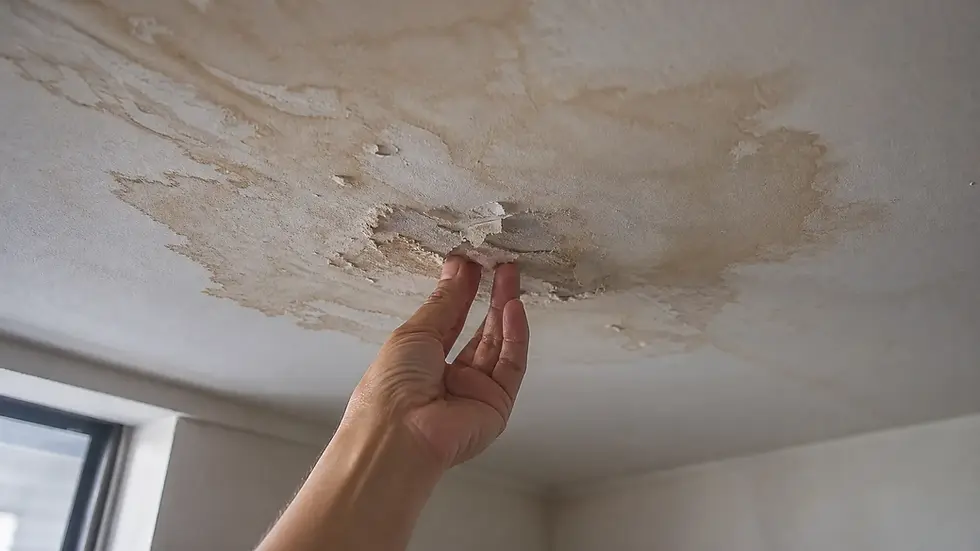
A water leak ceiling HDB repair assessment isn't about booking a contractor and touching up the paint. Get the diagnosis wrong, and you'll be dealing with the same stain, or worse, within a few months. This guide walks you through how to read what your ceiling is telling you, trace the source, understand who's responsible, and plan a repair that actually holds.
Why Getting the Diagnosis Right Matters First
Surface repairs fail when the source is still active. Based on jobs we handle regularly, most repeat ceiling stain calls involve a previous repair that treated the painted surface without touching the waterproofing layer above. The leak simply came back within months.
The core problem is that two things look identical from below: a ceiling with a current, active leak, and a ceiling that had a leak which has since dried up. The fix for each is completely different. Repainting a dry stain is fine. Repainting an active leak is a waste of money.
Before any contractor touches your ceiling, you need to know three things:
Is the leak active or resolved?
Where is the water coming from?
How deep has the damage gone?
Everything else, cost, timeline, materials, follows from those answers.
How to Find a Water Leak in Your HDB Ceiling
Signs That Point to an Active Leak vs. Old Water Damage
The fastest way to check: touch the stain. A dry, firm stain that doesn't change after rain or after the upstairs neighbour uses water is likely historical damage. A stain that feels damp, spreads after heavy rain, or reappears after being painted over is active.
Other signs of an active leak:
Paint is bubbling or blistering across a widening area
You can see water droplets or a drip line
The plaster feels soft when you press it lightly
A musty smell develops after rain or after upstairs bathroom use
Old water damage typically shows as a stable yellow-brown ring with crisp edges and no soft spots in the plaster. It still needs treatment, but it's not an emergency.
Tracing the Source: Upstairs Neighbour, Pipe, or Condensation?
Knowing how to find a water leak in your ceiling means mapping the stain location against what sits directly above it.
Upstairs bathroom or kitchen: If the stain sits beneath a wet area, toilet, shower, kitchen sink, suspect the waterproofing membrane or tile grout above. A common scenario: a resident in a mid-floor HDB flat notices a yellow ring stain near the toilet area. The upstairs neighbour's bathroom tiles had cracked grout that let water seep through the screed, saturate the concrete slab, and appear on the ceiling below, often weeks after the crack formed. That delay matters: the stain shows up long after the grout cracked, so you're chasing a problem that's been developing quietly.
Burst or leaking pipe: Pipe leaks tend to appear suddenly and spread fast. If the stain grew quickly and isn't tied to bathroom use patterns upstairs, a concealed pipe joint may be the culprit. A plumber needs to confirm this before ceiling work begins.
Condensation: Less common in HDB flats, but possible in air-conditioned rooms with poor insulation above the false ceiling. Condensation stains are usually diffuse and don't track to a specific wet area above. They also tend to recur in humid months.
Ask the upstairs resident whether they've noticed any wet patches on their floor, or whether their bathroom has recently had tile or waterproofing issues. That conversation can save significant time and money.
Water Stain Assessment: What the Damage Is Telling You
Surface Staining vs. Structural Deterioration
Not all ceiling damage is equal. A proper water stain assessment tells you whether you're dealing with cosmetic discolouration or deeper structural damage.
Yellow ring stain with a dry, hard edge: Slow seepage that has since dried. The water migrated through the slab over time and evaporated, leaving mineral deposits as a stain. Cosmetic repair is possible, but only after confirming the source is resolved.
Dark, spreading patch: Active or recent moisture. The concrete is still saturated. Repainting now will trap moisture and cause the new paint to fail quickly.
Bubbling or flaking paint: Water is caught between the paint film and the plaster. This means moisture has been present long enough to break the paint bond. Ceiling paint peeling from water damage is a direct result of this, and it won't stop recurring until the moisture source is gone.
Spalling concrete: Ceiling water damage that shows spalling, where the concrete itself is flaking or exposing rebar, is no longer a cosmetic issue. It signals prolonged moisture penetration into the structural layer, and plastering over it without treating the concrete will fail. If you see grey concrete chunks falling or rebar starting to show, that's a separate repair category. Understanding what spalling concrete looks like and why it happens helps you know how serious your situation is before you get quotes.
For toilet ceiling stain removal specifically, the stain profile almost always traces back to bathroom waterproofing above, and the treatment must address that layer, not just the painted surface.
Upstairs Water Damage: Your Responsibilities and HDB's Rules
In a strata-style building like an HDB flat, upstairs water damage to your ceiling almost always originates from your neighbour's unit. HDB's framework places responsibility for pipe leaks and waterproofing failures on the flat where the defect originates. If your upstairs neighbour's bathroom waterproofing has failed, they are required to carry out repairs, and HDB's Community Mediation Centre can be involved if the neighbour is uncooperative.
In practice, that means:
You report the issue to HDB and document the damage with photos and dates.
Your upstairs neighbour is responsible for investigating and fixing the source within their flat, typically the waterproofing membrane or a pipe.
You handle the repair to your own ceiling once the source above is confirmed fixed.
Do not repair your ceiling before the source is resolved. It will fail again, and you'll bear the cost twice.
If your neighbour disputes responsibility or is slow to act, HDB's Community Mediation Centre offers a structured process to resolve the dispute without going to court. Keep a paper trail: photos, dates, written messages to your neighbour, and any correspondence with HDB.
Leaking Ceiling Repair Cost and Timeline: What to Expect
Leaking ceiling repair cost in an HDB flat varies based on the scope of work required, not just the visible damage.
Stain treatment only (source already resolved, surface damage only): This is the lightest scope. It involves sealing the stain, skimming any minor surface imperfections, and repainting. Typically completed in one to two days.
Waterproofing above + ceiling repair below: When the waterproofing membrane in the upstairs bathroom needs replacement, that work happens in the upper flat. Once done, the affected ceiling below needs hacking back of damaged plaster, a waterproofing coat if required, re-skimming, and repainting. This is a multi-day job and the cost reflects the added layers.
Spalling concrete + waterproofing + replastering + repainting: The most involved scope. Spalling requires treating the exposed concrete and any rebar corrosion, then building back up with fresh plaster before waterproofing and painting. Skipping any step means the repair will fail again.
The correct sequence in every case is: fix the source → confirm it's dry → waterproof if required → skim and plaster → repaint. Reversing or skipping steps to save time is the most common reason ceiling repairs need to be redone. If you're weighing the extent of work needed, it's also worth reading about whether to repair or replace your HDB ceiling, in some cases where damage is widespread, replacement is more cost-effective than repeated patching.
Prevention: Stopping the Next Ceiling Leak Before It Starts
Once your ceiling is repaired, a few routine checks will reduce the chance of a repeat.
Bathroom tile grout: Check grout lines in your own bathroom every year, especially around the shower, toilet base, and bath. Cracked or missing grout is the most common entry point for water into the screed below. Regrout early, it's far cheaper than the waterproofing job that follows if you leave it.
Pipe joints under sinks and behind concealed panels: Look for drip marks, rust staining, or salt deposits around joints and valves. These signal slow weeping that will eventually saturate the slab.
Waterproofing membrane lifespan: In Singapore's tropical climate, waterproofing membranes in older HDB bathrooms, particularly flats built before the 1990s, are well past their typical service lifespan. Regular inspections matter most in ageing units. If you're renovating, include waterproofing as a fixed line item, not an optional upgrade.
Ceiling inspections after heavy rain: Check ceilings near wet areas after prolonged rain. Catching a stain when it first appears is far cheaper to treat than finding it after months of hidden seepage.
Preventing bathroom mould in Singapore HDB flats and preventing ceiling leaks are closely linked, both come down to controlling moisture at the source. Mould on your ceiling is often an early sign that moisture is consistently present. If you spot crack lines during your inspection, understanding hairline and structural cracks in HDB concrete will help you judge whether they're contributing to water ingress or are a separate issue.
If you've spotted a stain and want to know exactly what you're dealing with, the most reliable step is an on-site assessment. A photo or description can point you in a direction, but confirming the leak source, and ruling out the alternatives, requires eyes on the ceiling and, often, a conversation with the upstairs unit. Contact Leng Painter to arrange a visit. We'll assess the source, the damage depth, and the repair scope before any work begins, so you know what you're signing up for.


Comments