
HDB Kitchen Ceiling Mould Removal Cost in Singapore

There is no flat rate for removing mould from an HDB kitchen ceiling. The price follows the cause and the scope: how big the patch is, how deep it has gone, and whether water is still getting in from somewhere.
That is why a quote given over the phone without seeing the ceiling is a guess. A small patch of surface mould is a quick clean and repaint. A ceiling that stays damp because of a leak upstairs is a different job, and it starts with the leak, not the paint.
Kitchen mould also behaves differently from the mould most people know in the toilet. A toilet ceiling grows mould mainly from the bathroom's own damp. A kitchen ceiling can get it from two very different places, and you need to know which one you have before anyone prices the work.
What Causes Kitchen Mould on HDB Ceilings in Singapore
Kitchen mould in Singapore flats comes from water that arrives from outside your unit or moisture that your own cooking creates. The two need different fixes, so treating them the same way wastes money.
Upstairs Kitchen Leaks Are Often the Source
If the stain sits in one spot and keeps coming back, suspect the unit above. Water can come through cracked floor tiles, failed waterproofing under the screed, or a leaking sink trap or washing machine hose. It seeps down into your slab and shows up on your ceiling, sometimes weeks after the leak began.
Picture a typical case. Black spots appear on your kitchen ceiling right under the neighbour's sink. You wipe them, they return in a fortnight, and you wipe again. Nothing holds until the upstairs pipe is repaired, because the ceiling is being re-wetted from above.
Tile faults are one of the most common leak paths. If you want to know what that repair involves on the upstairs side, here is a guide to the cost of fixing cracked kitchen floor tiles.
Upstairs leak mould is not fixed from your side of the ceiling. You can clean and repaint as often as you like, but the mould will return until the source is stopped.
Steam, Condensation and Weak Extraction
The other cause is your own kitchen. Wok cooking, boiling and steaming put a lot of moisture into the air, and Singapore's humidity means it has nowhere to go. Warm, wet air hits the cooler ceiling surface, condenses, and mould settles in.
This type usually spreads in a wider, even film. It tends to be worst above the hob, near the window and in corners where air barely moves. A weak or clogged extractor hood, or a kitchen that stays shut while you cook, makes it worse.
Here the fix is partly in your habits and equipment. Clean the ceiling properly, repaint with anti-mould paint, and then give the steam somewhere to go, or the mould will be back within a year or two.
Telling Mould Apart From a Leak Stain
Not every dark mark on a ceiling is mould, and the difference decides what gets priced. You can check most of it yourself from the kitchen floor.
Mould shows up as fuzzy black, green or grey-green spots. Wipe them and they look better for a few days, then return. Mould is a sign of persistent damp, not necessarily of a live leak.
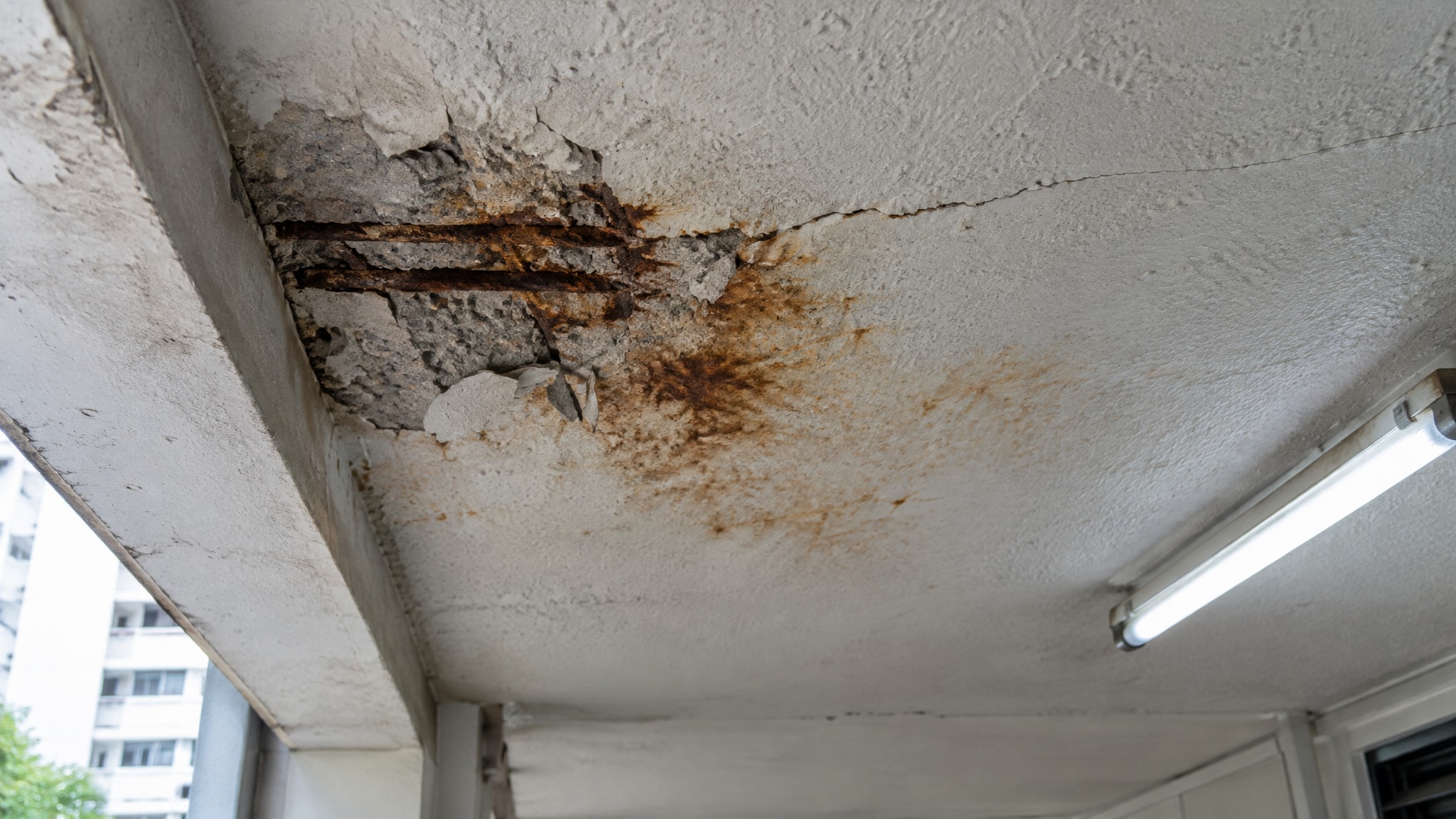
A leak stain looks different. Brown tide lines with a clear edge, paint that bubbles or peels, a patch that feels damp or cold, or a board that sags in the middle all point to water that is still arriving. A sagging ceiling board should be looked at soon, because wet board can fail.
Some ceilings show both: a brown ring with black spots growing inside it. In that case, treat it as a leak first.
Tracing live water has to come before any treatment is priced, since a ceiling repaired under a live leak is money spent twice.
What Drives Mould Removal Costs for HDB Kitchen Ceilings
Mould removal cost in HDB flats depends on a handful of things, and each one can move the total up or down. This guide cannot give you a figure, because the same-looking stain can be a morning's job or a multi-day one once the ceiling is inspected.
Affected Area, Ceiling Type and Access
These are the main drivers:
Affected area. A palm-sized patch near a corner costs less than mould spread across most of the ceiling.
Ceiling type. Work on a false ceiling or plaster ceiling is not the same. Boards may need to be opened up or replaced, while a plaster ceiling is cut back and re-plastered.
Height and access. Tall ceilings, cluttered cabinets below, or a hob that has to be covered all add time to the setup.
Depth. Surface mould that wipes and washes off is cheap to deal with. Mould that has gone into the plaster or board means cutting out material.
The leak. If water is still coming from upstairs, stopping it is a separate job, and it is not part of a ceiling quote.
For a wider look at ceiling pricing in common areas, this piece explains what drives ceiling repair prices. The logic carries over to kitchens, though the kitchen has its own factors above.
Re-Plastering and Anti-Mould Paint Scope
Once the mould is dealt with, the finish decides how long the repair lasts. If plaster has been cut out, it has to be re-plastered, cured and sanded before anything goes on it. After that comes a mould-resistant primer and anti-mould paint.
You can often keep costs down by repainting just the affected section, but a patch repaint can show as a different shade against the rest of the ceiling. Some owners prefer to repaint the whole ceiling for a clean result. Ask for both options so you can see the difference in scope.
A fair quote shows these items separately. If everything is lumped into one line, you cannot see where the money goes.
Who Pays When the Leak Starts Upstairs
The flat where the water starts is normally the one expected to fix the source. That means your neighbour is usually responsible for repairing the pipe, tile or waterproofing that is leaking. You, below, are usually responsible for repairing your own ceiling once the leak has stopped.
Do not take this as a fixed rule for your case. Check the process with HDB before you commit money, because the steps and who handles what can depend on the situation. This is general guidance, not legal advice.
The practical point is the order of work. Settle the leak fix first, then pay for ceiling work. Spending on paint before the source is dealt with is the most common way owners end up paying twice.
Documenting the Leak Before You Pay
If you suspect water is coming from above, start a record now. It costs nothing and helps if you need to raise the matter with your neighbour, the town council or HDB.
Photograph the stain with a date on each shot, and repeat every few days or after rain or heavy use upstairs.
Mark the edge of any wet patch lightly in pencil, so you can show if it grows.
Note when you see it: after the upstairs washer runs, after cooking, or only after rain.
Keep copies of any messages with your neighbour or any HDB reports.
That timeline shows whether the stain is active, which also helps your contractor trace the source.
Kitchen Ceiling Mould Treatment, Step by Step
Start by stopping the moisture. Whether that means the upstairs leak is fixed or your extraction is improved, nothing else will last until it is done. Then protect yourself: open the windows, and wear a mask and gloves before you touch the mould.
One safety point matters in a small kitchen. Never mix bleach with ammonia-based or acidic cleaners, because the fumes are hazardous. Use one product at a time and keep the space ventilated.
After that, the job splits by depth. If you are unsure whether you need to treat the mould or re-plaster the ceiling, a contractor can tap and inspect the plaster to tell you.
Cleaning and Drying Surface Mould
Where the mould sits only on the paint and the plaster underneath is hard and dry, a surface treatment is enough. The mould is washed with a fungicidal solution, left to work, then removed. The ceiling must then dry completely, which can take a while in Singapore's humidity, and a fan helps.
Only when it is fully dry does it get a mould-resistant primer and anti-mould paint. Rushing the drying is how mould returns under fresh paint.
When Plaster or Board Has to Come Off
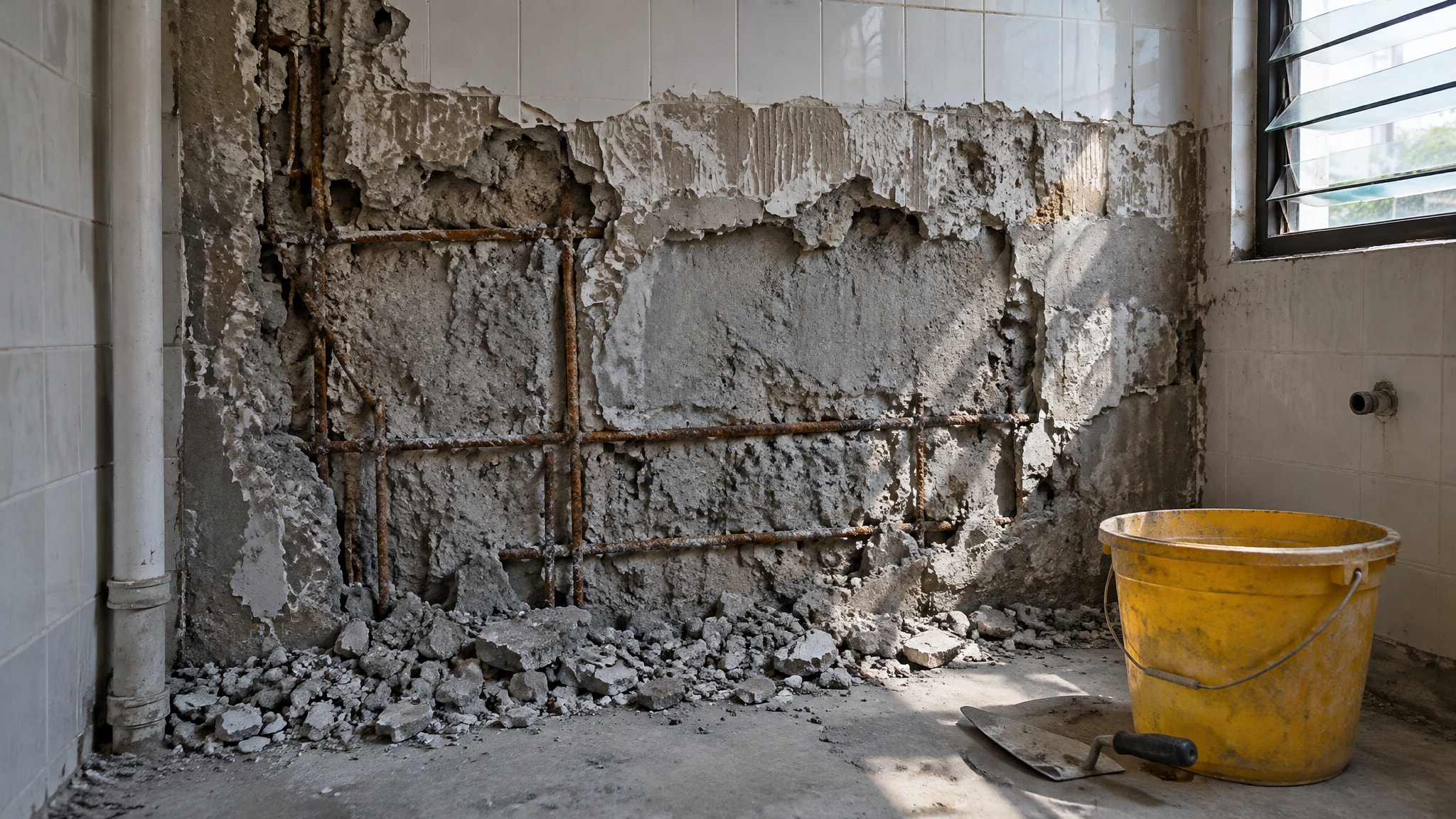
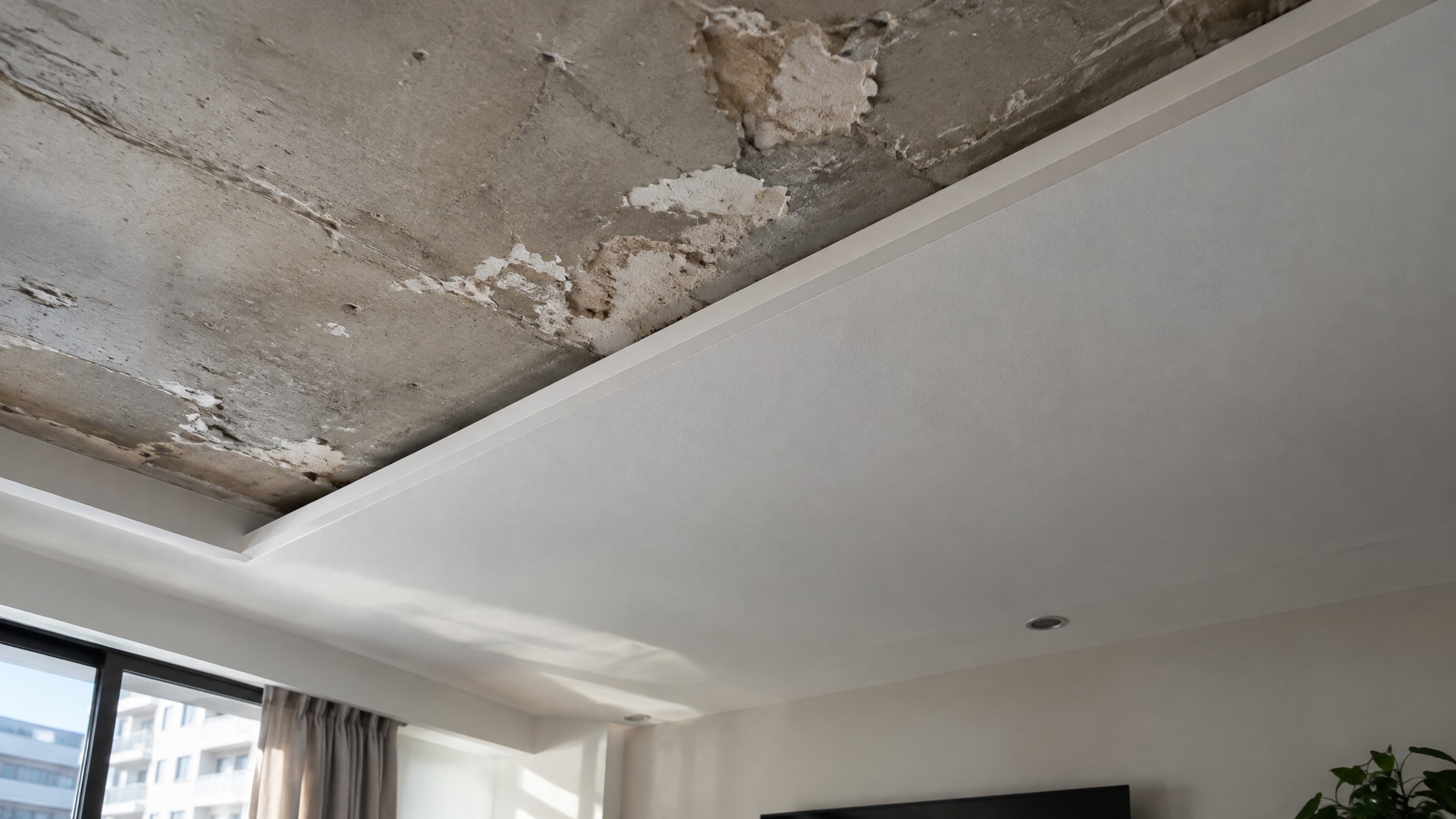
If the plaster is soft, crumbling, stained through, or the board is swollen, the mould has gone in too deep to wash out. That material is cut back to dry, sound surface, then re-plastered or the board is replaced. Primer and anti-mould paint go on after.
Painting over damp, mouldy plaster hides the stain for a while but leaves the moisture behind it. The mould comes back, often within months, and you pay twice. Scraping back to something sound and dry is what stops it.
Choosing a Mould Treatment Contractor for Kitchen Ceilings
Mould on a kitchen ceiling is a niche job, because it sits between plastering, painting and leak diagnosis. Many general renovation contractors will paint over it and move on, which is why it pays to ask a few questions first.
Leng Painter is a local specialist in mould ceiling treatment and toilet and kitchen ceiling repairs, covering plastering, spalling concrete repair and related surface work in HDB flats. We explain what is wrong and what we will do about it, without overselling.
Questions to Ask Before You Book
Put these to any contractor, including us:
Leak tracing. Will they look for the source of the water, or only treat the ceiling?
Written scope. Is the quote itemised: leak check, cleaning or cut-out, re-plastering, primer and anti-mould paint?
Experience. Have they worked on HDB kitchen ceilings, with both plaster and false ceiling types?
Return of mould. What happens if the mould comes back, and what do they say about the cause if it does?
Drying time. Do they allow the ceiling to dry fully before they prime and paint?
When you have two or three quotes, you can compare contractor quotations line by line. A much lower price usually means one of the lines is missing.
Getting a Quote for Kitchen Ceiling Mould Removal
The fastest way to get a straight number is to show us the ceiling. Contact Leng Painter directly and send:
Clear photos of the stain, close up and from across the room
Whether it is a plaster ceiling or a false ceiling
Your block and the flat's unit type
Whether you already know about a leak from upstairs
We will tell you what looks like mould and what looks like water, and give you an itemised quote based on what we see. If a site visit is needed to trace the source, we will say so.
When you are ready, request a ceiling repair quote and attach your photos.
Frequently asked questions
Can I just paint over mould on my kitchen ceiling?
No. Painting over damp mould hides it for a short while, but the moisture stays behind the paint and the mould returns. The mould has to be cleaned or cut out and the ceiling fully dried before primer and anti-mould paint go on.
Do I need to fix the upstairs leak before treating my ceiling?
Yes. If water is still coming through from above, the ceiling will be re-wetted and the mould will come back no matter how well it is treated. Settle the leak fix first, then pay for ceiling work.
Is it safe to clean ceiling mould with bleach?
Bleach on its own, used with the windows open and a mask and gloves on, is a common choice for light surface mould. Never mix it with ammonia-based or acidic cleaners, because the fumes are hazardous in a small kitchen. Mould that has gone into the plaster will not be fixed by cleaning at all.
What should I send to get a quote?
Send photos of the stain, the ceiling type (plaster or false ceiling), your block and unit type, and whether you already know of a leak from the flat above. With these, Leng Painter can tell whether it looks like mould or active water and itemise the quote.
Why does the mould keep coming back after I wipe it?
Mould that returns after wiping means the ceiling is staying damp. The cause is either a leak from upstairs or steam and condensation your kitchen cannot vent. Wiping only clears what you can see, so the cause has to be dealt with.
Comments