
HDB Toilet Ceiling Contractor Quotation Comparison Guide

Collecting three quotes for HDB toilet ceiling repair is standard practice, but comparing them is where most homeowners get stuck. You see one bid at $800 and another at $1,400 for what looks like the same job. The cheaper option seems obvious until you realise it excludes half the necessary work. Comparing HDB toilet ceiling contractor quotations means looking past the bottom line to understand exactly what each contractor plans to do to your ceiling.
Price alone doesn't tell you who will fix the problem permanently and who will just cover it up for a few months. This guide breaks down how to read multiple HDB toilet quotes so you can spot the real value in each proposal instead of just picking a number.
Why Unit Costs Matter More Than Total Price
A total sum hides the details that decide whether a repair lasts five years or five months. That's why you need to normalise unit costs before comparing bids. When one contractor quotes a lump sum and another breaks it down by square footage, you can't judge value fairly until you convert both to the same metric, based on the actual area being treated.
Breaking Down Labour vs Material Rates
Labour is usually the largest share of any spalling concrete repair bill in Singapore, because the work is manual and slow. Separate labour from materials and you can see whether a contractor is padding their margin or using cheap supplies to keep the price down. A quote that lists "labour and materials" as one figure stops you checking whether they're using approved cementitious coatings or generic fillers that fail fast in a humid toilet.
Ask each vendor to state their hourly or daily labour rate alongside material unit costs, so you can check them against current market rates. Specialist contractors point out that structural spalling repair needs different materials and methods than general plastering, so a straight price-per-square-foot comparison is invalid unless the scope matches. If a contractor won't break down these rates, they're asking you to take their honesty on faith.
Identifying Missing Line Items in Cheaper Quotes
The lowest bid often wins on paper because it leaves out essential prep work, work the contractor plans to add later as a variation order, or skip entirely. HDB renovation jobs run into variation orders often, usually because the first quotation was incomplete, and wet-area repairs are the worst for this since the real damage is hard to see before hacking starts. A quote that just says "toilet ceiling repair," with no hacking depth, no named coating, no waterproofing membrane brand, hasn't actually defined the scope. That leaves you exposed.
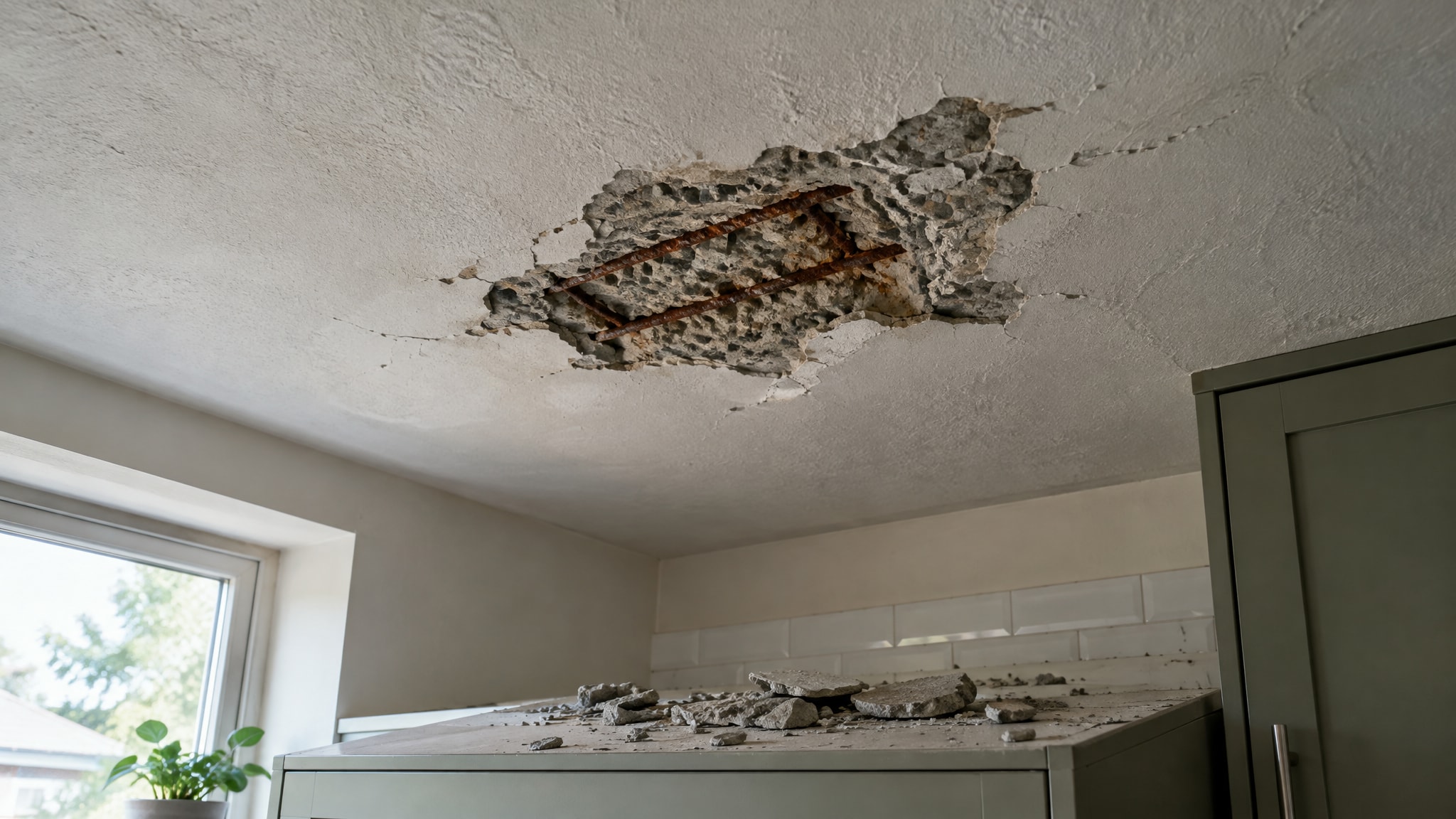
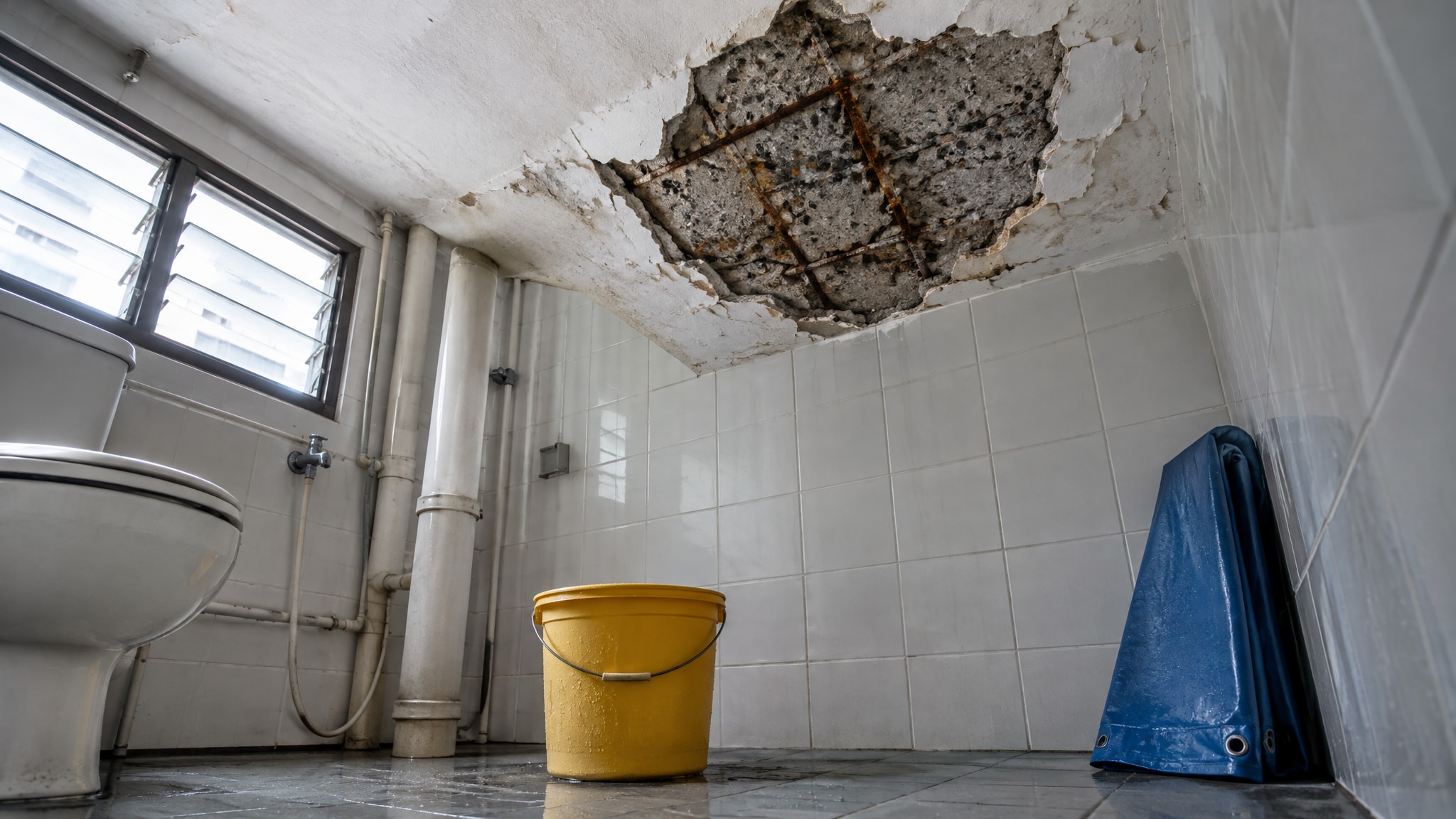
Check every cheap quote for rust treatment on exposed rebar. It's non-negotiable for a repair that lasts. Leave it out and the contractor is likely planning to plaster over corroded steel, which will expand and crack again within a year. Flag any bid missing this step as incomplete, no matter how good the total looks.
Scope of Work Clarity in Toilet Ceiling Repairs
You can't compare prices for two different jobs, yet many homeowners unknowingly weigh a structural repair bid against a cosmetic touch-up estimate. Telling these two apart is the first step to avoiding a repair that fails before your warranty does.
Spalling Concrete Treatment vs Cosmetic Cover-Ups
Real spalling repair means hacking away loose concrete, treating rusted reinforcement bars with anti-corrosion coating, and applying polymer-modified mortar to rebuild structural strength. A cosmetic cover-up just adds a thin layer of plaster or filler over the damage without touching the corrosion underneath. It looks smooth, but the deterioration carries on behind it. Comparing HDB renovation quotations only works if both contractors are quoting for the same thing: one for restoration, not one for restoration and one for concealment.
Look for specific terms like "rebar rust treatment," "bonding agent application," and "structural mortar" in the scope description. That tells you the contractor understands the difference. Vague terms like "ceiling patching" or "surface levelling" usually point to a handyman approach rather than specialist work. The distinction matters because cosmetic fixes in wet areas like toilets fail once moisture gets into the untreated surface behind the new plaster.
Waterproofing and Mould Prevention Inclusions
Toilet ceilings sit in a high-humidity environment where mould spores thrive on organic residue left behind after water damage. A proper quotation should list anti-fungal treatment or mould-resistant primer as its own line item, not buried inside general painting. Understanding the difference between mould treatment versus re-plastering helps you check whether the contractor is fixing the root cause or just wiping away the symptom.
Waterproofing matters just as much if the spalling started from a leak in the unit above or condensation inside the slab. Check whether the quote includes a waterproofing membrane or sealant on the repaired area before the finishing coats go on. Skip this step and you save money upfront, but you're signing up for recurring mould that no amount of paint will fix.
Red Flags in Contractor Quotation Comparisons
Certain patterns in a quotation spell trouble long before the contractor picks up a hammer. Spotting them early saves you from costly disputes mid-renovation. These warning signs show up again and again in problem bids across the HDB resale and maintenance market.
Vague Descriptions and Lump Sum Pricing
Ambiguity in a quotation works in the contractor's favour, because it lets them interpret the scope however suits them once work begins. Phrases like "repair ceiling as per site condition" or "make good existing damage" give you nothing to hold them to if the outcome disappoints. What should you watch for? Any description missing measurable quantities, named product brands, or a defined completion standard.
Lump sum pricing with no breakdown makes it impossible to negotiate if the real damage turns out worse than the initial assessment. You've got no leverage to question charges for extra hacking or extra materials, because the original quote gave you no unit rates to point to. Insist on itemised pricing even if the total stays the same. That transparency protects both sides once work starts.
Unusually Low Rates for Specialized Repair Work
Specialist repair work has a natural cost floor, set by material prices, skilled labour wages, and compliance requirements in Singapore. A price well below that floor usually means an unqualified handyman cutting corners on materials or skipping safety steps, not a genuine bargain. The cheapest toilet ceiling quote can end up the most expensive option, once premature failure forces you to pay for a second repair within eighteen months.
Check whether a contractor's quoted rate matches current Singapore market rates for specialist repair by comparing it against at least two other established vendors. A gap of more than thirty percent below the median should trigger a closer look at their qualifications and materials, not celebration of a bargain. Quality spalling repair takes specific technical knowledge that general painters or renovators rarely have, and that knowledge carries a fair market price.
Evaluating Multiple Quotes Side-by-Side
A structured comparison turns vague impressions into facts you can defend to yourself and your family. This approach takes the emotion out of the decision and surfaces gaps that a casual read misses.
Build a simple spreadsheet with a column for each contractor and a row for every major line item: hacking, rust treatment, plastering, waterproofing, painting, cleanup. Fill in the quantity, unit rate, and product name stated in each quote, and leave a cell blank where the information's missing rather than guessing. This side-by-side view shows you immediately which contractors actually inspected the job and which sent a generic estimate off a quick look.
Pay close attention to material brands across comparable bids. Swapping a premium bonding agent for a generic one can save hundreds of dollars while weakening the adhesion. Warranty terms deserve the same scrutiny, because a two-year guarantee on labour means little if the materials underneath are only rated for six months in wet conditions. In the end, your side-by-side comparison should show you who's offering full protection and who's offering a temporary fix dressed up to look like one.
Hidden Cost Traps in HDB Renovation Quotes
Initial quotations often leave out ancillary costs that turn up as surprise invoices once demolition reveals the real extent of the damage, or once the finishing touches become necessary. Spotting these traps while you're comparing quotes stops budget blowouts that sour your relationship with the contractor later.
Disposal Fees and Site Protection Charges
Hacking concrete generates a lot of debris, and it has to go to approved disposal facilities. Many quotes leave out haulage and tipping fees entirely. Quotes that skip site protection for existing tiles or sanitary ware often end in damage claims or extra charges mid-project, once a cracked tile or scratched fixture needs replacing. Confirm whether the price includes laying protective sheets, taping off nearby surfaces, and clearing all rubble from your flat once the job's done.
These add-on costs can easily tack several hundred dollars onto a project that looked affordable at first. Ask specifically how often debris gets cleared and what the final site-cleaning standard is, so you're not living in a construction zone longer than you need to. A contractor who includes these items upfront respects your property and your budget. One who treats them as optional extras probably lacks discipline elsewhere too.
Post-Repair Painting and Finishing Gaps
Spalling repair fixes the ceiling substrate, but it rarely includes the decorative finish unless the quote says so explicitly. Check whether painting after plastering is included, because this is a common friction point in toilet ceiling jobs, where homeowners assume a turnkey solution. Some contractors quote only for structural restoration and expect you to hire a separate painter; others bundle both at a combined rate that may or may not be fair value.
Check also for primer coats, sanding between layers, and colour matching to the existing walls if you want a seamless result. Skip the primer on fresh cementitious repair and you get uneven paint absorption and visible patch marks that undercut the whole job. Make sure the finishing matches the quality of the structural work, so your repaired ceiling looks as good as it performs.
When to Choose a Specialist Over a General Contractor
General renovators handle a wide range of projects well, but they often lack the focused experience that persistent wet-area defects like toilet ceiling spalling need. The choice between them comes down to whether your priority is the lowest cost today or the longest gap before the next repair.
A spalling concrete repair specialist brings diagnostic skill built across hundreds of similar HDB cases, which helps them spot root causes a generalist would miss. They carry specialised tools and materials built for Singapore's tropical humidity and alkaline concrete. Their line items may look higher, but accurate scoping cuts the odds of variation orders and callbacks that push the total cost up over time.
General contractors are strong on full renovations, where ceiling repair is just one piece among many, but they often subcontract this kind of specialist work anyway. Hiring one for an isolated toilet ceiling issue just adds a management layer without adding technical skill to the actual repair. For a targeted structural problem in a wet area, going straight to a niche specialist usually gets you a better result, even if the upfront line items look higher.
Next Steps After Comparing Your Quotes
Verification comes before commitment, because even a perfectly itemised quotation is worthless if the contractor isn't credentialed to do the work legally and safely. Check each vendor against the HDB Directory of Registered Contractors to confirm they're registered for the specific trade your repair falls under. Unregistered operators may quote lower, but you'll have no recourse through HDB's dispute resolution channels if the workmanship fails.
If your quotes are still unclear or inconsistent after running through this comparison, get a second opinion from a verified specialist who gives you transparent documentation. Request an itemised assessment that breaks down every material, labour hour, and ancillary charge, so you can decide with confidence. Taking this extra step now beats months of regret later, when a poorly scoped repair starts failing again.
Frequently Asked Questions
How do I know if a toilet ceiling quote covers real spalling repair or just plastering?
Look for explicit line items mentioning rebar rust treatment, bonding agent application, and polymer-modified structural mortar rather than generic terms like 'patching' or 'leveling'. True spalling repair addresses the corroded steel inside the concrete, while cosmetic fixes only smooth the surface. If the quote lacks these specific material and process descriptions, it is likely a temporary cover-up.
Why is the cheapest ceiling repair quote often more expensive in the long run?
Low bids frequently omit essential steps like rust treatment, waterproofing, or proper disposal that prevent recurrence of the damage. When these shortcuts cause the repair to fail within months, you pay twice for the same job plus additional damage from prolonged moisture exposure. The true cost includes both the initial invoice and the inevitable rework that a properly scoped quote avoids.
What should I do if my three quotes have completely different line items?
Create a comparison spreadsheet and request each contractor to revise their quote to match a standardized scope covering hacking, rust treatment, waterproofing, plastering, and painting. Refuse to compare bids that measure different work because you cannot assess value across unequal proposals. Contractors unwilling to itemize consistently are signaling they either lack expertise or intend to vary charges later.
Is waterproofing always necessary for HDB toilet ceiling repairs?
Waterproofing is mandatory if the spalling was caused by leakage from the unit above or persistent condensation within the slab structure. For minor surface damage unrelated to moisture ingress, anti-mould primer may suffice instead of full membrane application. Your contractor should diagnose the moisture source before recommending whether waterproofing belongs in your specific scope.
Comments