
Spalling Concrete Repair Vs Full Renovation: What's Needed?

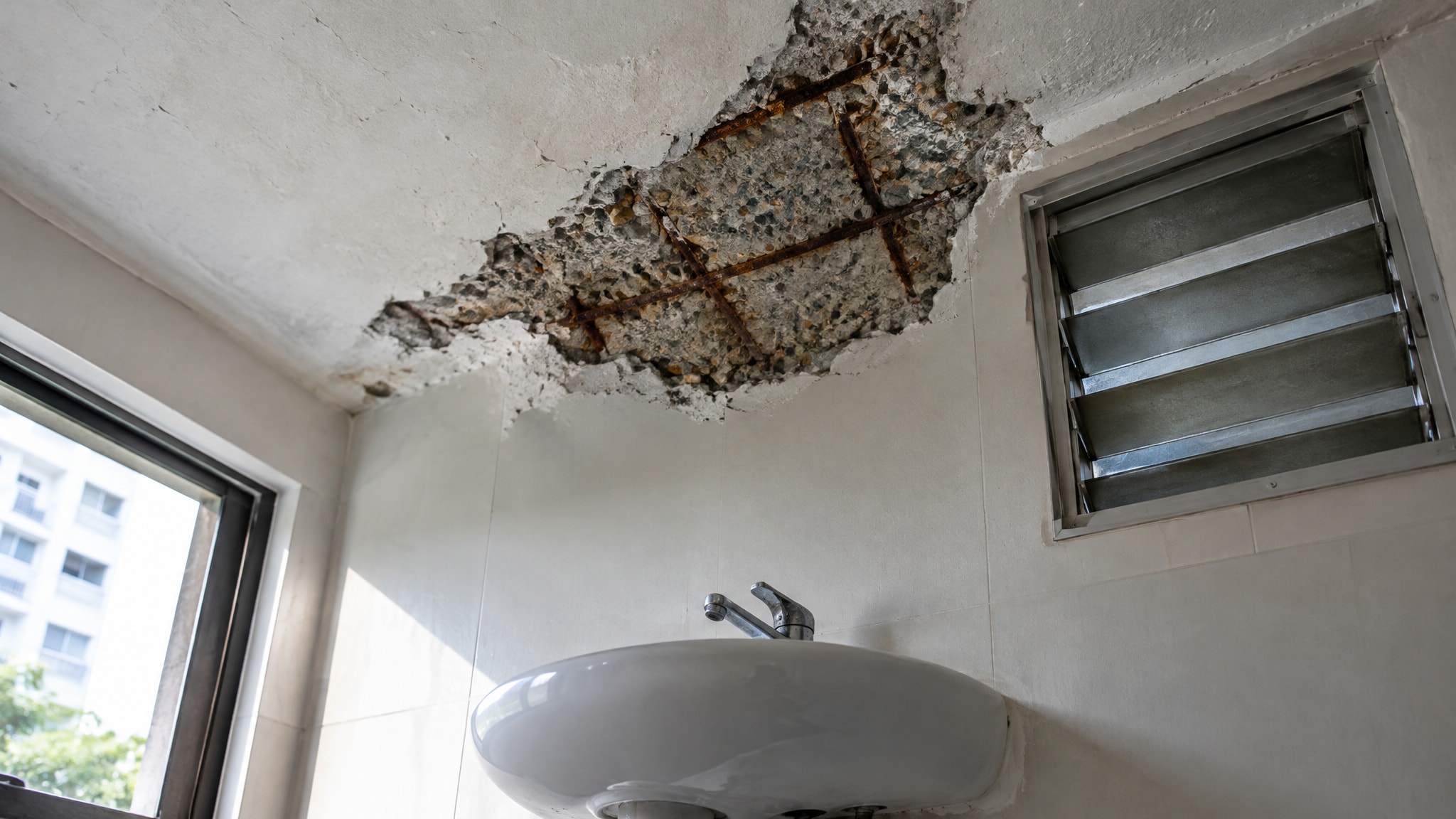
You've spotted a chip of concrete missing from the toilet ceiling, or a patch of rusty, flaking slab in the kitchen. Now you're wondering whether to patch it or rip the whole room out. Most owners are asking exactly that, and the answer is usually clearer than the quotes make it look.
Spalling concrete repair or full renovation: the short answer
A targeted repair is enough when the spalls are isolated, the concrete around them sounds solid when tapped, and no water is still getting in. A full renovation makes sense when the damage is widespread, keeps coming back after patching, or sits alongside a live leak.
So if you're asking whether you need a full renovation or just a repair, the test is simple: is the damage contained, and is the cause gone? If both answers are yes, patch it. If either is no, a patch will probably fail.
Here's how the two paths compare side by side.
Scope: Targeted spot repair: Only the spalled spots and the weak concrete around them, Full renovation: The whole room: finishes, waterproofing and any services in the way
Disruption: Targeted spot repair: Short and contained; the room is usually usable again sooner, Full renovation: Longer; the room is out of use while it's opened up and rebuilt
Cost driver: Targeted spot repair: Number, size and depth of spalls, and how much rebar needs treating, Full renovation: Hacking off finishes, waterproofing, re-tiling and making good
Best fit: Targeted spot repair: Isolated spalls, sound concrete nearby, no live leak, Full renovation: Spalling across a slab or ceiling, repeat failures, leaks, cracks or failing tiles
This table is a starting point. Your own flat decides which column you land in, and the next section shows how to tell.
How to gauge the scope of spalling damage
Spalling starts inside the concrete. Steel reinforcement rusts, the rust swells, and the swelling pushes the surface off. A visible chip is often only the edge of the problem, and tapping around it frequently finds hollow, loose concrete you can't see.
In HDB flats, this tends to show up where water sits for long periods: toilet and kitchen slabs, walls and outdoor ledges. That's where you should look first.
Before you go further, confirm whether the spot sits inside your flat or on a common part of the building. Who handles the repair depends on that, so settle it before you book any work. If you're unsure what counts as a warning sign, here are the signs that point to a spalling inspection.
Size, depth and count of each spall
Walk each room and map every spot, not just the worst one. Note where it is, roughly how big it is and how deep it goes.
Then check three things on each spot:
Exposed steel. Can you see rebar? Is it rusty, flaking or thinned out?
Depth. Is it a shallow surface chip, or has a chunk come away to reveal steel?
Hollow concrete. Tap the area around the spall with a coin handle or small hammer. A dull, hollow sound means the concrete has already separated from the steel.
One spall with solid concrete around it is a very different job from five spalls on the same ceiling. The count matters as much as the size.
Water, cracks and failing finishes
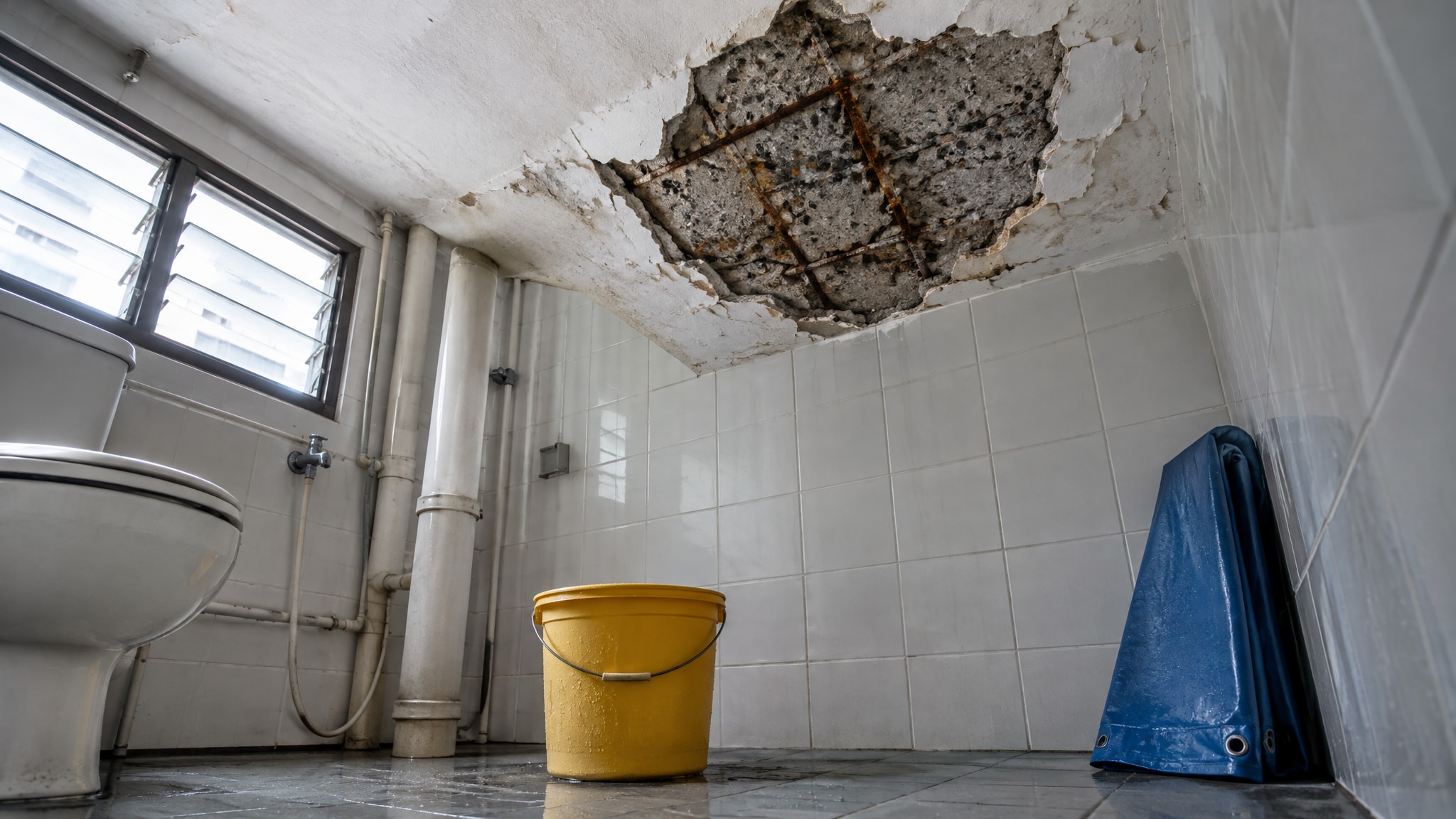
Next, look for water. A live water path will likely defeat any patch, because it keeps feeding the rust that caused the damage.
Watch for these signs:
Ceiling stains or damp patches, especially after rain or after the flat above has been used
Cracks running out from a spall rather than stopping at its edge
Tiles lifting, hollow-sounding or cracking nearby
Mould returning in the same place after cleaning
Two flats can have a chip of the same size and need completely different jobs. One has a single spot, sound concrete around it and no leak. The other has cracks linking several spalls and tiles lifting nearby, and that second one is renovation-scale work.
Take photos and sketch what you find. You'll need them later when you ask for quotes.
When a spot repair is enough
A spot repair is enough when three things line up: the spalls are isolated, the concrete around them rings solid, and no water is still getting in. If any one of those fails, the patch is borrowing time.
Spot repair does not fix a leak. If water is still coming through the slab, a neat patch will hold for a while and then break again, so the leak has to be dealt with first. It's also not the right call if tapping shows hollow concrete spreading well beyond the visible chip.
What a targeted concrete repair covers in an HDB flat
The work itself is plain and mostly physical. In a typical targeted repair, the contractor will:
Chip back the loose concrete until they reach sound concrete.
Treat any exposed rebar, cleaning off the rust and protecting the steel.
Patch the cavity with repair material.
Finish the surface to match the surrounding area.
Everything stays within the damaged zone. You don't lose the whole room's finishes, and you aren't redoing work that was fine.
If this sounds like your situation, a local HDB spalling concrete repair specialist can scope it from your photos and tell you what the job involves.
When spalling means a bigger renovation
Some spalling has simply outgrown a patch. At that point the real question is no longer how to fix the spot but why the slab keeps failing, and a bigger job answers that.
The same logic applies to ceilings. If you're dealing with mould overhead, here's the same spot-versus-full question for mould ceilings.
Signs the damage has outgrown a spot repair
Think bigger when you see any of these:
Spalling across a whole slab or ceiling rather than in one or two places
The same spot breaking again after it was patched
Cracks linking several spalls together
Failing tiles or waterproofing across the room, not just near the chip
Repeat failure is the clearest sign. A patch that breaks again usually means water or rust is still working behind it, and patching a third time won't change that.
Spot repair vs full reno in an HDB flat
The difference shows up in what happens on site. A spot repair stays inside the damaged area, and the rest of the room is left alone.
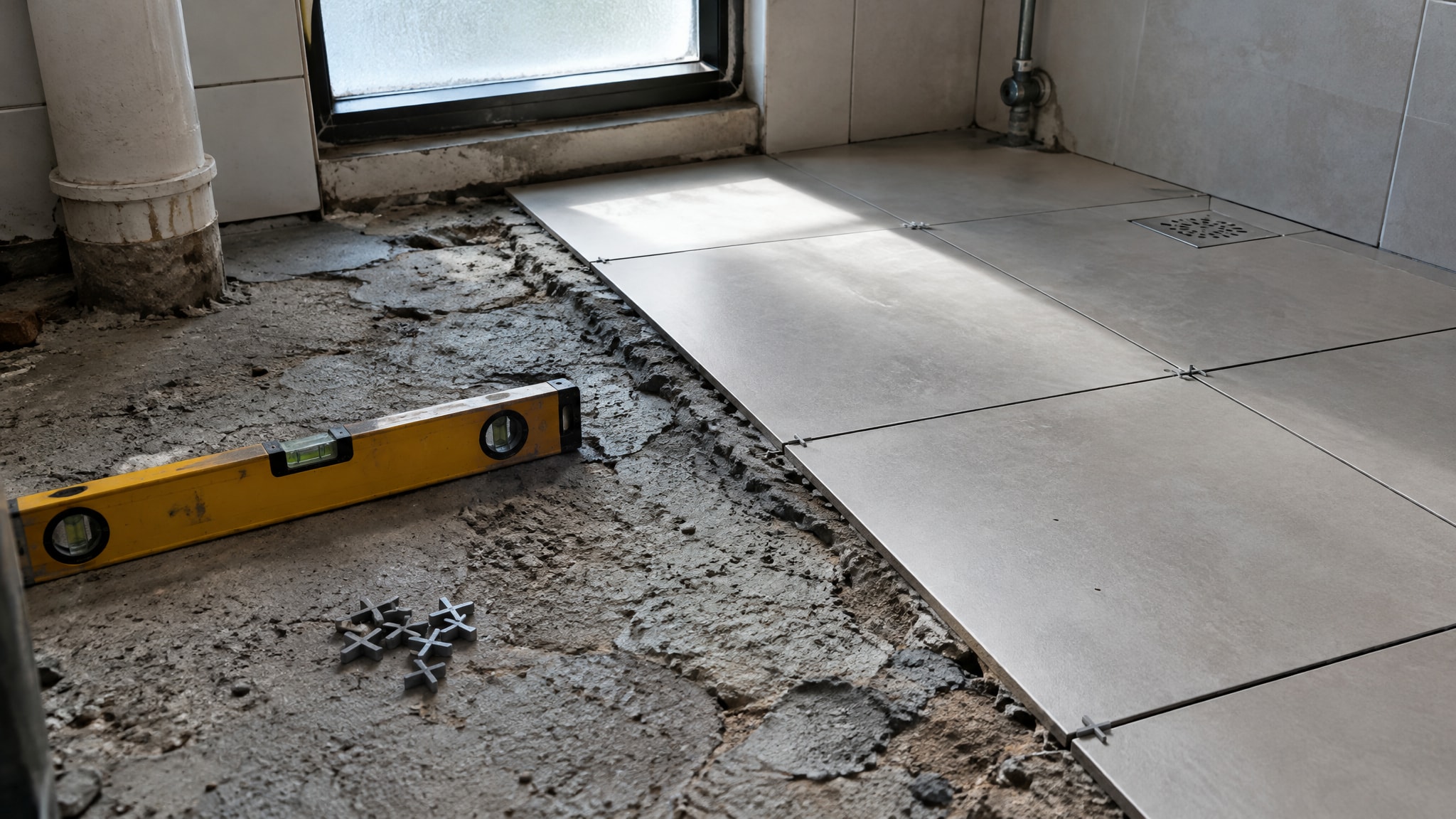
A full renovation does much more. It opens up the room, strips the finishes, reworks the waterproofing and any services in the way, and then replaces the finishes. You get a fresh, sound surface from slab to tile, but you also get a bigger job, more mess and a longer wait.
Neither is "better" in general. A full reno on a single isolated spall is money spent on nothing, and a patch on a failing slab is money spent twice.
What each path costs in money and disruption
We haven't put price figures in this article, because the numbers depend on your flat. What we can do is explain what moves the price, so you know what you're paying for.
For a spot repair, the cost follows the number, size and depth of the spalls, and how much rebar needs treating. You can size that path with our guide to spalling repair cost per square foot.
A full renovation adds the finish work on top. For tiling in particular, the toilet retiling cost guide shows what that layer involves.
On disruption, a spot repair is usually short and contained. A full reno keeps the room out of use for longer, which matters a lot if it's your only toilet.
Hidden costs that turn a repair into a renovation
Many owners start with a small repair budget and end up with a much larger bill. The gap usually comes from a handful of add-ons:
Opening finishes. If the spall is under tiles or a ceiling board, those have to come off to reach it.
Making good. Whatever was opened has to be put back and matched.
Waterproofing. Once the slab is exposed, skipping waterproofing invites the same failure.
Re-tiling. Tiles rarely survive being lifted around a repair, so a larger area gets redone.
Paying twice. A patch that fails because the leak was never fixed means doing the work again, and often doing the bigger job anyway.
Paying twice is the one you can avoid. If there's any sign of live water, find the source before you commit to a patch-only quote.
Where spalling repair fits in an HDB renovation
If you're already renovating, concrete repair comes first. It has to go in before new tiles, ceilings or waterproofing, because hacking afterwards damages finished work.
Picture the other order. You lay new tiles, then discover hollow concrete underneath and have to break through them. You've paid for the finish twice, and the new waterproofing is cut open as well.
That's why it pays to have the slab checked while the room is still bare, ideally before your interior designer locks the schedule. Here's more on timing a spalling repair around your renovation.
Getting quotes that show the real scope
Quotes only compare fairly when the concrete repair is priced on its own line, with locations and method written out. A single lump sum for "toilet works" hides what you're paying for, and it makes a cheap quote look like a bargain when it may have left the spalling out entirely.
Ask each contractor to list every spalled spot, say where it is, and describe how they'll repair it. Then you're comparing like for like on scope, not on the headline price.
A written scope record helps here. Mark each spalled spot on a rough room sketch, note any signs of leaking, and give the same record to every contractor you approach.
Vet the contractors before you ask for bids. Here's how to verify a spalling repair contractor.
Not sure which path your flat needs? Send us photos of each spalled spot and a rough sketch of the room, and we'll give you a written scope check. If a targeted repair fits, request a quote through our HDB spalling concrete repair specialist page.
Frequently asked questions
Can I just patch spalling concrete and renovate later?
Yes, if the spalls are isolated, the concrete around them is sound and no water is getting in. The patch will hold until you renovate. If a leak is still active, the patch will likely break again, so deal with the leak first.
How do I tell if the concrete around a spall is hollow?
Tap the area around the spall with a coin handle or a small hammer. Solid concrete gives a sharp, ringing sound, while hollow concrete sounds dull and flat. If the hollow area runs well past the visible chip, the damage is bigger than it looks.
Will spalling come back after a repair?
It shouldn't, if the cause is gone and the repair goes back to sound concrete and treats the rebar. It comes back when water is still reaching the steel, or when weak concrete was left behind. A spot that breaks again after patching is a sign to look at the wider room.
Should I fix spalling before or after retiling my toilet?
Before. Concrete repair needs the slab exposed, and hacking after new tiles or waterproofing go in damages that finished work. Get the slab checked while the room is still bare.
What should I send to get a scope check?
Send clear photos of each spalled spot and a rough sketch of the room showing where each one sits. Note any leaks, ceiling stains, cracks or lifting tiles. With that, the damage can be scoped in writing before you compare quotes.
Comments