
HDB Ceiling Contractor Vs Interior Designer for Repairs

When concrete flakes off your HDB ceiling or mould spreads across the toilet, your first instinct is probably to call the interior designer who renovated your flat. They know your home's layout, you've got their number saved, and handing over the repair feels like the easy option. But most IDs are generalists. They focus on aesthetics and space planning, not structural remediation, and that means they often lack the specific diagnostic skills ageing HDB concrete needs.
Choosing between an HDB ceiling contractor and an interior designer for repairs decides whether you're paying for design coordination or technical fix. That distinction matters when your budget is fixed and the damage is getting worse.
Why Homeowners Default to IDs for Ceiling Repairs
The relationship you built during renovation creates a natural pull toward calling that same firm whenever defects show up years later. You trust them because they delivered your dream kitchen, so assuming they can handle maintenance feels safer than vetting a stranger. But general renovation firms frequently subcontract specialised ceiling repair work. That adds a management layer without adding any technical oversight on structural concrete issues.
Your ID becomes a project manager for repairs they don't actually perform. They coordinate schedules and relay messages between you and the tradesperson doing the work, but they rarely have hands-on experience with spalling concrete chemistry or waterproofing membranes. When the problem is purely cosmetic, that arrangement works fine. Structural deterioration needs diagnostic precision that sits outside standard interior design training.
More homeowners are skipping interior designers for targeted repair jobs now, to avoid paying design fees on work that has nothing to do with design. It reflects a growing sense that maintenance and renovation are different disciplines, with different skills and different pricing.
Cost Differences: Direct Contractor Savings vs ID Markup
Bringing in an ID for a standalone repair usually inflates your bill, because their business model relies on marking up subcontractor rates to cover overhead and profit. You're effectively paying twice for the same labour: once to the specialist doing the work, once to the designer managing the transaction. Knowing where these costs come from helps you work out whether the premium buys you anything, or just adds friction.
Understanding Renovation Markups on Repair Work
Interior designers charge for coordination, communication and liability even when no design input is needed. A specialist contractor might quote $800 for hacking and re-plastering a spalled area, but the ID adds twenty to thirty percent on top for scheduling calls, site visits and invoice processing. Those fees apply regardless of how complex the job is, so a simple repair carries disproportionate overhead compared with a full renovation, where the same costs get spread across a much bigger scope.
The savings you get from hiring a contractor directly come from cutting out that intermediary margin entirely. The price you're quoted reflects materials, labour and equipment only, with nothing added for services you don't need.
What You Pay For With a Specialist Quote
A specialist's quotation breaks down into real line items: cementitious mortar, anti-corrosion primer, skilled man-hours, rather than vague coordination fees. That transparency means you can see exactly which part of your budget goes to fixing the damage and which part, if any, goes to admin. Comparing ceiling contractor quotations is straightforward once both parties itemise labour and materials instead of bundling everything into one lump sum that hides the real costs.
You should expect detailed specifications: product names, application methods, warranty terms tied directly to the work being done. A vague line like "ceiling treatment" with no material breakdown is a sign the quoter may be reselling someone else's service rather than doing it themselves.
Speed and Scheduling: Getting HDB Ceiling Issues Fixed Fast
Structural damage doesn't wait for a convenient slot in someone's project timeline, yet routing requests through an ID adds delays you don't need. Your message passes from you to the designer to the subcontractor, and each handoff adds hours or days before anyone even looks at the site. Going straight to a specialist contractor lets you talk through repair methods and material choices directly, without anything getting lost through a third-party designer.
Communication Chains and Response Times
Every extra person in the loop raises the odds of something getting misread and slows the decision down. An ID has to check their calendar, contact their preferred sub, wait for availability, then relay the options back to you before anything's booked. Specialists run their own crews directly and can often schedule an assessment within days, particularly for urgent cases involving water ingress or falling debris.
How much faster a specialist starts work compared to an ID firm comes down to how many people stand between you and the person actually holding the trowel. Cut the middleman, and you cut the time between asking and getting it fixed.
Urgency for Spalling Concrete and Mould
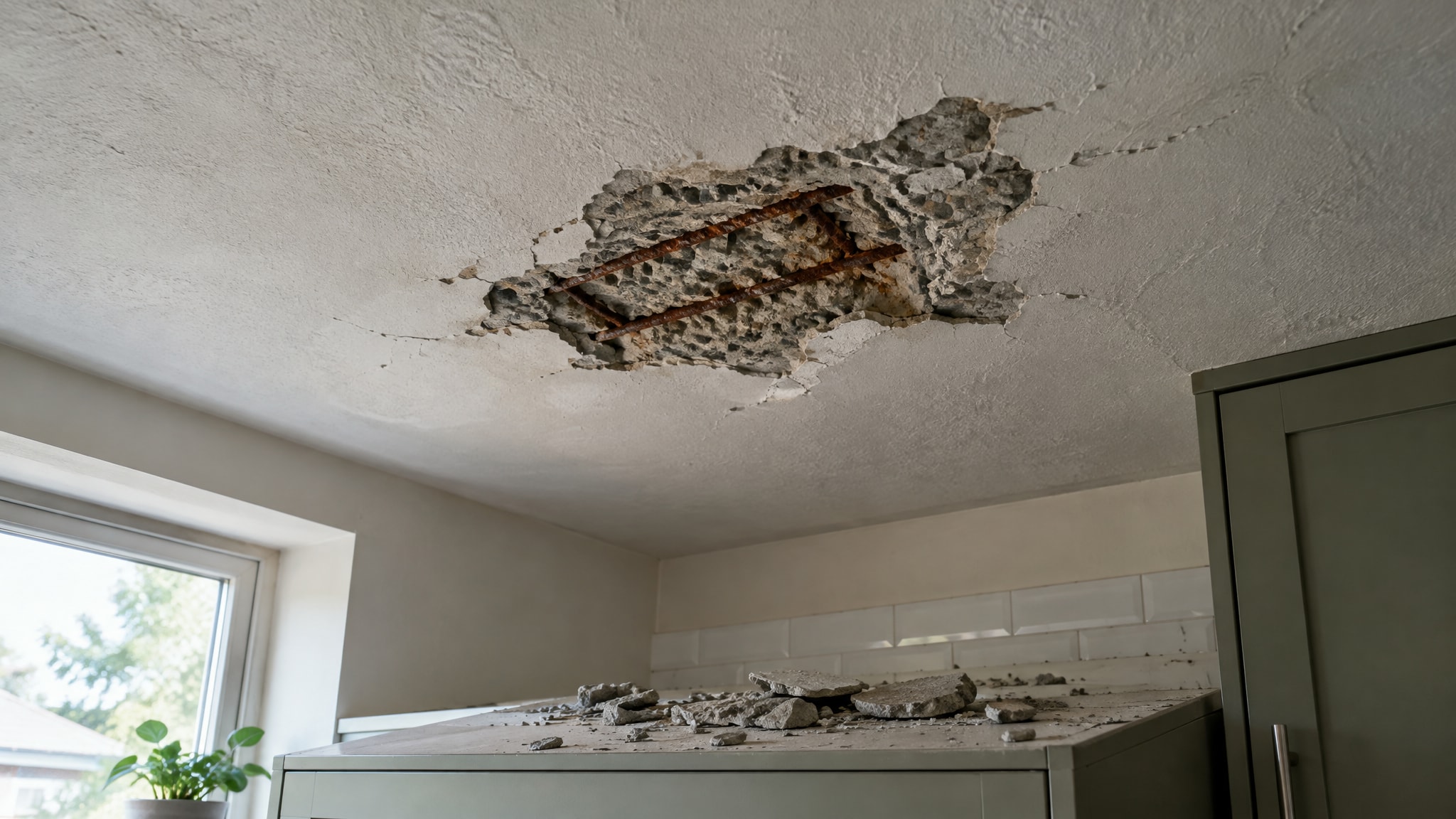
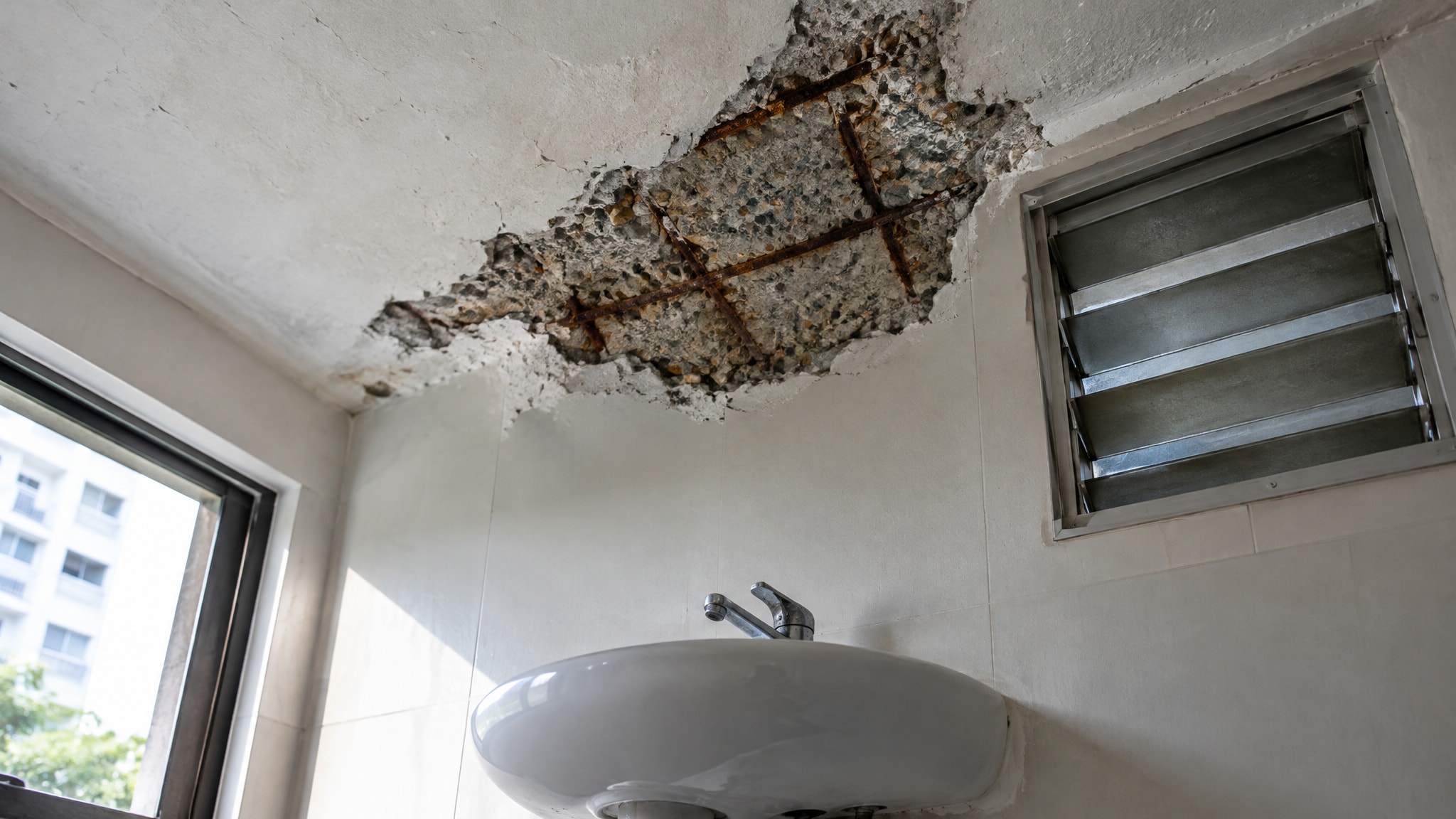
Spalling concrete in HDB toilets needs specific rebar treatment and waterproofing that's quite different from standard ceiling plastering or skim coating. Put off proper treatment and corrosion spreads deeper into the slab, which expands the eventual repair and the bill. Mould behaves the same way: it keeps growing while you wait, embedding further into porous surfaces and raising the health risk for anyone in the flat.
Specialist contractors treat active deterioration as urgent because they know how fast concrete cancer and fungal growth can spread. General renovators, working to project-based schedules, can't match that responsiveness. Repair work disrupts their planned renovation jobs and pulls resources away from them.
Technical Expertise: General Renovation vs Structural Repair
Cosmetic patching hides the symptom for a while and leaves the cause untreated, which more or less guarantees the problem comes back within months or years. Real repair means understanding why HDB ceilings fail in the first place: local construction practices, climate effects, material ageing patterns specific to Singapore public housing. Whether your interior designer can actually fix spalling concrete or mouldy ceilings comes down to whether they've trained in that specific area, beyond aesthetic finishing.
Diagnosing Root Causes Beyond Surface Damage
A visible crack or stain often starts somewhere else entirely, in the building envelope or the plumbing. A generalist sees a wet patch and applies sealant. A specialist traces where the moisture is actually coming from, checks drainage gradients, and tests the substrate before deciding on treatment. Get the diagnosis wrong and you've wasted money on a surface fix while the real problem keeps degrading structural components you can't see.
Knowing the difference between mould treatment and full re-plastering means recognising when fungal contamination has gone past the paint layer and into the cement itself. Cleaning the surface and repainting only fixes how it looks. Proper remediation might call for biocidal washing, vapour barriers, or replacing the substrate entirely, depending on how deep the saturation goes.
Specialist Methods for HDB Concrete Ceilings
HDB flats built in earlier decades used specific concrete mixes and reinforcement standards that behave differently from what you'd find in a modern private development. Specialists who've worked across these estates recognise era-specific failure modes, like carbonation-induced corrosion or alkali-silica reaction, that a generic contractor rarely comes across. That pattern recognition means an accurate call on the problem and the right materials the first time, instead of trial and error that drags out the job and the cost.
A spalling concrete repair specialist brings diagnostic experience built up over hundreds of similar cases across Singapore's public housing estates. That case knowledge translates into faster, more reliable outcomes than a generalist could manage, picking up occasional repair jobs between renovation projects.
When Coordinating Through an Interior Designer Still Makes Sense
Standalone repairs are better off going straight to a specialist, but integrated projects can still justify bringing in an ID, even at a higher cost. If your ceiling damage showed up mid-renovation, or it needs to match new carpentry, lighting or finishes seamlessly, the designer's overview stops things looking mismatched. Coordination earns its keep when several trades overlap and the look matters as much as the structure.
Using your ID for a ceiling repair makes sense when the work is part of a larger refurbishment, where design intent is already driving material and finish choices across the whole space. In that case, the markup buys real integration, not just admin, and the repaired section blends in with the new work. A standalone emergency repair doesn't have that justification, because there's no design coherence to protect.
Budget also changes the maths when the repair is a small slice of the total renovation spend. Absorbing ID markup on a $2,000 repair inside a $150,000 renovation barely moves the needle, compared with hiring separately. Judge each case on how much it overlaps with the bigger project, rather than defaulting to one extreme or the other.
Hiring a Ceiling Contractor Directly: What to Verify
Cut out the intermediary and the job of verifying falls on you. Without an ID filtering candidates, you need to check credentials, look at relevant experience, and confirm warranty terms yourself. It takes effort upfront, but it saves you from the costly mistake of hiring someone unqualified because they quoted the lowest price.
Checking HDB Renovation Credentials
Every contractor working on HDB properties needs a valid licence from the Housing & Development Board, whatever the size or type of job. Check registration status through official channels before anyone touches your ceiling: unlicensed work breaks housing rules and voids insurance cover. Specialised repair work also benefits from BCA Green Label certification or manufacturer-approved applicator status for specific waterproofing and concrete restoration systems.
Credentials show a baseline, not a guarantee of quality on their own. Check licensing against a documented track record in similar HDB repair jobs, rather than taking the certificate as proof enough.
Reviewing Past Repair Work and Warranties
Ask for before-and-after photos from previous ceiling repair jobs specifically, not a general renovation portfolio of kitchens and bedrooms. What you want to see is the crack pattern before repair, the substrate preparation stage, and the finished result once it's cured. Warranty terms should spell out how long cover lasts, what's excluded, and what happens if the problem comes back within that period.
Get a fast ceiling repair quote from a few specialists so you can compare not just price but their proposed method and how confident they sound during the assessment. A contractor who asks detailed questions and explains their reasoning is telling you more than one who quotes instantly with no inspection.
Making the Right Choice for Your HDB Flat
The choice between specialist and designer comes down to three things: urgency, budget, and how much the work overlaps with a wider project. Standalone structural repairs need the technical expertise and speed a specialist delivers, usually for less money than a generalist firm charges. Integrated renovation projects, where ceiling work ties into broader design goals, may still justify paying for ID coordination.
Your HDB flat needs a repair matched to its actual failure mode, not a generic treatment applied without thinking. Weigh your situation against what's laid out here, then bring in whoever's skills actually fit what you need.
Frequently Asked Questions
Is it cheaper to hire a ceiling contractor directly instead of going through an interior designer?
Yes, hiring directly typically saves twenty to thirty percent because you eliminate the ID's coordination markup on subcontractor rates. Specialist quotes reflect only labor and materials for the repair work itself, without embedded administrative fees. Savings are most significant for standalone repairs where no design integration is required.
How much faster can a specialist contractor start HDB ceiling repairs compared to an ID firm?
Specialists can often assess and begin work within days since they control their own crew schedules without intermediary coordination delays. ID firms typically add one to two weeks of communication lag while relaying requests between homeowner, designer, and subcontractor. Urgent cases involving active spalling or mould benefit most from direct engagement.
Does my interior designer have the technical skills to fix spalling concrete or mouldy ceilings?
Most IDs lack specialized training in structural concrete diagnosis and remediation protocols specific to HDB buildings. They typically subcontract this work to specialists while adding management fees without providing technical oversight. Verify whether your ID holds specific certifications in concrete restoration before assuming competence beyond cosmetic finishing.
When should I still use my ID for ceiling repairs instead of a direct contractor?
Use your ID when ceiling repairs form part of an ongoing renovation requiring seamless aesthetic integration with new carpentry, lighting, or finishes. The coordination markup delivers value when multiple trades intersect and visual continuity matters alongside structural repair. Standalone emergency repairs or isolated damage unrelated to renovation work are better handled directly by specialists.
What credentials should I check when hiring an HDB ceiling repair specialist directly?
Verify valid HDB contractor licensing through official channels before allowing any work to commence. Request before-and-after documentation from previous ceiling repair jobs specifically, not general renovation portfolios. Confirm warranty terms include coverage duration, excluded conditions, and clear remediation procedures for recurring failures.
Comments